

Infant Lounger Bassinet Safety and Features: The Quick Answer

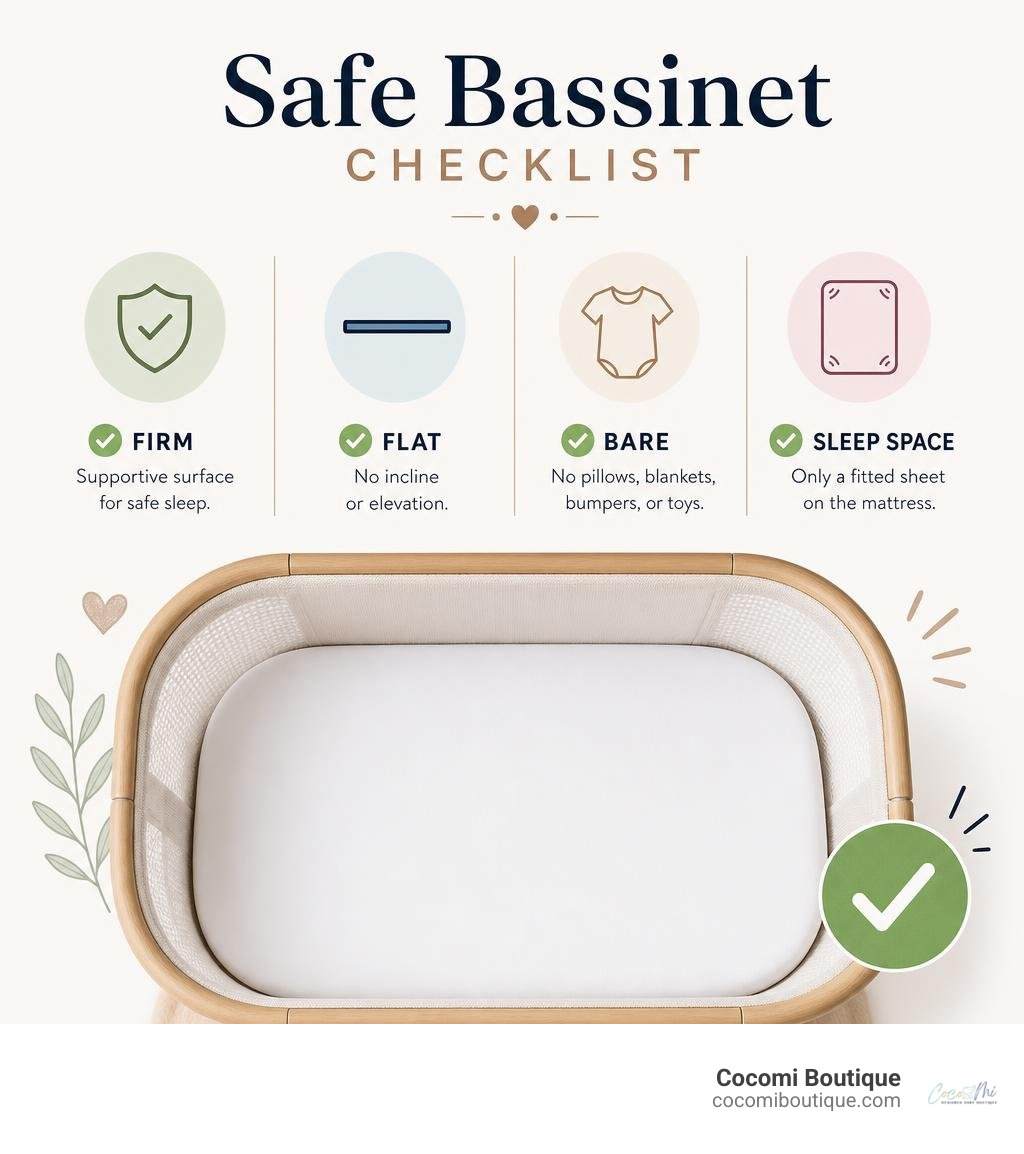
An infant lounger bassinet setup is not safe for unsupervised sleep. An infant lounger should not be placed inside a bassinet, crib, or playard because safe-sleep spaces need a bare, firm, flat surface with only a fitted sheet.
Parents may find that the soft, contoured shape helps a baby seem calmer or sleep longer. But padded sides and extra fabric can raise the risk of breathing obstruction, overheating, and unsafe positioning. Infant loungers are designed for closely supervised, awake moments such as cuddling, lounging, and tummy time - not overnight sleep or unattended naps.
For newborn sleep, choose a purpose-built bassinet or Moses basket that follows its sleep instructions. At CocoMi Boutique, we value elegant, handcrafted essentials made with natural, chemical-free fabrics and OEKO-TEX certified materials that are gentle on delicate newborn skin. Beautiful materials matter, but they never replace a clear, empty, firm sleep surface.
Thoughtfully selected baby essentials balance natural comfort, refined design, and practical safety, helping families separate soothing daytime products from dedicated products intended for sleep.
Infant lounger helpful reading:
Understanding the Infant Lounger Bassinet Concept and Lounger Use
Navigating the early months of parenthood brings joy alongside a steady stream of questions about rest and nursery gear. When welcoming a newborn into the home, creating an environment that balances soothing comfort with uncompromising safety is every parent's top priority. Many expecting parents, grandparents, and thoughtful gift shoppers encounter infant loungers and naturally wonder how they integrate with bedside sleepers and standard nursery furniture.
An infant lounger features an unpadded center sling surrounded by soft, cushioned perimeter bolsters. This contoured shape gently hugs a newborn, creating a secure, nest-like sensation that mimics being held. These items serve a wonderful purpose in daily family life:
- Providing a clean, cushioned surface for active bonding and gentle interaction on the living room floor
- Supporting supervised awake time while parents fold laundry or read nearby
- Offering an elevated, comfortable space for guided tummy time to strengthen neck and shoulder muscles
To explore how these items fit into everyday routines, our newborn lounger guide offers practical insight into maximizing awake-time comfort. Understanding the specific function of each nursery item ensures your little one enjoys comfort without compromising safe sleep guidelines.
How an Infant Lounger Bassinet Setup Differs From Standalone Sleep Spaces
It is crucial to distinguish between products created for awake relaxation and certified standalone sleep environments. A dedicated bassinet or crib is engineered strictly for independent, unsupervised infant sleep. These sleep spaces feature a flat, remarkably firm mattress covered only by a taut, fitted sheet, framed by breathable mesh or solid structural railings that promote constant airflow.
In contrast, placing an infant lounger inside a bassinet introduces plush, padded borders into a space that should remain completely bare. When cushioned surfaces are added to an enclosed sleep area, the structural dynamics change:
- The firm, flat plane required for healthy airway support becomes contoured and soft.
- The perimeter airflow provided by bassinet mesh walls is obstructed by plush side bumpers.
- The infant is placed at risk of rolling into soft side bolsters.
For an in-depth look at these environmental differences, read our bassinet lounger article to understand why certified sleep surfaces must always remain separate from lounging accessories.
Why Parents Consider an Infant Lounger in a Bassinet for Sleep Stretches
Parental exhaustion is profound during the fourth trimester. Newborns possess an active Moro (startle) reflex, causing their arms to fling outward suddenly, often waking them from light sleep. On a wide, firm mattress, infants can feel unprotected compared to the tight, cozy environment of the womb.

Many parents report that placing a contoured lounger into a bassinet extends infant sleep stretches from fragmented 2-hour cycles into 4-to-8-hour periods. The cushioned sides prevent the startle reflex from fully waking the infant, offering the calming embrace babies crave. However, while longer rest is tempting for exhausted parents, bypassing basic sleep precautions inside an enclosed bassinet creates hidden safety hazards that far outweigh the temporary convenience of longer nighttime stretches.
Critical Safety Risks of Placing Loungers Inside Bassinets
The primary concern with using an infant lounger inside a bassinet centers on infant physiology. Newborns possess heavy heads and relatively weak neck muscles. When positioned on soft or cushioned surfaces, several critical risks arise:
- Positional Asphyxiation: If a baby’s head tilts forward onto their chest due to a soft or contoured incline, their narrow airway can easily compress, preventing oxygen intake without making a sound.
- Suffocation Hazards: An infant who turns their head or wriggles toward the plush outer bolsters can press their nose and mouth against soft fabric, obstructing normal breathing.
- Rebreathing Carbon Dioxide: Enclosed, plush spaces can trap exhaled air, causing the infant to rebreathe carbon dioxide rather than fresh oxygen.
- Overheating: Newborns cannot regulate their body temperature efficiently. Thick, non-breathable synthetic padding retains body heat rapidly, increasing the risk of thermal stress.
To explore the safety mechanics behind infant resting spaces, our safe sleep lounger article outlines the key design elements that keep little ones protected during every rest period.
Pediatric Sleep Recommendations and Official Guidelines
Leading pediatric health organizations and consumer safety bodies, including the American Academy of Pediatrics (AAP), maintain clear, evidence-based recommendations for infant sleep spaces. The gold standard for infant rest remains the "ABC" framework:
- Alone: The infant should sleep without pillows, loose blankets, plush toys, bumper pads, or positioners.
- Back: Babies should always be placed flat on their backs for every sleep, naptime, and bedtime.
- Crib or Bassinet: The sleep space must feature a firm, flat mattress certified to rigorous structural standards (such as ASTM and JPMA testing requirements).
Official guidelines emphasize that soft loungers, cushions, and nests are classified strictly for supervised awake use. They should never be used as sleep positioners or bassinet inserts.
Comparing Loungers and Certified Bedside Sleepers
When deciding on the right nursery arrangement, comparing the core features of daytime loungers and certified sleep furniture helps clarify their appropriate roles.
| Feature / Consideration | Daytime Infant Lounger | Certified Bedside Bassinet |
|---|---|---|
| Intended Purpose | Supervised awake lounging, tummy time, interactive play | Overnight, independent infant sleep |
| Mattress Surface | Contoured, soft center sling with plush raised borders | Completely flat, firm mattress pad |
| Airflow Engineering | Cushioned textile sides designed for cozy awake resting | 360-degree breathable mesh walls for continuous airflow |
| Supervision Required | Constant, direct adult visual supervision | Safe for unmonitored infant sleep |
| Safety Certifications | Soft goods standards for awake containment | Strict ASTM & JPMA infant sleep structural standards |
For families seeking versatile solutions that adapt safely to different rooms, our portable bassinet lounger overview provides helpful guidance on safe, multi-functional nursery gear.
Safe and Natural Alternatives for Newborn Sleep and Resting
Creating a serene, secure nursery does not mean sacrificing comfort or aesthetic beauty. By choosing mindfully crafted products made from 100% natural materials, parents can provide their little ones with soothing, womb-like comfort while adhering strictly to safe sleep principles.

At CocoMi Baby Boutique, we believe newborn essentials should be both safe and elegant. Handcrafted from natural, chemical-free fabrics that meet rigorous OEKO-TEX safety standards, our collection of baby nests, blankets, and swaddles is intentionally designed to protect delicate newborn skin. When selecting newborn gear, our baby nest complete guide explores how natural fibers create peaceful, cozy lounging spaces for family bonding.
Dedicated Moses Baskets and Natural Bassinets
For families who love classic elegance and natural textures, a dedicated Moses basket or handcrafted woven bassinet provides an ideal sleep setup. Unlike soft loungers placed inside larger furniture, a certified natural bassinet offers:
- A perfectly fitted, firm, flat mattress that supports healthy spinal alignment and unrestricted breathing
- Solid, woven breathable walls crafted from chemical-free palm leaf or natural wicker
- Light, effortless portability to keep your baby resting nearby while maintaining independent sleep boundaries

To learn more about transitioning your infant into safe, supportive sleeping spaces, explore our bassinet beyond article for thoughtful nursery styling advice.
Proper Swaddling and Soothing Techniques
If your newborn struggles to settle on a flat bassinet mattress without the hugging feel of a lounger, traditional swaddling is a proven, safe technique. Swaddling replicates the gentle pressure of the womb while keeping the infant's sleep space clear of dangerous loose bedding.
Consider these gentle soothing strategies to encourage longer, peaceful sleep stretches:
- Use Breathable Natural Fabrics: Wrap your infant in handcrafted, lightweight organic cotton or muslin swaddles that allow airflow and prevent overheating.
- Ensure Hip-Healthy Wrapping: Keep the swaddle snug around the arms and chest to calm the Moro reflex, while leaving ample room around the hips and legs for natural joint movement.
- Incorporate Rhythmic White Noise: A gentle sound machine mimicking oceanic or womb sounds can mask sudden household noises.
- Maintain a Consistent Bedtime Ritual: A warm bath, gentle infant massage, and soft lighting prepare your baby's nervous system for restful sleep.
Frequently Asked Questions About Infant Sleep Gear
Can baby sleep in an infant lounger inside a bassinet overnight?
No. An infant lounger should never be placed inside a bassinet, crib, or cradle for overnight sleep or unsupervised naps. Padded bolsters and soft fabrics introduce suffocation, positional asphyxiation, and overheating risks. Loungers should be reserved exclusively for supervised awake time, interactive play, and guided tummy time on a flat floor.
What is the safest way to soothe a fussy newborn in a flat bassinet?
The safest approach combines a snug swaddle using breathable, natural muslin or organic cotton with consistent sensory cues. Keep the bassinet mattress firm and flat, position the sleeper right next to your bed for close parental presence, and use rhythmic shushing or gentle white noise to help your newborn transition smoothly into deep sleep.
When should babies transition out of baby loungers?
Infants should transition out of baby loungers as soon as they begin showing signs of rolling over, pushing up onto their hands and knees, or when their length exceeds the inner boundaries of the lounger (typically around 3 to 4 months of age). At this developmental milestone, transition all floor activities to a flat, open play mat.
Conclusion
Parenting is a journey filled with love, learning, and precious milestones. While navigating newborn sleep challenges can feel overwhelming, maintaining a clear distinction between daytime lounging accessories and certified sleep environments ensures your baby remains protected through every stage of development.
At CocoMi Baby Boutique, our story began just like yours: as parents searching for baby essentials that unite timeless European-quality craftsmanship with pure, chemical-free materials. We craft our Moses baskets, cozy baby nests, nursing pillows, and ultra-soft muslin swaddles using 100% natural, OEKO-TEX certified fabrics that are kind to delicate newborn skin and gentle on the planet.
Whether you are designing a tranquil nursery in the Chicago area or shopping for an unforgettable newborn gift from anywhere in the country, we invite you to explore our handcrafted collections. Visit our nursery inspiration and baby care guide to discover beautifully designed essentials created with love, safety, and uncompromising quality for your family.