

What Is a Newborn Lounger — and Is It Safe for Your Baby?

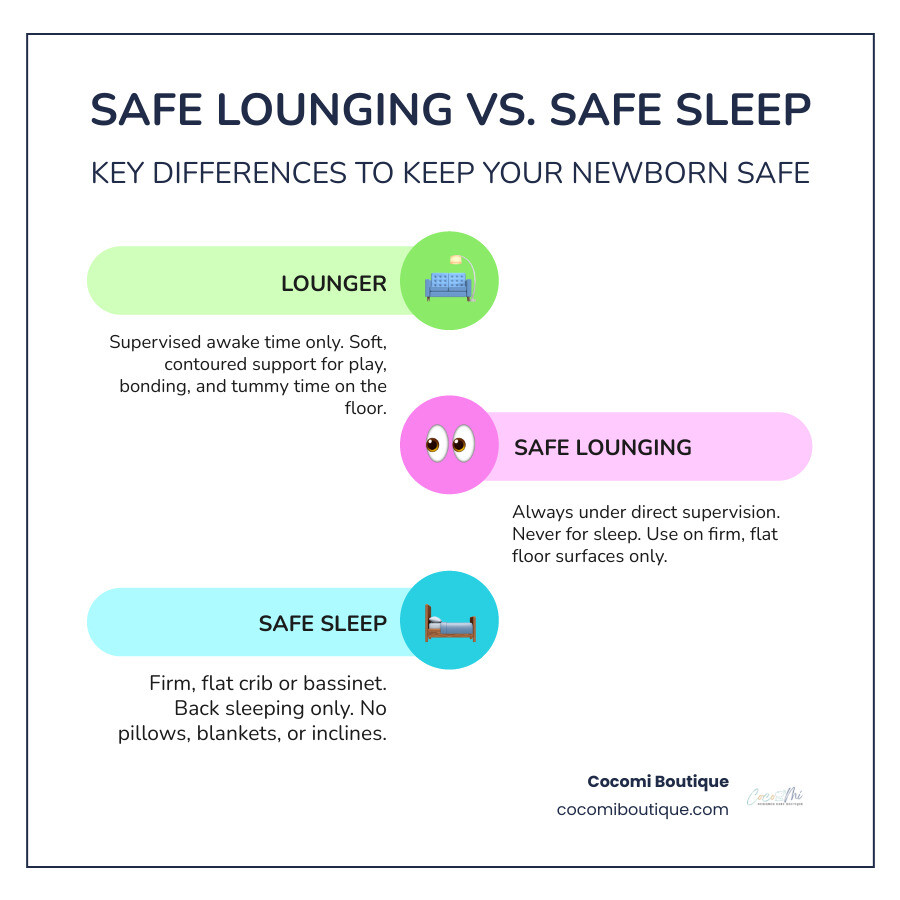
A newborn lounger is a soft, contoured cushion designed to cradle your baby during supervised awake time — for play, bonding, and tummy time. It is not a sleep product.
Quick answers:
- What is it? A portable, padded nest that supports your baby's body during waking hours
- Is it safe for sleep? No — always move a sleeping baby to a firm, flat crib or bassinet
- Best age range? Birth to around 6–9 months, depending on the product
- Where to use it? On the floor only — never on a bed, sofa, or raised surface
- Key feature to look for? Breathable, organic or OEKO-TEX certified materials with a machine-washable cover
Baby loungers have become one of the most talked-about newborn products in recent years. Parents love the hands-free convenience. Paediatricians and safety regulators have raised important questions about how — and where — they're being used.
The gap between how loungers are marketed and how they're actually used has led to serious safety warnings. The CPSC has flagged multiple lounger products for violating federal infant sleep regulations, citing suffocation and fall risks.
At the same time, a well-designed lounger — used correctly — can genuinely support your baby's development during supervised awake time.
This guide covers everything you need to know: safety rules, the best materials, developmental benefits, recalled products, and how to choose a lounger that is both beautiful and trustworthy.
I'm Monika Jarog, and I've spent years working with handcrafted, natural baby essentials — including newborn loungers made from chemical-free, European-quality materials — to help parents find products that are as safe as they are beautiful. Everything in this guide reflects that same commitment to quality and care.
Understanding the Purpose of an Infant Lounger
When we first bring a baby home to the Chicago suburbs, from Northbrook to Glenview, we quickly realize that we can't hold them 24/7—as much as we might want to! This is where the newborn lounger enters the scene. Its primary purpose is to provide a dedicated, comfortable spot for your baby to hang out while they are awake and under your direct supervision.
Think of it as a "landing pad" for your little one. It allows them to observe the world around them, engage in eye contact with you, and enjoy some hands-free time while you perhaps fold a load of laundry or enjoy a cup of coffee nearby. It is designed to mimic the feeling of being held, often featuring a "hug" or "cradle" effect that keeps the baby snug and secure on their back.
However, it is vital to distinguish these products from other infant gear. Many parents confuse loungers with sleep products or floor seats, which can lead to safety mishaps. To help clarify, we’ve put together a comparison of the most common items found in nurseries today. For a deeper dive into the logistics of these items, check out our Portable Infant Lounger Complete Guide.
Comparison: Loungers vs. Bassinets vs. Floor Seats
| Feature | Newborn Lounger | Bassinet | Floor Seat |
|---|---|---|---|
| Primary Use | Supervised awake time/play | Unsupervised overnight sleep | Sitting support/feeding |
| Surface | Soft, contoured, or padded | Firm, flat, and level | Rigid plastic or foam with leg holes |
| Age Range | 0–9 months (until rolling) | 0–5 months (until pushing up) | 4–12 months (once head control is met) |
| Safety Rule | Floor use only; Awake only | Elevated or stand; Sleep safe | Floor use only; Awake only |
Essential Features of a Premium Newborn Lounger
When selecting a lounger for your home in Buffalo Grove or Highland Park, quality should be your first priority. A premium newborn lounger isn't just about aesthetics; it’s about the integrity of the materials touching your baby’s delicate skin.
We always recommend looking for products that utilize organic cotton and OEKO-TEX certified materials. These certifications ensure that the fabrics are free from harmful chemicals and flame retardants, which is essential for newborns who have highly absorbent skin. European-quality craftsmanship often means higher standards for breathability and durability.
A high-end lounger should also feature:
- Breathable Mesh or 3D Fabric: To promote airflow and help regulate the baby's temperature.
- Machine-Washable Covers: Because, let’s be honest, spit-ups and diaper leaks are part of the journey.
- Firm Support: While they look plush, the base should still provide enough resistance to support a developing spine.
Discover more about choosing quality in our guide on the Best Baby Lounger.
Safety Standards and CPSC Regulations
Safety is the most critical chapter of this guide. In recent years, the Consumer Product Safety Commission (CPSC) has issued stern warnings regarding the use of baby loungers. According to Scientific research on infant sleep safety, many products marketed as loungers have failed to meet federal safety regulations for infant sleep.
The primary hazard identified is the risk of suffocation. If a baby falls asleep in a lounger, their head can fall forward (chin-to-chest), potentially restricting their airway. Furthermore, the soft, padded sides of a lounger pose a risk if a baby rolls or turns their face into the fabric.
The CPSC and the American Academy of Pediatrics (AAP) are very clear: a newborn lounger is never a safe place for a nap. If your baby dozes off, you must move them immediately to a safe sleep environment. For more detailed safety protocols, see our Baby Lounger Complete Guide.
Safe Sleep Best Practices
To keep your baby safe in your home—whether you're in Winnetka or Deerfield—always follow these gold-standard sleep rules:
- Firm and Flat: Babies must sleep on a firm, flat surface. Any incline or plush padding increases the risk of SIDS or accidental suffocation.
- Back to Sleep: Always place your baby on their back for every sleep, including naps.
- Clear the Space: The crib or bassinet should contain nothing but a firm mattress and a tight-fitting sheet. No blankets, pillows, or loungers should ever be placed inside a crib.
- Crib Transition: As soon as your baby shows signs of rolling over or pushing up (typically around 4–6 months), it is time to transition away from loungers and into a full-sized crib for all activities.
Developmental Benefits of Supervised Awake Time
While they aren't for sleep, a newborn lounger can be a fantastic tool for physical development when used correctly. One of the most significant challenges new parents face is "flat head syndrome" (plagiocephaly). Statistics show that 45% of infants develop a flat head by 3 months of age. Frequent, supervised tummy time is the best way to reduce those odds.
Using a lounger for tummy time can provide a slight "mechanical advantage." By propping a baby's chest slightly up on the padded edge of a lounger (while they are awake and supervised), they can more easily practice lifting their head and strengthening their neck muscles. This position also allows for better visual exploration of their surroundings.
Supporting Milestones with a Newborn Lounger
- Reflux Reduction: Over 50% of infants struggle with acid reflux. For babies who experience discomfort after feeding, a lounger with a slight, therapist-approved incline can help them stay upright during that critical 20-30 minute "awake window" post-meal. Learn more about this in our article on the Lounger For Baby With Reflux.
- Sensory Play: Being slightly reclined (but not sleeping!) allows babies to see their hands more clearly, promoting hand-eye coordination and self-soothing behaviors.
- Motor Skills: Many loungers, such as those developed by pediatric therapists, are designed to encourage "crunches" or leg movements that build core strength.
Proper Use and Placement of Your Newborn Lounger
Where you put the lounger is just as important as how you use it. We cannot stress this enough: The only safe place for a newborn lounger is on the floor.
Never place a lounger on a bed, sofa, countertop, or any elevated surface. Babies can wiggle or roll unexpectedly, and the soft nature of a lounger makes it unstable on uneven surfaces like a couch. If a lounger were to tip or if the baby were to move to the edge, the fall could be devastating.
Always ensure the lounger is on a flat, stable part of the floor—ideally a firm rug or a play mat. And remember, "supervised" means you are in the same room, looking at the baby, and able to react instantly if they roll or fall asleep. For parents looking for value without sacrificing these safety standards, our guide on Nesting On A Budget Finding The Perfect Affordable Baby Lounger offers great insights.
When to Stop Using a Newborn Lounger
Like all baby gear, the newborn lounger has a shelf life. Most manufacturers recommend stopping use when:
- The baby reaches the weight limit (usually around 20 lbs).
- The baby begins to roll over independently.
- The baby can push up on their hands and knees.
- The baby's torso becomes too long for the center "well" of the lounger (typically around 9 months or 21 inches from head to bottom).
Frequently Asked Questions about Infant Lounging
Can my baby sleep in a lounger?
No. This is the most important rule of all. A newborn lounger is designed for awake time only. The soft, plush surfaces that make them comfortable for lounging are the same features that make them dangerous for sleep. If your baby falls asleep, move them to a firm, flat crib or bassinet immediately. Using a lounger for sleep violates CPSC and AAP safety guidelines and carries a significant risk of suffocation.
How do I clean a premium lounger?
Hygiene is paramount for newborns. Most premium loungers, like those we curate at Cocomi Boutique, feature removable, machine-washable covers made from organic cotton.
- Covers: Usually, these can be washed on a cold, gentle cycle with a mild, dye-free detergent and air-dried to prevent shrinking.
- Inserts: The inner cushion or foam core typically requires spot cleaning with a damp cloth and mild soap. Always ensure the insert is 100% dry before putting the cover back on to prevent mildew.
What materials are safest for newborn skin?
Newborn skin is incredibly sensitive. We always advocate for natural fibers. Look for:
- Organic Cotton: GOTS-certified cotton is grown without synthetic pesticides.
- OEKO-TEX Certified Fabrics: This ensures every thread and button has been tested for harmful substances.
- Tencel or Bamboo: These are often used in 3D mesh technology for their hypoallergenic and moisture-wicking properties.
- Chemical-Free Fills: Ensure the polyester or foam fill inside the lounger has zero added flame retardants or harsh chemicals.
Conclusion
A newborn lounger can be a beautiful and helpful addition to your nursery, providing a cozy spot for bonding and development during those precious early months. However, as we've explored, its benefits are only realized when safety is the top priority. By choosing high-quality, natural materials and strictly following supervised, awake-time-only rules, you can enjoy the convenience these products offer with peace of mind.
At Cocomi Boutique, we believe that every baby deserves the best start in life. Whether you are in Chicago, Highland Park, or Wheeling, we are here to provide handcrafted, luxury baby essentials that meet the highest European standards for safety and style. From organic muslin swaddles to premium baby nests, our collection is designed by parents, for parents.
Explore our premium baby collection and discover the difference that quality craftsmanship makes for your growing family.