

Why an Infant Swaddle Blanket Matters for Your Newborn

An infant swaddle blanket is a specialized piece of fabric designed to wrap snugly around your baby, recreating the secure, womb-like environment they experienced before birth. Here's what you need to know:
Key Facts About Infant Swaddle Blankets:
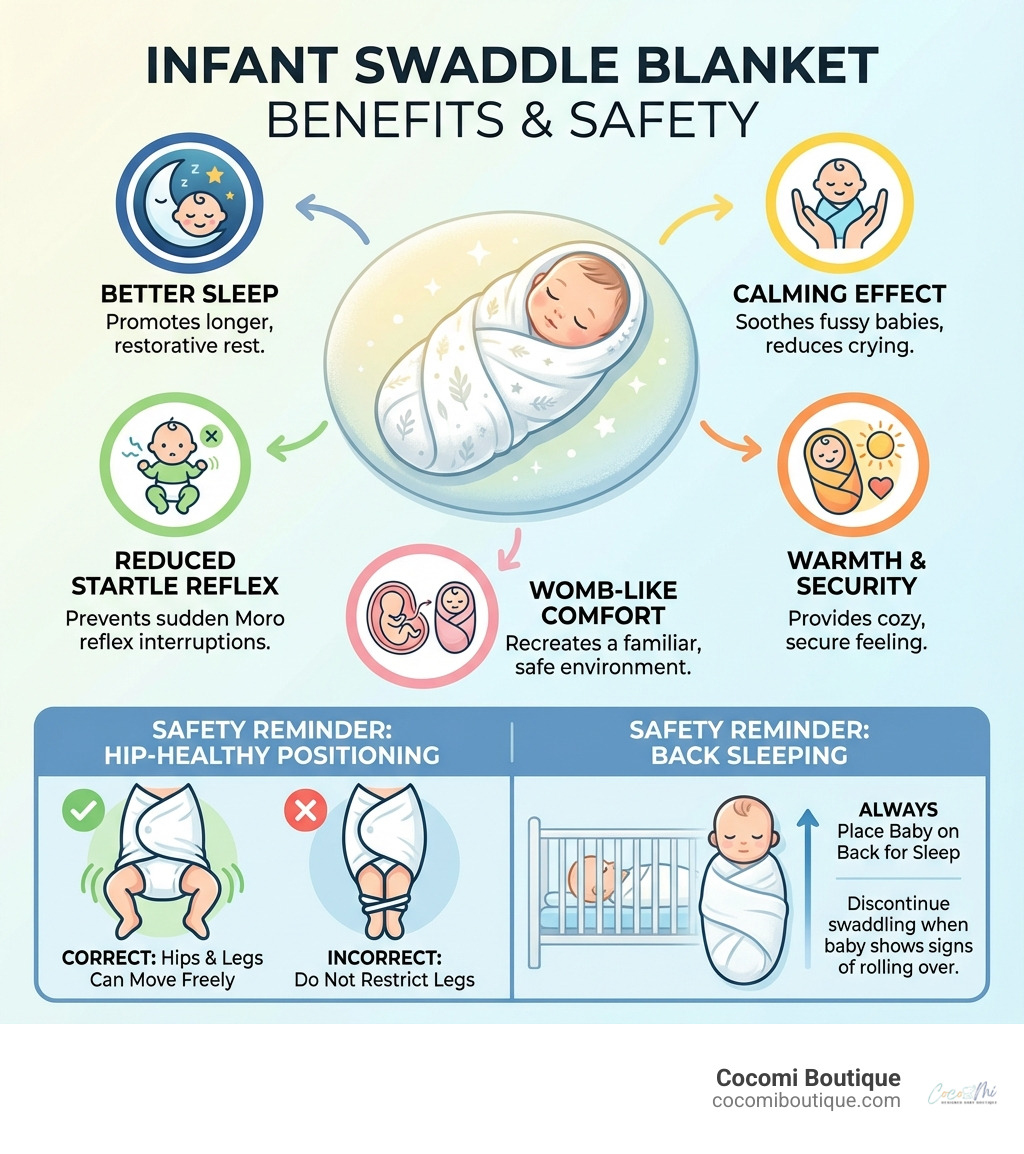
- Purpose: Wraps baby snugly to prevent the Moro (startle) reflex from disrupting sleep
- Benefits: Promotes longer sleep, calms fussy babies, provides warmth and security
- Materials: Cotton muslin, bamboo, organic cotton, or knit fabrics
- Safety: Must allow hip movement, prevent overheating, and be discontinued when baby can roll over (around 2 months)
- Types: Traditional square blankets, velcro wraps, or zippered swaddles
If you've ever watched your newborn startle awake just as they drift off to sleep, you've witnessed the Moro reflex in action. This involuntary movement is completely normal, but it can disrupt your baby's rest and leave everyone exhausted. That's where swaddling comes in.
Swaddling isn't just about keeping your baby warm. It's about comfort. When you wrap your little one in a soft swaddle blanket, you're helping them feel safe and secure. Research shows that most newborns sleep better when swaddled, and many parents report that swaddling helps calm even colicky babies.
But not all swaddle blankets are created equal. The fabric matters. The fit matters. And knowing how to swaddle safely matters even more.
I'm Monika Jarog, and I've spent years crafting handmade baby essentials from 100% natural, chemical-free materials that meet the highest European safety standards. Through my work designing premium infant swaddle blankets and baby wraps, I've learned exactly what makes a swaddle both effective and safe for your precious little one.
In this guide, we'll walk through everything you need to know to choose the perfect swaddle blanket for your baby.
Similar topics to infant swaddle blanket:
The Art of the Swaddle: Techniques and Safety
Swaddling is truly an art form, but don't let that intimidate you! With a little practice, you'll be a swaddling pro in no time. The goal is to create a snug, secure wrap that mimics the comforting accept of the womb, helping your baby feel safe and preventing those pesky startle reflexes that can wake them up.
One of the most common and effective methods is the classic diamond swaddle technique. This method uses a square or rectangular infant swaddle blanket and is quite versatile.
Here are the general steps for a diamond swaddle:
- Lay it out: Spread your chosen infant swaddle blanket flat on a safe, firm surface in a diamond shape. Fold the top corner down about six inches.
- Position your baby: Lay your baby on their back in the center of the blanket, with their head resting above the folded edge. Make sure their shoulders are just below the fold.
- First arm wrap: Gently straighten your baby's left arm and place it alongside their body. Take the left side of the blanket and pull it across your baby's body, tucking it snugly under their right arm and back. Ensure it's snug, but not too tight around their chest.
- Bottom up: Fold the bottom corner of the blanket up over your baby's feet and body. If the blanket is long enough, you can tuck it under their left shoulder.
- Second arm wrap: Gently straighten your baby's right arm and place it alongside their body. Take the remaining right side of the blanket and pull it across your baby's body, tucking it securely under their left side. You should have a neat, secure "baby burrito"!
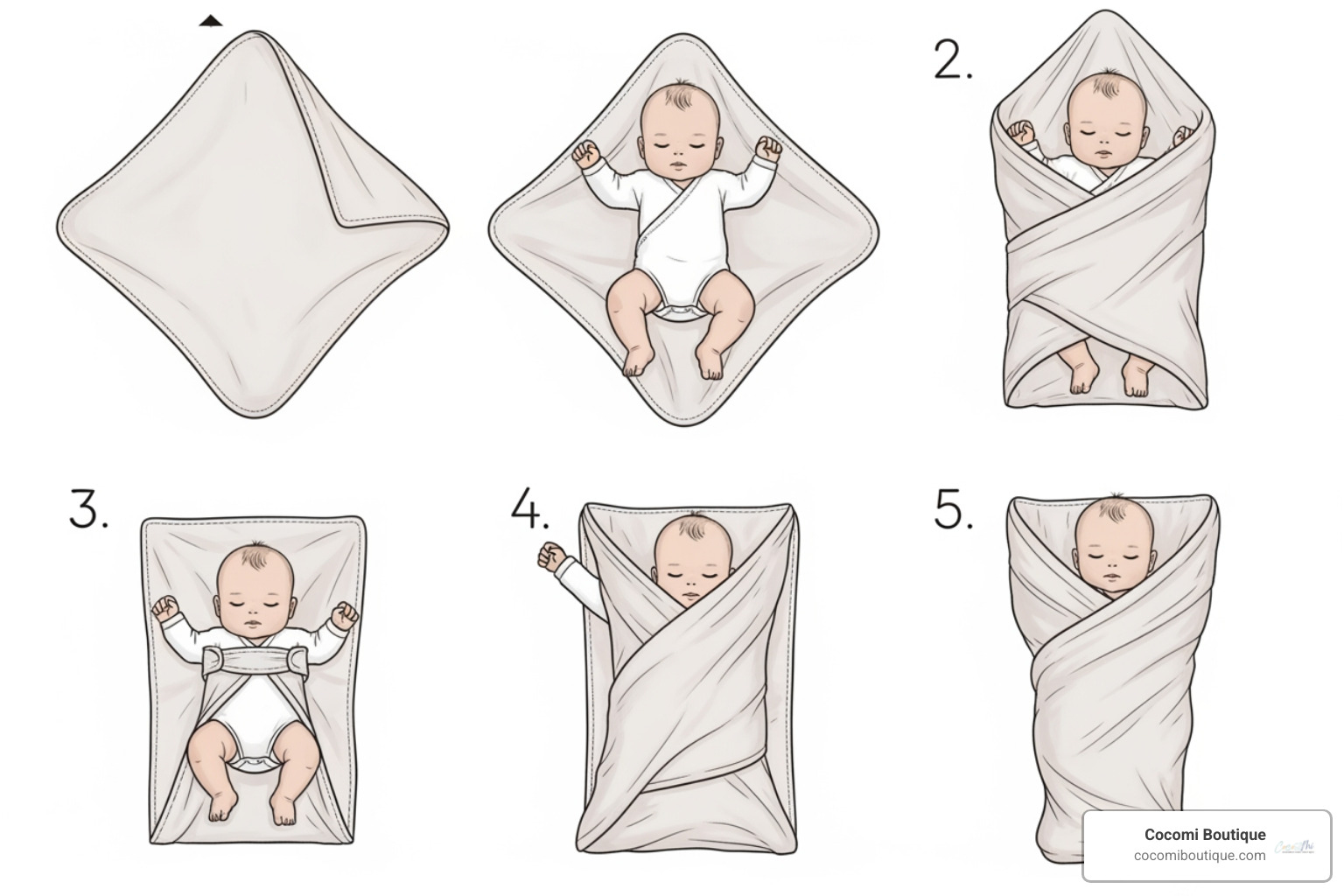
For a more visual guide and detailed instructions on how to master this technique, we recommend checking out this resource: How to Swaddle Your Baby.
Beyond the technique, safe sleep practices are paramount. The American Academy of Pediatrics (AAP) strongly recommends that babies always be placed on their back to sleep, for every sleep, until they are one year old. This "back to sleep" recommendation significantly reduces the risk of SIDS (Sudden Infant Death Syndrome). When your baby is swaddled, they must be placed on their back. A bare crib is also essential – this means no loose blankets, bumpers, pillows, or toys in the sleep space, which could pose a suffocation hazard. A properly swaddled baby replaces the need for loose blankets, keeping them cozy and safe.
Safety First: The Dos and Don'ts of Using an Infant Swaddle Blanket
Safety is our utmost priority when it comes to your little one. While swaddling offers numerous benefits, it's crucial to follow safety guidelines to ensure your baby's comfort and well-being.
One of the most important aspects is hip-healthy swaddling. Traditional swaddling methods that tightly restrict a baby's legs can lead to hip problems, such as hip dysplasia. Our goal is to provide a snug accept for the upper body while allowing plenty of room for natural leg and hip movement. The research emphasizes that a hip-healthy design leaves ample room for baby to move their legs and hips freely. When you swaddle, ensure your baby’s hips and knees can bend up and out, allowing for a natural frog-like position. If you can fit two to three of your fingers in between your baby’s chest and the swaddle, then you’ve swaddled just right – snug but not restrictive around the lower body.
Another critical consideration is overheating. Babies cannot regulate their body temperature as effectively as adults, so choose breathable fabrics and dress them appropriately. Our research highlights the importance of lightweight, stretchy cotton and breathable fabrics to prevent overheating while keeping your little one cozy year-round. Always check your baby for signs of overheating, such as sweating, damp hair, flushed cheeks, heat rash, or rapid breathing. If you notice any of these, loosen the swaddle or remove a layer of clothing.
Here's a quick summary of the dos and don'ts for safe swaddling:
- DO always place your swaddled baby on their back to sleep.
- DO ensure the swaddle is snug around the torso but loose around the hips and legs, allowing for full hip mobility.
- DO use breathable fabrics like cotton muslin to prevent overheating.
- DO check your baby regularly for signs of overheating.
- DO stop swaddling as soon as your baby shows signs of rolling over.
- DON'T swaddle your baby too tightly, especially around the hips.
- DON'T use a swaddle that is too loose, as it can solve and become a suffocation hazard.
- DON'T put any other loose blankets, pillows, or toys in the crib with a swaddled baby.
- DON'T let your baby sleep on their stomach or side while swaddled.
For a comprehensive dive into ensuring your baby's safety while swaddled, we encourage you to read our guide: The Ultimate Guide to Safe Swaddling for Newborns.
How to Choose the Perfect Infant Swaddle Blanket
Choosing the right infant swaddle blanket can feel like a quest, but we're here to guide you! The market offers a delightful variety, each with unique features designed to make your baby's sleep sweeter.
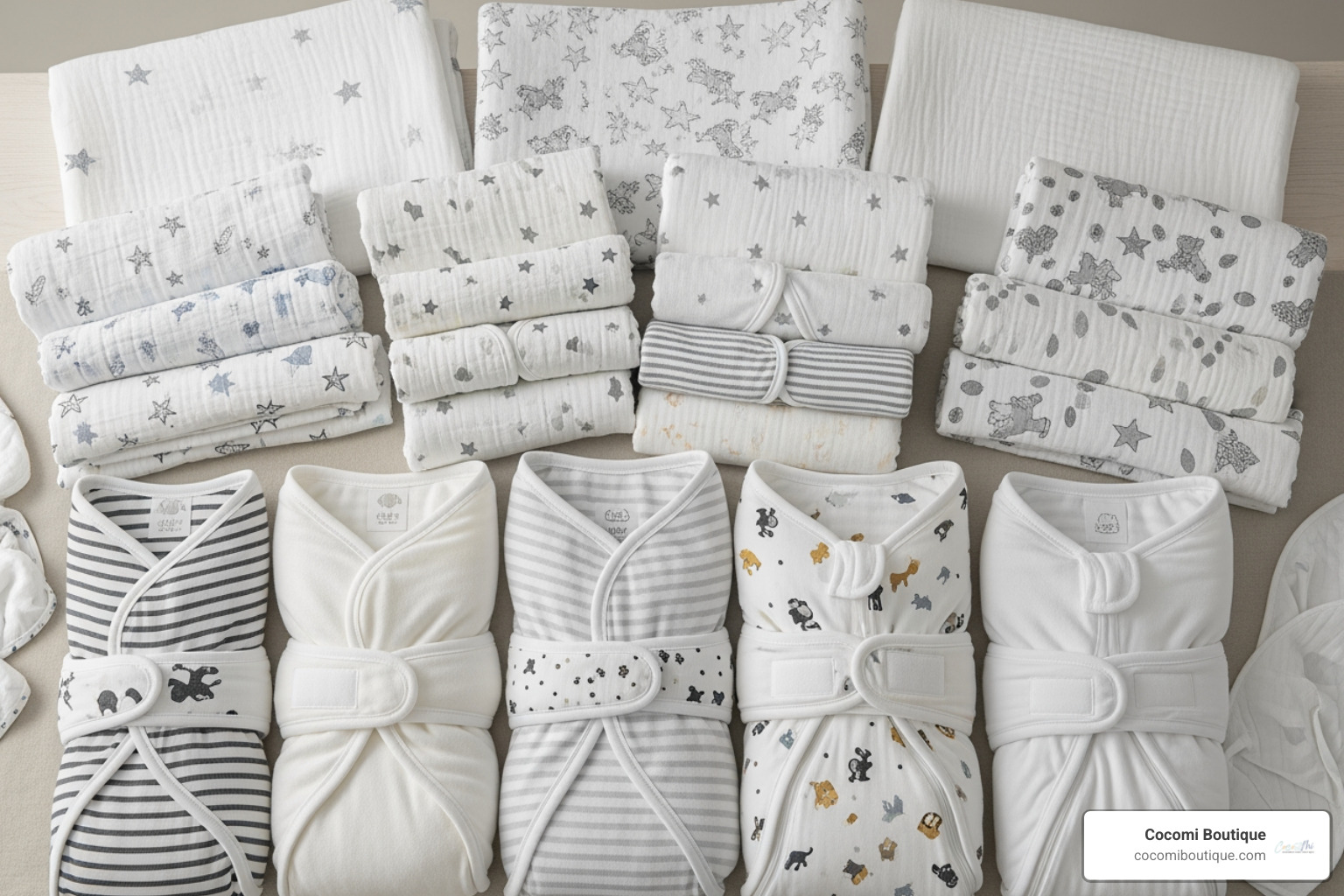
When it comes to types of swaddles, you'll generally find:
- Traditional Swaddle Blankets: These are typically large square or rectangular blankets made from soft, breathable fabric. They require parents to master a specific wrapping technique (like the diamond swaddle we discussed). Many parents love these for their versatility, as they can also double as nursing covers, burp cloths, or play mats.
- Swaddle Wraps with Easy Closures: These modern marvels are designed for convenience. They often feature adjustable wings with hook-and-loop closures or zippers, making swaddling quick and foolproof. These designs create a snug, womb-like feeling with adjustable wings and closures that prevent loosening. These are particularly great for those sleepy middle-of-the-night changes!
Our goal at Cocomi Boutique is to help you find the best options for your baby's sweet dreams. You can explore more in our guide: Finding the Best Swaddle for Sweet Dreams.
Sizing guidelines are crucial for both comfort and safety. An infant swaddle blanket that's too small won't provide a secure wrap, and one that's too large can become a loose fabric hazard. Most swaddles are sized by age, weight, and length. For example, a small/medium size might be designed for babies 0-3 months, weighing 7-14 pounds, and up to 26 inches long. Other ranges might specify 0-14 weeks. Always check the manufacturer's recommendations and choose a swaddle that fits your baby's current size, not one they'll "grow into."
Finally, let's talk about TOG rating. TOG stands for "Thermal Overall Grade," and it's a measure of a fabric's thermal insulation or warmth. The higher the TOG rating, the warmer the fabric. While not all swaddles explicitly state a TOG rating, understanding this concept helps you choose the right fabric for your nursery's temperature.
- Lower TOG (e.g., 0.5 - 1.0): Ideal for warmer rooms or summer months. Think lightweight cotton muslin or bamboo.
- Higher TOG (e.g., 2.5 - 3.5): Suitable for cooler rooms or winter months. Thicker knit fabrics would fall into this category.
The goal is to keep your baby comfortable without overheating. We always recommend checking your baby's temperature by feeling their chest or back—they should feel warm, not hot or sweaty.
Decoding Fabrics: From Cotton Muslin to Bamboo
The material of an infant swaddle blanket is more than just a preference; it plays a critical role in your baby's comfort, temperature regulation, and overall safety. At Cocomi Boutique, we understand that discerning parents seek the best for their little ones, which is why we focus on high-quality, natural fibers.
Here's a breakdown of common swaddle blanket materials and their properties:
| Fabric Type | Softness | Breathability | Stretch | Best Use Case |
|---|---|---|---|---|
| Cotton Muslin | Becomes softer with each wash | Excellent; open weave allows for airflow | Minimal | All-season use, especially in warmer climates. Versatile for swaddling, burp cloths, and nursing covers. |
| Organic Cotton | Very soft and gentle on sensitive skin | Good breathability | Varies (can be a knit) | Ideal for babies with sensitive skin or allergies. A great eco-friendly choice. |
| Bamboo | Exceptionally soft, often described as silky | Highly breathable and moisture-wicking | Naturally stretchy | Perfect for hot weather or babies who tend to get warm. Also hypoallergenic and antibacterial. |
| Knit Fabrics (e.g., Jersey) | Soft and cozy, like a favorite t-shirt | Moderate breathability | Very stretchy, allowing for a snug fit | Great for cooler temperatures or for babies who like a very snug, flexible swaddle. |
The Transition Phase: When and How to Stop Swaddling
As much as we love the cozy comfort an infant swaddle blanket provides, there comes a time when your baby needs to graduate from their snug wrap. This transition is a crucial step in their development, ensuring their safety as they grow more mobile.
The most important sign to stop swaddling is when your baby shows any indication of being able to roll over. This is a critical safety milestone because if a swaddled baby rolls onto their stomach, they may not be able to roll back, increasing the risk of suffocation. The American Academy of Pediatrics (AAP) recommends stopping swaddling once your baby is able to roll over, which commonly happens around the time they turn 2 months old. Some babies might even start trying to break free from the swaddle before they fully roll. If you notice their arms consistently popping out, or if they're wiggling vigorously within the swaddle, it might be time to begin the transition.
Transitioning your baby out of the swaddle can be a gradual process to help them adjust to sleeping with their arms free. Here are a few common transition methods:
- One arm out: Start by swaddling your baby with one arm free. This allows them to get used to having an arm out while still benefiting from the security of the swaddle on their other side. Do this for a few nights or naps, until they seem comfortable.
- Both arms out: Once they're comfortable with one arm out, try swaddling them with both arms free, but still wrapping the blanket around their torso. This provides some of the familiar snugness without restricting their arms.
- Use a transition product: This is where wearable blankets or sleep sacks become your best friend. These products provide warmth and comfort without restricting your baby's arms, allowing them full freedom of movement. Many transition swaddles are designed with removable sleeves or adjustable features to ease this process.
Here are some popular transition products that can help ease your baby out of the swaddle:
- Sleep Sacks: These are essentially wearable blankets that zip up, providing warmth and security without restricting arm movement. They're a safe alternative to loose blankets in the crib.
- Transition Swaddles: Some swaddle designs offer features like "arms-up" positions or detachable sleeves that allow you to gradually free your baby's arms.
At Cocomi Boutique, we offer a range of soft, stylish, and comfortable wearable blankets that are perfect for this next stage in your baby's sleep journey. They provide the warmth and security your little one needs while ensuring their safety and promoting independent sleep.
Frequently Asked Questions about Swaddling
We know that navigating baby sleep can bring up a lot of questions. Here are some of the most common inquiries we hear about swaddling and sleepwear:
What is the difference between a swaddle blanket and a wearable blanket?
This is a great question, and understanding the distinction is key to safe and comfortable sleep as your baby grows.
An infant swaddle blanket (or simply a swaddle) is designed to snugly wrap your baby's arms and torso, restricting arm movement. Its primary function is to prevent the startle reflex (Moro reflex) from waking your baby, recreating that secure, womb-like feeling. Swaddles are typically used for newborns and very young infants who are not yet showing signs of rolling over.
A wearable blanket (often called a sleep sack), on the other hand, is like a mini sleeping bag for your baby. It's designed to be worn over pajamas and zips up, providing warmth and comfort without restricting arm movement. The key difference is that wearable blankets allow your baby's arms to be completely free. They are considered a safe alternative to loose blankets in the crib for babies who can roll over or whose parents prefer not to swaddle. The transition from a swaddle to a wearable blanket is a natural progression as your baby develops more mobility.
What should a baby wear under a swaddle?
The goal is to keep your baby comfortable and prevent overheating. What your baby wears under their infant swaddle blanket largely depends on the room temperature.
- Warm Rooms (above 75°F / 24°C): In warmer environments, a lightweight, short-sleeved onesie or just a diaper might be sufficient. The swaddle itself provides a layer of warmth.
- Moderate Rooms (70-75°F / 21-24°C): A lightweight, long-sleeved onesie or a thin cotton sleeper is usually appropriate.
- Cooler Rooms (below 70°F / 21°C): Opt for a warmer sleeper or footed pajamas under the swaddle.
Always check your baby's temperature by feeling their chest or back (their hands and feet can often feel cool, which is normal). They should feel warm, not hot or sweaty. Look for signs of overheating like sweating, damp hair, flushed cheeks, heat rash, or rapid breathing. It's better to underdress slightly and add a layer if needed, than to risk overheating. A breathable infant swaddle blanket helps regulate temperature effectively.
How many swaddle blankets do I need?
There's no magic number, but we recommend having a few infant swaddle blankets on hand, usually around 3-5. This allows for frequent washing and ensures you always have a clean, dry one ready. Think of it this way: newborns are prone to spit-ups, diaper leaks, and general messes, so having backups is always a good idea!
The versatility of swaddle blankets also means they can be used for much more than just swaddling. Many parents find them indispensable for various purposes throughout the day:
- Burp Cloth: The absorbent fabric makes them perfect for catching spit-up.
- Nursing Cover: Their generous size offers privacy during breastfeeding.
- Changing Pad Cover: Lay one down for a soft, clean surface during diaper changes on the go.
- Stroller or Car Seat Cover: Provides shade or a light layer of warmth.
- Play Mat: A clean surface for tummy time or playtime.
This multi-use functionality means your infant swaddle blanket will be a workhorse in your baby gear arsenal! Find more creative ways to use these versatile items in our guide: Muslin Magic: Unlocking All the Uses for Your Baby's Favorite Blanket.
Conclusion: Wrapping Up Your Swaddling Journey
We've covered a lot about the wonderful world of the infant swaddle blanket, from its comforting accept to the crucial safety considerations. We hope this guide has empowered you with the knowledge to make informed choices for your little one.
To recap, swaddling is a time-honored practice that can significantly contribute to your newborn's comfort and sleep. It helps to prevent the startling Moro reflex, keeps them feeling secure, and can even soothe fussy babies. However, safety is paramount: always ensure hip-healthy positioning, prevent overheating with breathable fabrics, and discontinue swaddling as soon as your baby shows signs of rolling over.
Choosing the right infant swaddle blanket involves considering the type of swaddle (traditional, velcro, zipper), the appropriate size for your baby, and the material. We've seen how fabrics like cotton muslin, organic cotton, bamboo, and various knits each offer unique benefits in terms of softness, breathability, and stretch. For newborns, prioritize extreme softness, excellent breathability, appropriate sizing, and durability for frequent washing.
Trust your instincts as a parent. You know your baby best. What works for one family might be different for another, and that's perfectly okay! At Cocomi Boutique, we are committed to offering soft, stylish, and comfortable baby clothing and essentials that meet the highest standards of quality and care. We believe in providing delightful shopping experiences for parents in Northbrook, Chicago, and throughout Illinois.
Thank you for joining us on this journey to understand the infant swaddle blanket. We're here to support you in creating happy, snug, and safe moments for your precious little one. For more insights and tips, be sure to explore our complete handbook: Swaddle Savvy: Your Complete Handbook for Happy Babies.