

What is an Infant Lounger and Why Use One?
An infant lounger is a cushioned, portable pad designed to cradle your baby during supervised awake time. Here's what you need to know:
Quick Overview:
- What it is: A cushion-like product with raised, bolstered sides that hug your baby's body
- Age range: Typically for babies 0-9 months (before rolling or crawling)
- Primary use: Supervised play, bonding, and tummy time—not for sleep
- Key difference: Unlike bassinets or cribs, loungers are for awake, supervised time only
- Safety rule: Always use on flat, firm surfaces with constant adult supervision
Think of an infant lounger as a cozy docking station for your little one. The design creates a snug, womb-like environment that many babies find calming. The raised sides provide a gentle boundary, while the soft center supports your baby during supervised activities like bottle feeding, tummy time, or simply lounging beside you while you work from home.
It's crucial to understand what an infant lounger is not. Despite their comfort and portability, infant loungers are not safe sleep devices. According to research from Health Canada, certain baby loungers don't meet safety regulations and can pose strangulation, entrapment, and fall hazards. The American Academy of Pediatrics (AAP) is clear: babies should always sleep on their backs in a crib or bassinet with a firm, flat surface and no soft bedding.
The global baby lounger market reached $1.2 billion in 2022 and is projected to grow to $2.1 billion by 2030. This growth reflects increasing parental awareness about infant comfort and development, but it also means more products to evaluate and more safety considerations to keep in mind.
I'm Monika Jarog, and I've spent years designing and curating handcrafted baby essentials from 100% natural, chemical-free materials that meet the highest European safety standards, including infant loungers that prioritize both comfort and security. My mission is to help parents steer baby products with confidence, ensuring every choice brings peace of mind alongside style and functionality.
Infant lounger terms explained:
The Key Benefits of a Quality Lounger
When used correctly and safely, an infant lounger can genuinely make those early months with your baby a bit more manageable. I've watched countless parents find how a thoughtfully designed lounger becomes woven into their daily rhythm, creating little pockets of calm in the beautiful chaos of new parenthood.
Let me share what makes a quality lounger so valuable.
Those precious hands-free moments are what many parents treasure most. The first few months with a newborn are extraordinary, but let's be real—they're also exhausting. An infant lounger gives you a safe, supervised spot to place your baby while you grab a snack, fold a few onesies, or simply catch your breath. You're still right there, watching over them, but your arms get a break. It's not about stepping away; it's about staying present while taking care of yourself too.
Portability changes everything when you're trying to keep your little one close throughout the day. Most infant loungers are lightweight and easy to carry from room to room. This means your baby can be beside you in the kitchen while you prep lunch, or in the living room during family time. They're part of the action, not isolated in another room, and you don't have to choose between getting things done and being near your baby.
The bonding opportunities an infant lounger creates are truly special. When your baby is cradled in that cozy spot, eye contact becomes easier and more natural. You can read board books together, sing songs, or just chat about your day (even if they mostly respond with adorable gurgles). That slightly liftd, supported position makes interaction more comfortable for both of you, turning ordinary moments into memory-making time.
Tummy time support is another benefit many parents appreciate. Not every baby loves tummy time at first, but it's essential for building neck and upper body strength. An infant lounger can provide gentle support that makes the experience less frustrating. The slight elevation and cozy boundaries help some babies feel more secure as they work on lifting their heads and exploring their newfound strength.
Perhaps most comforting is the gentle "hugging" sensation that quality loungers provide. The raised sides create a snug environment that mimics being held, which many newborns find deeply soothing. This cocoon-like feeling can help reduce the startle reflex and create a sense of security during supervised awake time. Some babies simply settle better when they feel that gentle boundary around them, as if they're still nestled close to you.
For a deeper look at how these cozy spaces work and what to consider, check out The Truth About Newborn Snuggle Nests: Safety, Benefits, and What to Consider.
The key is remembering that these benefits only apply when your infant lounger is used exactly as intended—for supervised, awake time only, on a firm, flat surface, with you right there. Used this way, a quality lounger becomes a helpful companion during those precious early months.
Safety First: The Golden Rules of Infant Lounger Use
The comfort and convenience of an infant lounger can be wonderful, but let's be absolutely clear: safety isn't negotiable. We know you want to give your baby the best, and that starts with understanding how to use these products correctly. The good news? Following a few essential guidelines will keep your little one safe while still enjoying all the benefits a quality lounger offers.
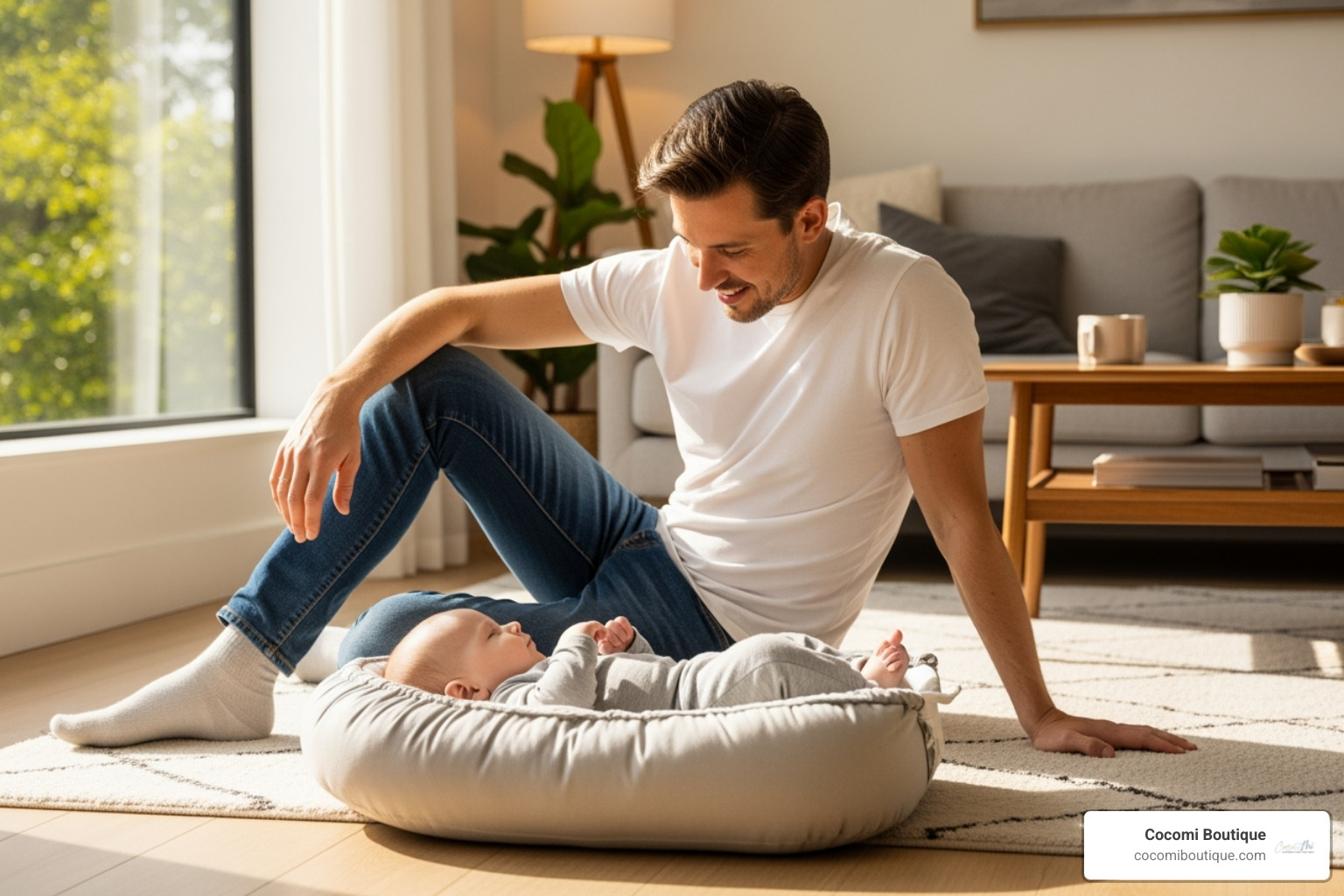
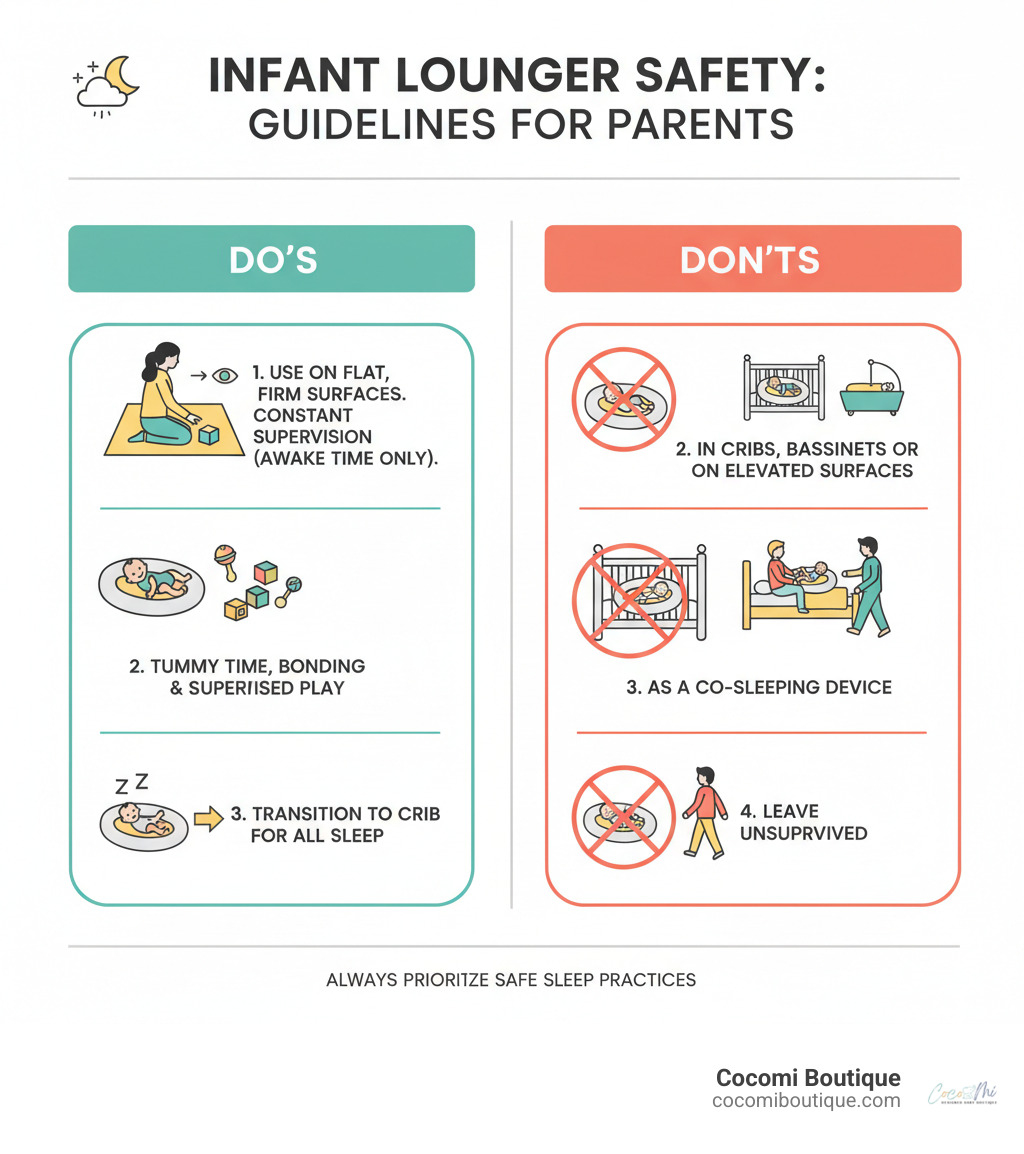
The number one rule? Awake-time only, with constant supervision. This isn't just a suggestion—it's critical. The American Academy of Pediatrics (AAP) and Health Canada are crystal clear on this point: infant loungers are not for sleep. Not for naps. Not for overnight. Not even for "just a quick minute." These loungers are designed exclusively for supervised awake time when you're right there, alert and watching.
What does supervision really mean? Your baby should always be within arm's reach and in your direct line of sight. If your little one drifts off while lounging (and let's face it, that cozy design can be pretty sleep-inducing), gently transfer them to a safe sleep space like a crib or bassinet immediately. Yes, even if they just fell asleep. The AAP's safe sleep guidelines exist for a reason, and they apply every single time.
Surface matters more than you might think. Always place your infant lounger on a firm, flat, stable surface—and we mean the floor. It might seem convenient to pop it on the couch while you fold laundry or on the bed while you get dressed, but liftd surfaces create serious fall hazards. Countertops, tables, sofas, and beds are all off-limits. Soft or uneven surfaces can also shift, potentially changing your baby's head position and creating suffocation risks.
Here's what never to do: Don't use an infant lounger for co-sleeping. The padded sides and soft construction that make these loungers feel cozy also create entrapment and suffocation hazards if your baby rolls or if you accidentally roll onto the lounger during sleep. Similarly, never place a lounger inside a crib, bassinet, or playard. These sleep spaces are designed with firm, flat mattresses for a reason—adding any soft bedding or lounger introduces dangerous variables.
Health Canada has issued specific warnings about baby loungers that don't meet safety regulations. The risks are real: strangulation, entrapment, and fall hazards can occur, primarily due to soft, compressible sides. If a baby rolls in a lounger, their airway can become obstructed by the padded sides or if their face presses into the soft material. These aren't scare tactics—they're documented dangers that we need to take seriously.
Before you buy any lounger, do your homework. Check for product recalls and safety warnings through official channels. Look for products that have been JPMA certified and independently tested to meet or exceed U.S. Consumer Products Safety Commission (CPSC) safety standards. This certification provides an extra layer of confidence that the product has been rigorously evaluated. Always read the manufacturer's safety labels and instructions completely—not just a quick skim.
The landscape of baby product safety is constantly evolving. Some popular lounger manufacturers have even retired their infant lounger products in the U.S. due to changing regulations and safety standards. This shows that the industry is responding to safety concerns, but it also means we need to stay informed and vigilant.
We understand that these rules might feel restrictive, especially when you're exhausted and just need a safe spot for your baby. But by following these guidelines without exception, you can enjoy the convenience of an infant lounger while protecting what matters most—your baby's safety.
How to Choose the Perfect Infant Lounger: A Feature Roundup
Shopping for an infant lounger can feel overwhelming when you're faced with endless options, each promising to be the perfect fit for your baby. Here's something that might help put things in perspective: the global baby lounger market is expected to reach USD 2.1 billion by 2030. This growth isn't just about more products hitting shelves—it reflects a genuine shift in how parents think about infant comfort and development. Rising birth rates and increased awareness about baby gear safety mean manufacturers are innovating constantly, creating products that truly meet modern parenting needs.
But here's the thing: more choices also mean you need to be more informed. Let's walk through what really matters when selecting an infant lounger, so you can make a decision that feels right for your family.
What to look for in an infant lounger
Understanding when and how long your baby can safely use an infant lounger is the foundation of making a smart choice. These products aren't meant to grow with your child indefinitely—they're designed for a specific developmental window.
Most infant loungers work beautifully for babies from birth up to around 9 months old. This timeframe covers those precious early months when your little one isn't yet mobile, rolling consistently, or trying to escape their cozy spot. The design creates that snug, contained feeling that newborns often find so comforting.
Weight limits aren't just suggestions from manufacturers—they're critical safety boundaries. Every infant lounger has a maximum weight capacity, and exceeding it can compromise the product's structure and put your baby at risk. Always check this specification before purchasing and keep an eye on your baby's growth.
Here's where your baby's development becomes your guide: you need to stop using the infant lounger the moment your little one shows signs of increased mobility. If your baby starts rolling over, pushing up on their hands and knees, or making any attempt to crawl or climb out, it's time to retire the lounger. These milestones mean your baby has gained enough strength and coordination to potentially get into unsafe positions, increasing risks of entrapment or falls. Some products recommend transitioning around 9 months or when your baby measures about 21 inches from head to bum, but really, your baby's abilities matter more than the calendar.
Still wondering if an infant lounger is the right investment for your family's needs? We've got you covered with Is a Baby Nest Worth It? Unpacking the What, Why, and How-To.
Essential materials for your infant lounger
The materials touching your baby's delicate skin matter more than you might think. We're talking about comfort, yes, but also health, safety, and peace of mind during those hours your little one spends lounging.

Organic cotton should be at the top of your priority list. When the outer shell or cover is made from 100% organic cotton, you're choosing a fabric grown without harmful pesticides or chemicals. This makes such a difference for sensitive baby skin that reacts to even the slightest irritation. Beyond being gentle, organic cotton is naturally breathable, helping regulate your baby's temperature and preventing that concerning overheating we all worry about.
Breathability extends beyond just the outer fabric. Every material used in the infant lounger should allow for proper air circulation around your baby's body and head. This isn't just about comfort—it's a safety consideration that helps maintain a healthy environment.
Non-toxic materials are non-negotiable in our book. Your infant lounger should be completely free from harmful chemicals, flame retardants, and harsh dyes. Pay attention to the fill material too, not just what you can see on the outside. Quality loungers use hypoallergenic polyester fiber fill that's specifically chosen for having zero added chemicals or flame retardants. This creates a cleaner, safer space for your baby to spend their awake time.
Let's be realistic about life with a baby for a moment: there will be spills, spit-up, and yes, diaper blowouts. A removable, machine-washable cover transforms from a nice-to-have into an absolute essential. Being able to toss the cover in the washing machine means you can keep things hygienic without stress, maintaining a fresh and clean lounger through all the inevitable messes.
Must-have features and design
Once you've confirmed the materials are safe and high-quality, it's time to think about the practical features that will make your infant lounger truly useful in daily life.
Portability makes all the difference between a lounger that sits in one room and one that becomes part of your family's rhythm. A lightweight design is essential, and built-in handles are a game-changer. When you can easily carry your baby's lounger from the living room to the kitchen, or even outside to a shaded patio, you're able to keep your little one close and supervised no matter where your day takes you.
Adjustability is a feature worth seeking out. Some infant loungers include clever design elements like a velcro "U" shape at the bottom that can be repositioned as your baby grows. This means the lounger maintains that snug, comforting fit for a longer period, adapting to your baby's changing size while still providing that secure feeling they love.
The supportive and snug design is really what defines a quality infant lounger. The whole point is creating that sense of security and comfort that mimics being held. Look for raised, bolstered sides that gently hug your baby's body without being restrictive. The sides should be firm enough to provide genuine support while remaining soft and cozy. Some thoughtfully designed loungers even include features like a head positioner to help prevent flathead syndrome, or a slight elevation that can ease discomfort from colic or reflux.
We'll say it again because it truly matters: removable and washable covers are essential. Life with a baby is beautifully messy, and you need gear that can keep up. A cover that comes off easily and goes right in the washing machine means you're always just one wash cycle away from a fresh, clean lounger.
Ample padding rounds out the comfort equation. While the surface needs to be firm for safety reasons, there should still be adequate cushioning in the base and bolsters to keep your baby comfortable during supervised awake time. A thick, high-density mattress provides the support your baby's developing spine needs without crossing into that overly soft territory that raises safety concerns.
By keeping these features in mind, you'll be able to choose an infant lounger that works for your lifestyle while keeping your baby comfortable and safe during those precious early months.
Frequently Asked Questions about Infant Loungers
We know you have questions, and we're here to provide clear, straightforward answers. The world of baby products can be confusing, especially when it comes to items like infant loungers that have specific usage guidelines. These are the questions we hear most often from parents just like you, and we want to make sure you have all the information you need to make the best decisions for your little one.
Can my baby sleep in an infant lounger?
This is perhaps the most crucial question we receive, and our answer is a firm NO. We can't stress this enough: infant loungers are designed exclusively for supervised awake time, never for sleep—not even for quick naps.
Here's why this matters so much. The padded sides that make an infant lounger so cozy and comforting for an awake baby become a serious suffocation risk during sleep. If your baby rolls over or their face becomes pressed against the fabric while sleeping, they might not be able to reposition themselves, and this can quickly become dangerous. The American Academy of Pediatrics (AAP) has clear safe sleep guidelines that are non-negotiable: babies should always sleep on their backs, on a firm, flat surface, with no blankets, pillows, bumpers, or any other soft bedding around them.
If your baby falls asleep in their infant lounger during supervised awake time—and let's be honest, those sweet little faces can drift off in seconds—gently and immediately move them to a safe sleep environment. This means a crib or bassinet that meets current safety standards, with nothing but a fitted sheet. We know it's tempting to let them continue their peaceful snooze, but their safety is worth the brief interruption.
What is the appropriate age for an infant lounger?
The typical age range for using an infant lounger is from birth up to about 9 months, though this isn't a hard and fast rule that applies to every baby or every product. Your baby's individual development matters far more than hitting a specific age milestone.
Most infant loungers are designed with newborns and young infants in mind, providing that snug, womb-like environment during those early months. However, the real determining factor for when to stop using a lounger isn't the calendar—it's your baby's mobility. The moment your little one starts rolling over, pushing up on their hands and knees, or attempting to crawl, it's time to retire the infant lounger. At this stage, they've gained enough independence and movement that the lounger no longer provides a safe, contained space.
Some manufacturers recommend discontinuing use when babies reach 9 months old, are crawling, and measure 21 inches from head to bum, but your baby might reach these milestones earlier or later. That's perfectly normal! Always check the specific manufacturer's recommendations for both age and weight limits, and remember that every baby develops at their own unique pace. Your baby's abilities should always be the ultimate guide for when to transition away from the lounger.
How do I clean an infant lounger?
Maintaining a clean infant lounger is essential for your baby's hygiene and health, and thankfully, most modern loungers make this task surprisingly manageable. Babies are wonderfully messy little creatures, so having a lounger that's easy to clean is absolutely crucial.
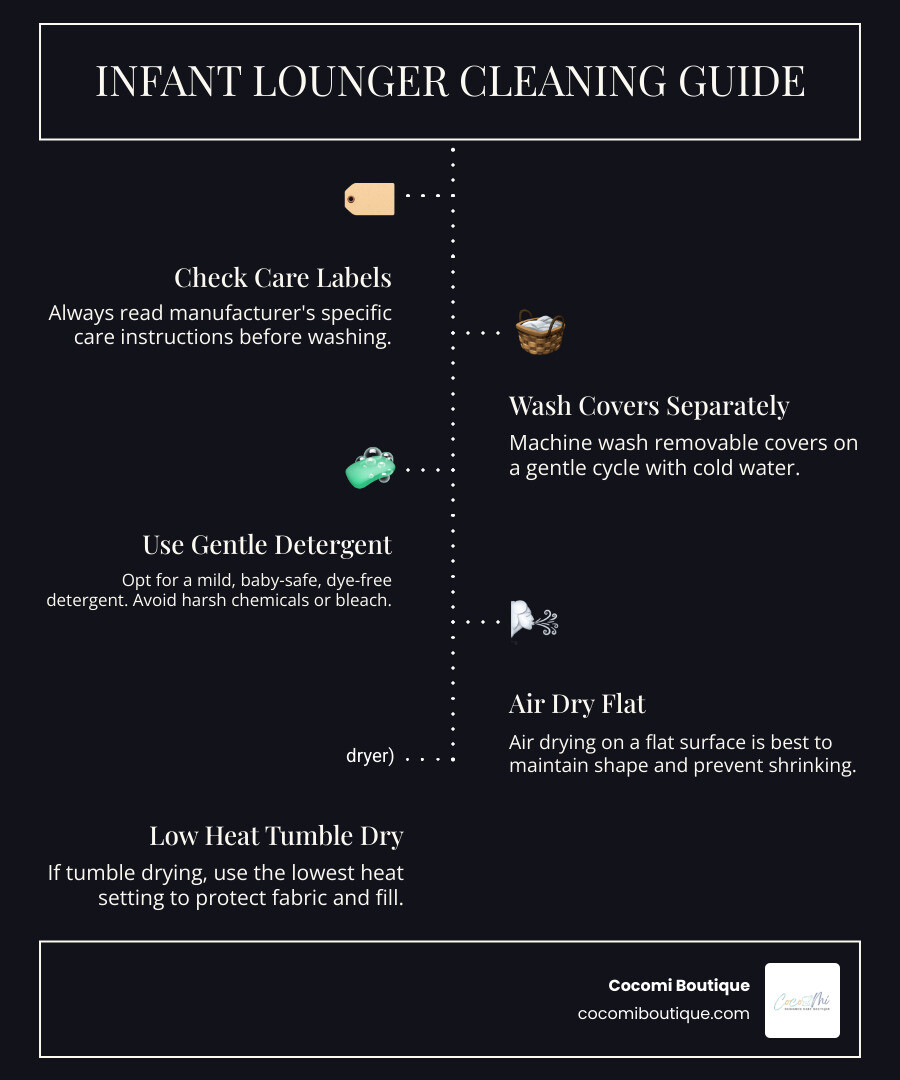
Your first stop should always be the care label and manufacturer's instructions—these are your roadmap to keeping the lounger in great condition. Most high-quality infant loungers feature removable, machine-washable covers, which is honestly a non-negotiable feature in our book. When it's time for a wash, use a gentle cycle with cold water to protect the fabric and maintain the cover's shape. Hot water can cause shrinking or damage those delicate organic materials we love so much.
Choose a mild, baby-safe, dye-free detergent to avoid irritating your baby's sensitive skin, and steer clear of harsh chemicals or bleach. Some manufacturers also recommend not pouring detergent directly onto the lounger. For drying, air drying on a flat surface is often the best option to help the cover retain its original shape and prevent shrinking. If you prefer using a dryer, stick to the lowest heat setting—high heat can damage both the fabric and the fill inside. Some parents find success with air drying until the cover is damp, then finishing it off in the dryer on low. And here's a pro tip: wash the cover by itself to prevent damage from zippers or buttons on other items.
Conclusion: The Perfect Cozy Companion for Your Baby
Choosing the right products for your baby can feel overwhelming, but we hope this guide has given you the confidence to make informed decisions about infant loungers. These cozy companions can truly transform those early months, offering you precious hands-free moments while providing your little one with a snug, secure spot for supervised play and bonding.
Throughout this guide, we've explored the wonderful benefits an infant lounger can bring to your daily routine—from its portability that lets you keep baby close as you move around the house, to the calming "hugging" sensation that soothes fussy moments, to providing gentle support during tummy time. When used correctly, these products can be incredibly valuable tools in your parenting journey.
But let's circle back to what matters most: safety is non-negotiable. An infant lounger is designed exclusively for supervised awake time. It's a place for play, interaction, and engagement—never for sleep. We can't stress this enough: if your baby dozes off in their lounger, gently move them immediately to a safe sleep space like a crib or bassinet. Always keep your baby within arm's reach, use the lounger only on firm, flat surfaces like the floor, and never place it inside cribs or use it for co-sleeping.
By choosing an infant lounger made from safe, breathable, non-toxic materials like organic cotton, and by following the manufacturer's age, weight, and developmental guidelines, you're making choices that prioritize your baby's well-being. Remember to transition out of the lounger as soon as your little one shows signs of rolling, pushing up, or crawling—typically around 9 months or earlier, depending on your baby's development.
At Cocomi Boutique, we understand that every choice you make for your baby comes from a place of love. Just as we carefully curate soft, stylish, and comfortable baby clothing that meets the highest standards, we want to empower you with knowledge to choose wisely for all aspects of your baby's comfort and safety. An infant lounger, when used with care and attention, can become a cherished part of those fleeting early months, giving your baby a cozy spot to observe the world while staying safe under your watchful eye.
Thank you for trusting us to guide you through this decision. We're here to support you every step of the way.
Explore our latest articles for more parenting tips and find how to create a nurturing, stylish environment where your little one can thrive.