

Why Breastfeeding Support Pillows Make Every Feeding Session Easier

Breastfeeding support pillows are specially shaped cushions designed to bring your baby up to breast height, so you don't have to hunch forward or strain your arms during feeding.
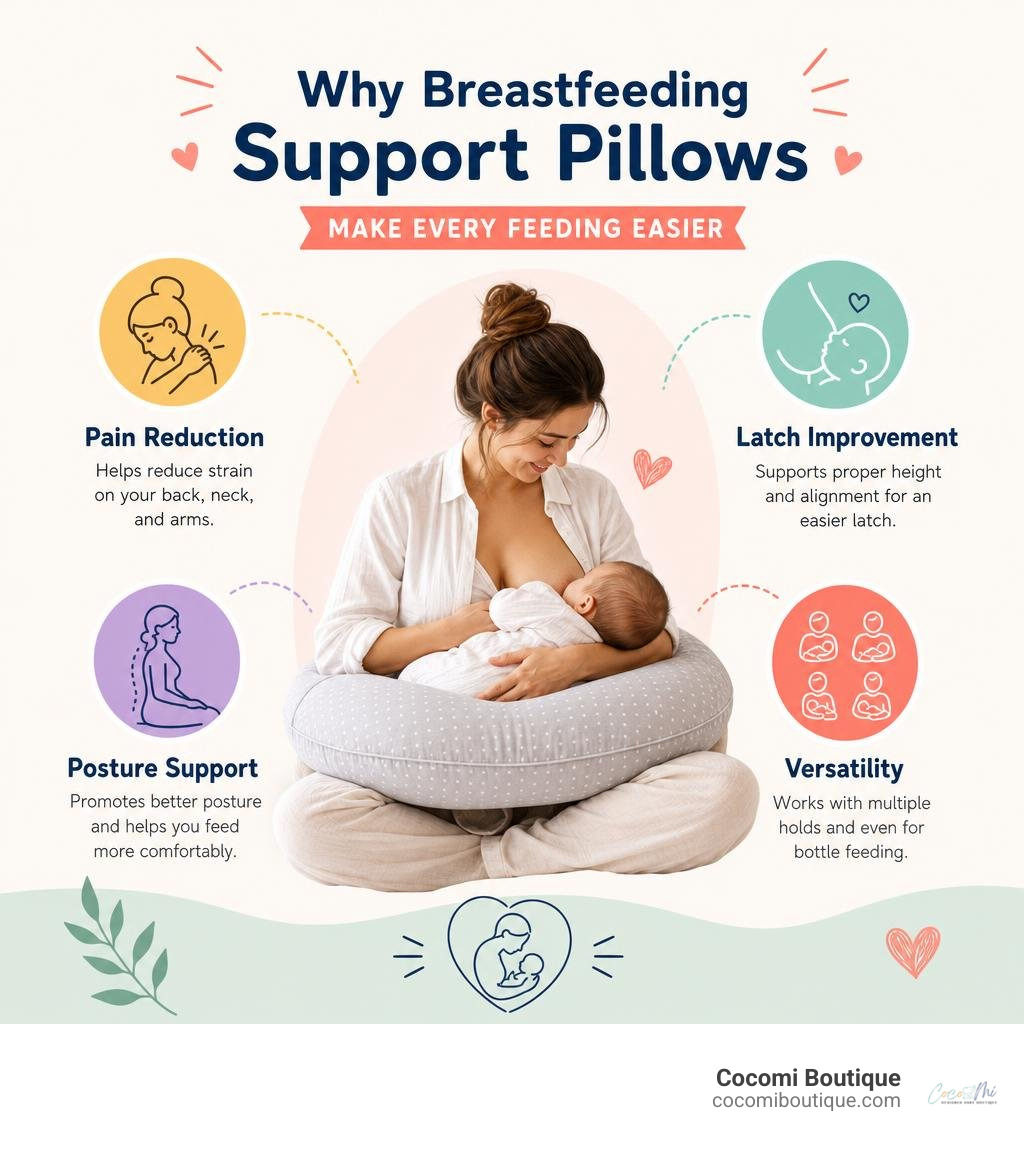
Here's a quick summary of why they matter:
- Reduce physical pain — up to 80% of mothers report posture-related discomfort while breastfeeding
- Improve latch — proper baby height and alignment makes it easier for your baby to feed effectively
- Protect your back, neck, and shoulders — by supporting your arms and baby's weight during feeds
- Useful across multiple holds — cradle, cross-cradle, football hold, and more
- Not just for breastfeeding — also support bottle feeding and bonding
Newborns feed up to 12 times a day. That's a lot of time spent in one position. Without proper support, the physical toll adds up fast — and research shows that 1 in 4 mothers has considered stopping breastfeeding because of pain or discomfort.
A good nursing pillow doesn't just make feeding more comfortable. It helps you stay consistent, relaxed, and present for those precious early months.
I'm Monika Jarog, and at Cocomi Boutique I've worked closely with handcrafted breastfeeding support pillows made from natural, chemical-free materials designed to meet the highest European safety standards. In this guide, I'll walk you through everything you need to know to choose and use the right pillow for you and your baby.
Understanding Breastfeeding Support Pillows and How They Differ from Regular Pillows
At first glance, you might wonder if a standard bed pillow or a throw cushion from your living room in Northbrook or Glenview could do the job. While household pillows are wonderful for sleeping, they are generally not designed to support the unique mechanics of infant feeding.
Standard pillows are soft, compressible, and prone to shifting. When you rest a newborn on a regular pillow, their heavy head sinks, causing them to roll inward or slide away from your body. To compensate, you will naturally find yourself hunching your shoulders, tensing your neck, and using your forearms to hold them in place.

A dedicated breastfeeding support pillow is engineered with a firm, stable core. It serves as a structured platform that wraps around your torso, filling the gap between your lap and your breasts. This elevated platform:
- Brings your baby directly to nipple height without requiring you to lean forward.
- Distributes your baby's weight evenly across your lap rather than placing the burden on your wrists, arms, and upper back.
- Maintains its shape over long, frequent feeding sessions, preventing the baby from slipping into awkward angles.
Choosing a specialized nursing pillow for newborn care is one of the most proactive steps you can take to prevent the cumulative muscle strain that so many new parents experience. By aligning your spine and supporting your baby's delicate body, you create a relaxed environment that naturally encourages a peaceful feeding experience.
How to Safely Position and Use Your Pillow for a Perfect Latch
Achieving a deep, pain-free latch is the cornerstone of a successful breastfeeding journey. However, a proper latch is highly dependent on how your baby's body is positioned relative to yours. If your baby has to twist their neck or reach upward to reach the nipple, the latch will likely be shallow and uncomfortable.
When using your support pillow, keep the "tummy-to-tummy" rule in mind. Your baby’s chest and belly should face your body directly, with their head, neck, and spine aligned in a straight line.
Here is how you can use a support pillow to facilitate the most common breastfeeding holds:
- The Cradle Hold: Position the pillow snugly around your waist. Rest your baby horizontally across the cushion, supporting their head and neck in the crook of your elbow on the side you are feeding from.
- The Cross-Cradle Hold: Similar to the cradle hold, but you use the opposite hand to support your baby’s head and neck. This hold offers superb control for newborns who are still learning to latch. The firm platform of the pillow supports the baby’s torso, freeing up your hand to guide their head gently.
- The Football (or Rugby) Hold: Tuck the pillow along your side, extending slightly behind you. Place your baby under your arm (like a football) with their body resting along the pillow and their feet pointing toward your back. This position is highly recommended for parents recovering from a C-section, as it keeps all weight off the abdominal area.
No matter which hold you prefer, safety must always come first. Never let your baby sleep on a nursing pillow. These cushions are designed strictly for awake, supervised feeding sessions. While you might also use specialized pregnancy support pillows for your own comfort during rest, your infant should always be transitioned to a flat, firm, dedicated sleep surface if they fall asleep after feeding.
The Key Benefits of Using a Nursing Pillow
The early weeks of parenthood are a beautiful blur, but they can also be physically exhausting. Investing in a high-quality nursing pillow provides immediate, tangible benefits for both you and your little one.

For parents, the primary benefit is ergonomic relief. When you consider that a newborn may nurse for 20 to 45 minutes per session, up to 12 times a day, the physical strain on your upper body is immense. A supportive cushion relieves pressure on your lower back, shoulders, and wrists. It also provides a comfortable resting place for your arms, which can significantly reduce the tension that leads to tension headaches and clogged milk ducts.
For your baby, a firm feeding cushion provides a stable, secure surface that prevents them from rolling or sliding. This stability makes it much easier for them to maintain a steady, deep latch without slipping off the breast. Additionally, keeping your baby slightly elevated during and immediately after a feed can help reduce common infant issues like spit-up, acid reflux, and painful gas.
To illustrate the difference a dedicated support system can make, let’s look at the data comparing feeding comfort levels:
| Feeding Setup | Perceived Postural Discomfort (Scale 0-10) | Key Physical Impact |
|---|---|---|
| No Pillow / Unassisted | 5.0 | Severe strain on neck, lower back, and wrists; high risk of slouching. |
| Generic / Household Pillows | 3.6 | Moderate shifting; requires constant manual readjustment during feeds. |
| Ergonomic Nursing Pillow | 0.45 | Minimal strain; baby is held securely at the correct height; relaxed shoulders. |
This dramatic reduction in discomfort highlights why so many lactation professionals consider a structured feeding pillow an essential registry item. It transforms feeding from a physically demanding chore into a comfortable, bonding experience.
Choosing the Right Design for Your Body and Feeding Style
Every parent's body is unique, and babies come in all shapes and sizes. Because of this, there is no single "perfect" nursing pillow for everyone. When selecting a pillow, you should consider your body type, your preferred feeding positions, and your lifestyle.
At Cocomi Boutique, we believe that what touches your baby's skin matters just as much as the physical support the pillow provides. When shopping, look for premium, safe materials. Opt for covers made from organic cotton or OEKO-TEX certified fabrics. These natural, chemical-free materials are exceptionally soft, breathable, and gentle on a newborn's sensitive skin, ensuring that your baby remains cool and comfortable during long, warm feeding sessions.
If you are looking for advanced ergonomic features, look for designs that offer specialized support. Some high-quality options feature a wide, memory foam cushion and an adjustable waist strap to ensure a secure fit.
Other customizable designs offer a unique convertible setup with an adjustable belt and a full-length bolster that can be modified as your feeding confidence grows.
For parents seeking scientifically backed support, look for innovative dual-density designs. These models often feature a firmer side designed specifically for newborns who need extra elevation, and a softer side for older babies, ensuring optimal support at every developmental stage.
U-Shaped vs. Wraparound Breastfeeding Support Pillows
When comparing the various styles on the market, you will generally choose between two primary shapes: U-shaped (C-shaped) pillows and wraparound pillows.
- U-Shaped Pillows: These classic, crescent-shaped cushions slide easily around your waist from the front. They are highly versatile, easy to position quickly, and can be used by multiple caregivers for bottle feeding. Because they don't have straps, they are incredibly convenient for quick setups.
- Wraparound Pillows: These pillows completely encircle your body and secure with a strap or buckle. They often feature built-in lumbar support to keep your back straight and a flat, firm top surface to prevent the baby from rolling inward.
A structured, secure wraparound design combined with a beautifully soft, organic cotton cover and a waterproof inner lining is excellent for protecting the core from spills while keeping your baby comfortable.
Selecting Breastfeeding Support Pillows for Plus-Size Parents, Twins, and Travel
If you have specific physical needs or a busy lifestyle, standard off-the-shelf pillows might require a bit of extra research to find the perfect fit:
- Plus-Size Parents: Look for adjustable wraparound pillows with generous strap extensions, or open U-shaped pillows that do not squeeze your sides too tightly. Many premium brands offer adjustable waistbands that comfortably accommodate a wide range of body shapes.
- Twin Feeding (Tandem Breastfeeding): Feeding two babies at once requires a spacious, extra-firm platform. Specialized twin nursing pillows are much wider and flatter, allowing you to position both babies in a double-football hold simultaneously.
- Travel and On-the-Go: If you frequently travel between Chicago, Glencoe, or Highland Park, a bulky nursing pillow can be difficult to pack. Look for compact, inflatable travel pillows or folding designs that fit easily into a diaper bag.
Frequently Asked Questions About Nursing Pillows
Are breastfeeding pillows absolutely necessary?
While they are highly recommended, they are not strictly mandatory. Every family's breastfeeding journey is unique. If you prefer to nurse in a reclined, laid-back position, or if you find that a rolled-up organic blanket or a firm sofa cushion provides adequate support, you may not need a commercial pillow. However, for those who nurse in upright positions, a dedicated pillow offers a level of stability and ergonomic relief that household items simply cannot replicate.
How do you clean and wash a nursing pillow?
Babies are wonderfully messy, so ease of cleaning is crucial. Always choose a pillow with a removable, machine-washable slipcover.
- The Cover: Zip off the cover and wash it in cold water on a gentle cycle using a mild, baby-safe detergent.
- The Core: Most foam or memory foam cores cannot be machine washed, as water can damage the structure. Spot clean the inner core with a damp cloth and mild soap, and allow it to air dry completely in a well-ventilated space out of direct sunlight.
What do lactation consultants say about the safest pillows?
Lactation consultants and safety organizations emphasize two critical rules, and parents can also review the American Academy of Pediatrics safe sleep guidance for trusted information on keeping infants safe during rest:
- Firmness is Key: A nursing pillow should be firm enough to support your baby's weight without sagging. If the pillow is too soft, the baby's face can sink into the fabric, presenting a safety risk or making it difficult for them to breathe comfortably while latching.
- Supervised Awake Time Only: Never use a nursing pillow as a sleep positioner, baby lounger, or propping device for an unattended infant. Always keep your eyes on your little one while they are on the pillow, and move them to a safe crib or bassinet if they drift off to sleep.
Conclusion
At Cocomi Boutique, we know that the early days of parenting are filled with beautiful moments, gentle cuddles, and a fair share of physical adjustments. Our mission is to make this transition as comfortable, elegant, and seamless as possible. By choosing high-quality, natural, and ergonomically supportive tools, you are investing in your own physical well-being and creating a peaceful space for your baby to thrive.
If you are looking to create the ultimate cozy environment for your newborn's rest and feeding times, we invite you to explore our curated selection of premium, handcrafted essentials. From our signature organic swaddles to our beautifully designed nest-sleep-pillow collection, we are here to support your family with European-quality craftsmanship and chemical-free materials. Visually elegant and wonderfully soft, our boutique items make the perfect addition to your nursery or a thoughtful gift for someone you love. Use our guide to choose the perfect support pillow, take a deep breath, and enjoy these beautiful bonding moments with your little one.