

Bamboo Muslin Squares: Soft, Useful Essentials for Every Day

Bamboo muslin squares are lightweight, absorbent cloths for everyday baby care. Use them to catch milk during burping, wipe dribbles and spills, cover a shoulder while feeding, line a changing surface, or offer light coverage in the stroller. A common 70 x 70 cm size gives useful coverage without taking up much room in a changing bag.
Made with an open muslin weave, bamboo versions are valued for their smooth feel, breathability, and ability to manage moisture. They can be a thoughtful choice for newborns and babies with delicate skin, especially when the fabric is independently tested for harmful substances, such as through OEKO-TEX Standard 100 certification.
At CocoMi Baby Boutique, we believe the small essentials should feel as considered as the nursery itself: naturally soft materials, chemical-free fabrics, elegant design, and safety-first quality for little ones.
This guide will help you choose bamboo muslin squares that suit newborn skin, daily messes, and a beautifully prepared nursery, built around comfort, safety, and natural materials.
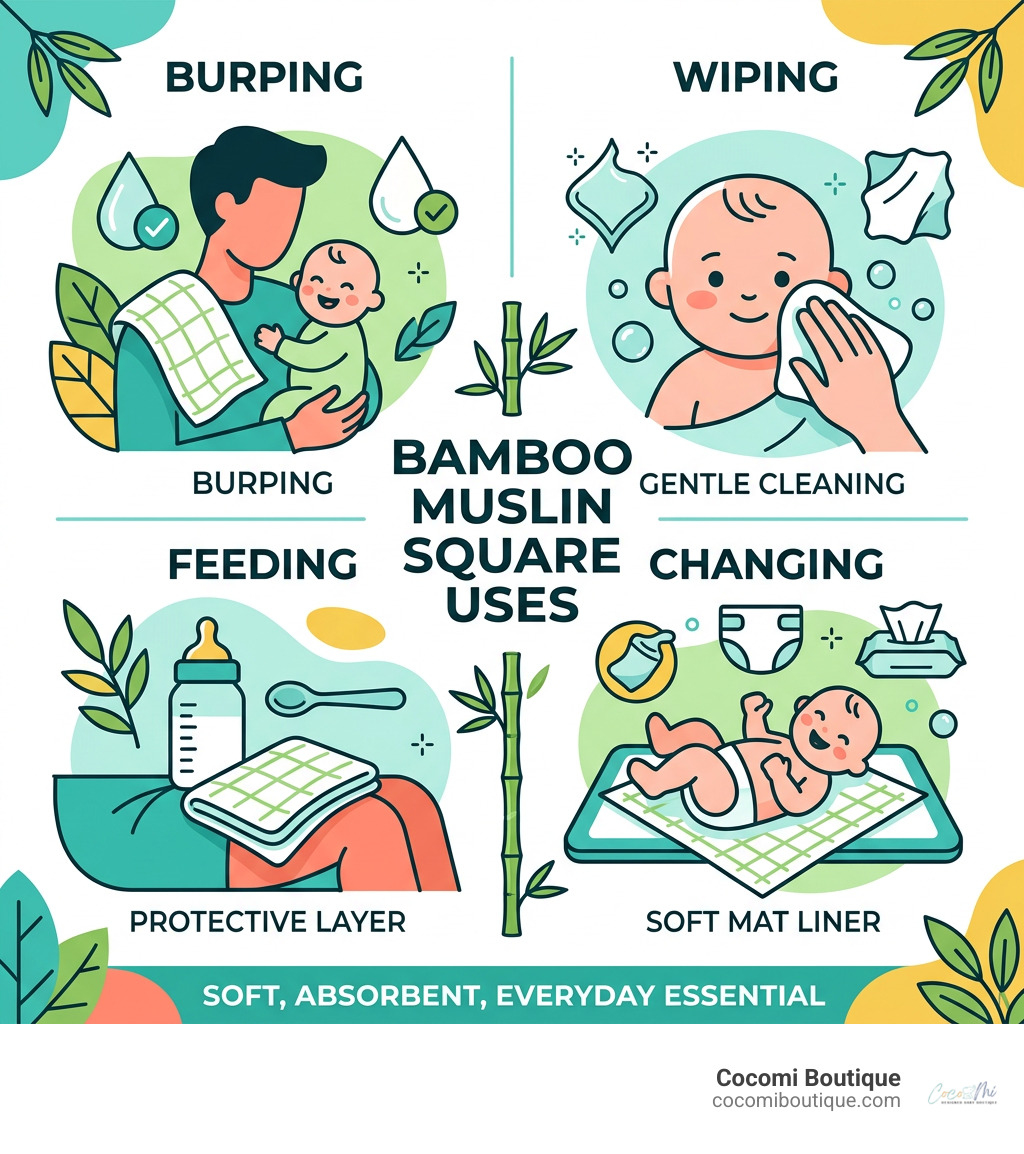
Easy bamboo muslin squares glossary:
Why Modern Parents Choose Bamboo Muslin Squares
Welcoming a newborn means navigating a world of constant feeds, sudden spit-ups, and endless laundry cycles. Amid these fleeting, joyful moments, parents quickly realize that standard textiles can feel rough against delicate newborn skin. This is why natural bamboo textiles have become a staple in modern nurseries. Understanding how the fine muslin fabric weave creates a gentle, breathable lattice helps explain why this material performs so reliably for everyday care.
The open plain-weave structure permits natural airflow while the silky bamboo fibers provide an exceptionally supple texture. Unlike heavy cloths that trap heat or coarse fabrics that rub against sensitive cheeks, bamboo muslin delivers lightweight breathability and cloud-like softness. Whether you need a quick spill catcher or a discreet nursing drape, these squares combine practicality with timeless nursery elegance.
Everyday Nursery and On-the-Go Practical Uses
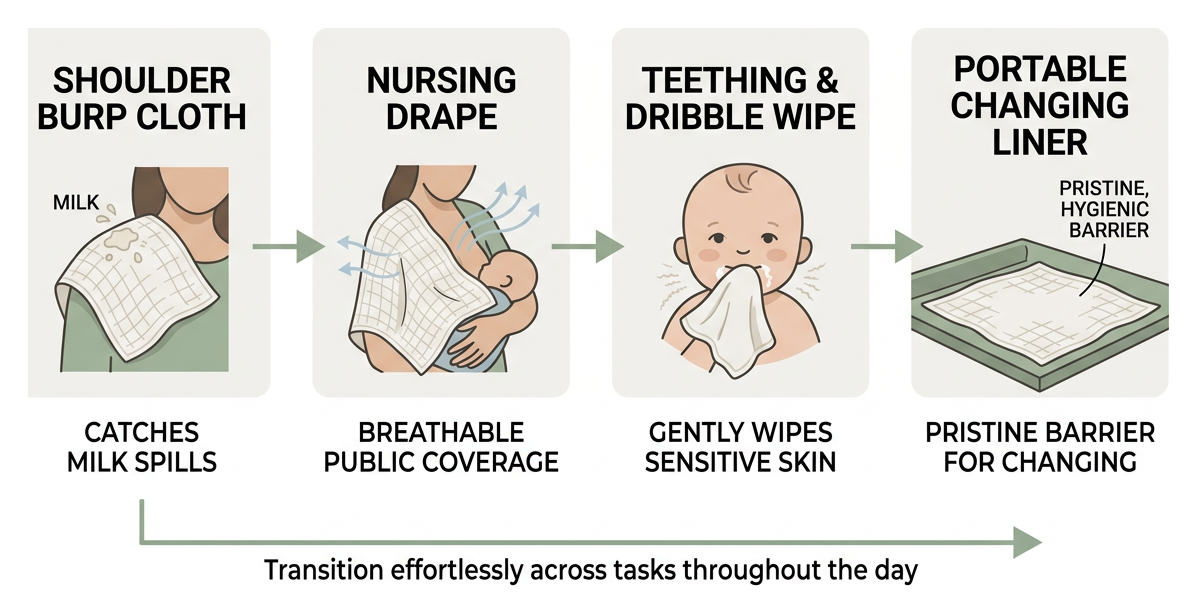
A well-crafted muslin square is truly an indispensable multi-use item in any baby bag. When you invest in premium muslin burp cloths, you discover that a single piece of cloth can effortlessly transition across multiple parenting tasks throughout the day:
- Shoulder Burp Cloth: Drapes easily over your clothing to catch milk spills and protect your outfits during post-feed burping sessions.
- Nursing Drape: Provides lightweight, breathable coverage during public nursing moments without trapping excess warmth around your baby.
- Teething & Dribble Wipe: Soft enough to wipe sensitive gums, milk dribbles, and sticky fingers repeatedly without causing redness.
- Stroller Sunshade: Acts as a quick, airy shield against light breezes or direct sun when strolling through the neighborhood.
- Portable Changing Liner: Creates a pristine, hygienic barrier between public changing stations and your baby's delicate skin.
Key Benefits of Bamboo Muslin Squares for Newborn Skin
Newborn skin is up to 30% thinner than adult skin, making it prone to chafing, contact dermatitis, and heat rash. Bamboo fabric offers intrinsic botanical benefits that make it uniquely suited for infant wellness:
- Naturally Hypoallergenic: The round, non-abrasive fibers glide smoothly over the skin's surface, minimizing friction and soothing sensitive skin.
- Antibacterial & Odor-Resistant: Natural bamboo contains bio-agents that help resist bacteria buildup, keeping cloths fresh even after catching sudden spit-ups.
- Moisture-Wicking Micro-Gaps: The cross-section of bamboo fiber is filled with microscopic micro-gaps, enabling it to absorb liquid up to four times faster than conventional textiles.
- Thermal Regulation: Bamboo fibers naturally breathe, adjusting to ambient temperatures to help keep your baby cool during summer outings and comfortable during cooler evenings.
Bamboo vs. Cotton Muslin: A Side-by-Side Comparison
When selecting nursery essentials, parents often weigh the differences between traditional cotton and innovative bamboo. While pure cotton burp cloths boast high satisfaction ratings—often holding a strong 4.8 out of 5 satisfaction rating benchmark from thousands of parents—modern bamboo offers distinctive sensory and performance advantages. Exploring the nuances of bamboo vs cotton muslin allows parents to make an informed choice tailored to their lifestyle.
| Feature | 100% Bamboo Muslin | 100% Cotton Muslin |
|---|---|---|
| Texture & Hand Feel | Silky, fluid, cashmere-like drape | Crisp, textured, soft after multiple washes |
| Liquid Absorbency | Exceptional (absorbs 3–4x its weight quickly) | Good, reliable everyday absorbency |
| Breathability | Maximum airflow via micro-porous fibers | High breathability with open lattice weave |
| Environmental Footprint | Low water demand, fast-growing crop | Higher water usage during agricultural growth |
| Skin Sensitivity | Ultra-gentle; ideal for eczema-prone skin | Gentle; highly favored when certified organic |
| Durability & Care | Requires gentle washing at 30°C | Highly resilient to frequent high-heat cycles |
Absorbency, Breathability, and Texture
The microscopic structure of bamboo rayon fibers features natural micro-gaps and micro-holes. This capillary structure acts like a natural sponge, instantly pulling moisture away from surfaces. When a baby experiences sudden spit-up, a bamboo muslin absorbs the fluid immediately rather than allowing it to run off the fabric onto your clothing.
Beyond absorbency, the physical texture of bamboo is noticeably smoother than cotton. Cotton fibers have natural twists that create a structured, slightly textured weave, whereas bamboo fibers are round and smooth. This creates a silk-like hand feel that eliminates abrasive friction against delicate newborn skin.
Sustainability and Environmental Impact
As conscious parenting continues to shape modern nurseries, the environmental footprint of baby essentials has become a top consideration. Bamboo is an exceptionally sustainable, fast-growing grass that regenerates naturally after harvesting without requiring replanting.
Crucially, bamboo fabric relies on a third less water than cotton in production. Cultivated without the need for synthetic chemical pesticides or fertilizers, bamboo promotes soil health and supports a cleaner manufacturing footprint. Choosing premium bamboo squares allows families to embrace an eco-conscious lifestyle while surrounding their little one in pure, natural luxury.
Practical Buying Guide: Sizes, Layers, and Safety Standards

Selecting the right textiles involves balancing fabric weight, dimensions, and manufacturing safety. In addition to compact wiping cloths, many parents also complement their nursery collection with larger bamboo muslin blankets for swaddling and restful sleep. For daily care and burping, standard multi-layered squares offer the perfect balance of portability and protective coverage.
Essential Dimensions and Multi-Pack Options
- 70 x 70 cm (Standard Muslin Square): The gold standard for multi-use care. This size is large enough to drape securely over an adult shoulder or wrap around a baby's chest during feeding, yet compact enough to fold into a small diaper bag pocket.
- Multi-Layer Construction: Selecting squares with dual-layer or four-layer weaves ensures optimal absorbency without adding unnecessary bulk or stiffness.
- Multi-Packs for Daily Convenience: Newborns go through several squares a day. Having packs of 3, 5, or 8 ensures you always have a fresh, clean cloth ready while others are in the wash, making multi-packs an essential choice to build a dependable rotation.
Certification and Fabric Safety Standards
Because baby cloths frequently touch your infant's mouth, eyes, and skin, verifying textile safety standards is essential. Look for products with independent certifications such as OEKO-TEX Standard 100 or GOTS-certified organic status.
Choosing OEKO-TEX certified baby swaddles and muslins guarantees that the fabric has been rigorously tested against hundreds of harmful substances, including heavy metals, toxic finishes, and allergenic azo dyes. European safety standards ensure that the textiles touching your newborn's skin are completely non-toxic, chemical-free, and safe.
Best Practices for Longevity and Softness
Proper care ensures that your bamboo textiles maintain their silky drape, structural integrity, and absorbency over months of frequent laundering.
How to Wash and Care for Bamboo Muslin Squares
Bamboo is a gentle, natural fiber that responds best to mindful laundering practices. Follow this simple routine to preserve your cloths:
- Machine Wash Cold or Delicate (Up to 30°C): Use a gentle cycle to safeguard the delicate open-weave fibers from unnecessary tension.
- Choose Eco-Friendly, Mild Detergent: Protect delicate fibers and sensitive skin by using gentle, plant-based detergents free from harsh enzymes or synthetic fragrances.
- Skip Fabric Softeners and Bleach: Chemical fabric softeners coat the natural fibers with a waxy residue that significantly diminishes absorbency. Bamboo naturally becomes softer on its own without chemical additives.
- Air Dry or Tumble Dry on Low Heat: Hang your cloths to line-dry in natural sunlight, or tumble dry on the lowest heat setting to prevent fiber shrinkage.
- No Ironing Needed: The relaxed, crinkled texture of muslin is part of its natural charm and enhances its absorbency.
Frequently Asked Questions About Muslin Squares
Do bamboo cloths become softer after washing?
Yes. Bamboo muslin fibers undergo a natural "bloom" during the laundering process. With each gentle wash cycle, the woven threads relax and expand slightly, increasing both the cloud-like softness and the overall absorbency of the fabric over time.
Are bamboo squares safe for babies with eczema?
Bamboo is one of the most recommended textiles for babies prone to eczema, cradle cap, or contact dermatitis. Its round, non-abrasive fiber profile minimizes skin friction, while its natural breathability prevents sweat accumulation that often triggers skin flare-ups.
How many squares does a newborn realistically need?
Most parents find that having 8 to 12 muslin squares provides a comfortable daily rotation. This allows you to keep a couple in the nursery, several in the living area, and a few in your diaper bag, while still having clean spares during laundry days.
Conclusion
Creating a safe, calming, and elegant nursery starts with the essentials you reach for every single day. Bamboo muslin squares bring together the best of all worlds: whisper-soft texture for delicate newborn skin, outstanding everyday absorbency, and an eco-conscious profile that honors our planet.
At CocoMi Baby Boutique, we craft beautiful, safe essentials designed by parents who understand the value of pure, natural materials. Explore our full collection of handcrafted baby nests, swaddles, and nursery textiles at CocoMi Baby Boutique and surround your little one in gentle, European-standard luxury.