

Why Baby Bath Essentials Matter for New Parents
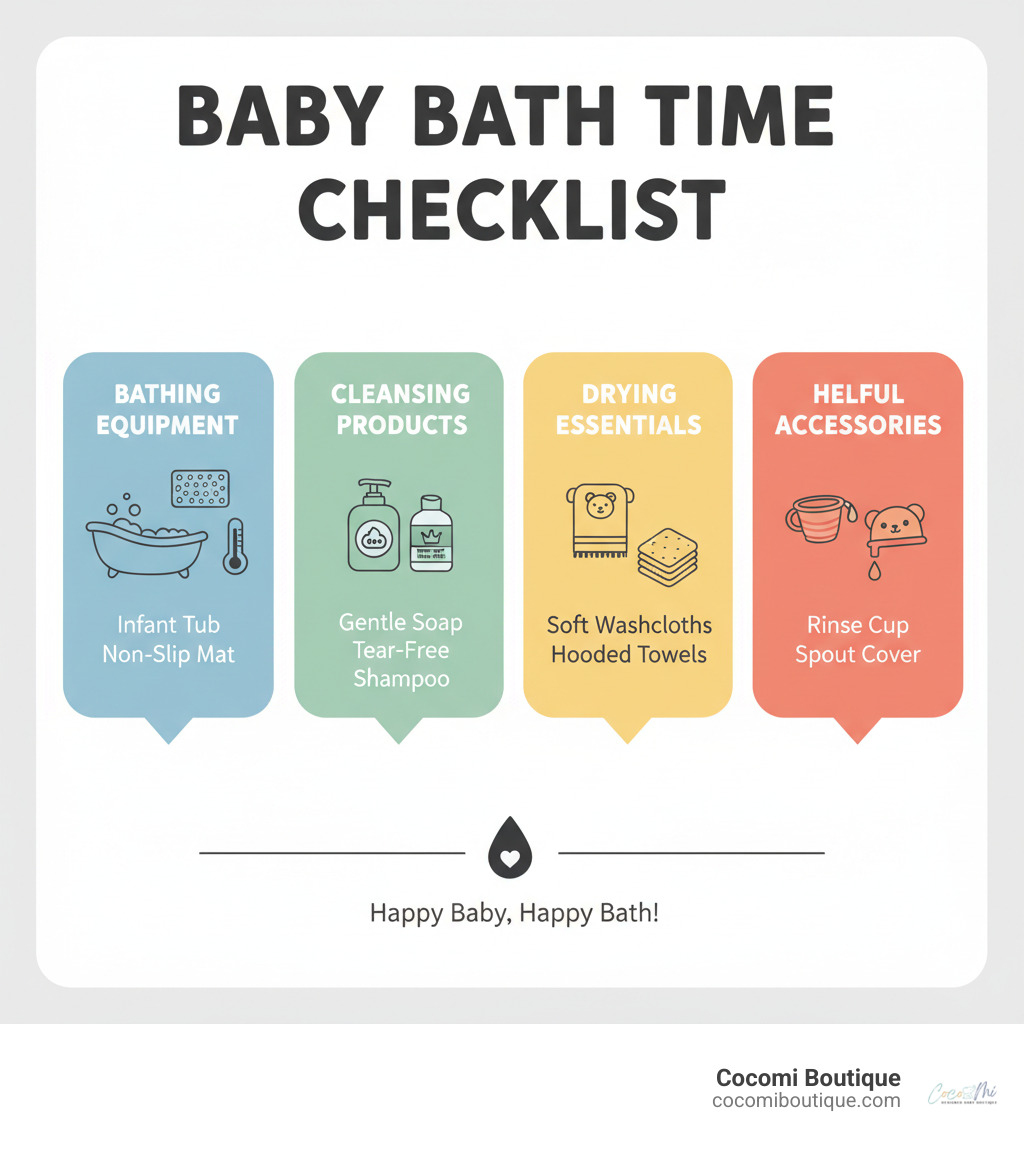
Baby bath essentials are the key items you need to make bath time safe, comfortable, and enjoyable for your little one. Here's what every parent should have:
Core Baby Bath Essentials:
- Baby bathtub – A small, supportive tub designed for infants
- Gentle baby wash and shampoo – Tear-free, fragrance-free formulas for sensitive skin
- Soft washcloths – Made from cotton or bamboo for gentle cleaning
- Hooded towel – Keeps baby warm and dry after bath time
- Bath thermometer – Ensures water stays at a safe 100°F (38°C)
- Non-slip bath mat – Prevents accidents and keeps baby secure
- Rinse cup – Helps wash away soap without getting water in baby's eyes
There's nothing more relaxing than a soak in the tub—except maybe when you’re bathing your slippery baby, which can prove more nerve-wracking than relaxing at first. Bath time can be a delightful experience filled with splashing, giggling, and precious bonding moments, but many new parents feel overwhelmed by all the products and safety considerations.
The good news? You don't need every gadget on the market. With the right baby bath essentials and a little practice, you'll quickly transform bath time from a source of anxiety into a cherished daily ritual. Whether you're preparing for your newborn's first bath or looking to upgrade your current setup, understanding what you truly need makes all the difference.
As Monika Jarog, I've spent years helping parents find high-quality, thoughtfully designed baby bath essentials that combine safety with comfort and style. My experience crafting handmade baby products from natural, chemical-free materials has taught me exactly what matters most when it comes to creating a safe and soothing bath experience.
Common baby bath essentials vocab:
Your Complete Checklist of Baby Bath Essentials
Bath time is one of those magical moments that brings joy to everyone involved—mom, dad, and especially baby! It's more than just getting clean; it's about creating a special bonding routine that you'll both look forward to each day. Of course, to make those splashy moments safe and comfortable, you'll need the right baby bath essentials on hand. With a thoughtfully curated collection of items, you can transform bath time into a fun, relaxing experience where your little one stays safe and cozy while you get them squeaky clean.
Choosing the Right Tub: Your First Baby Bath Essential
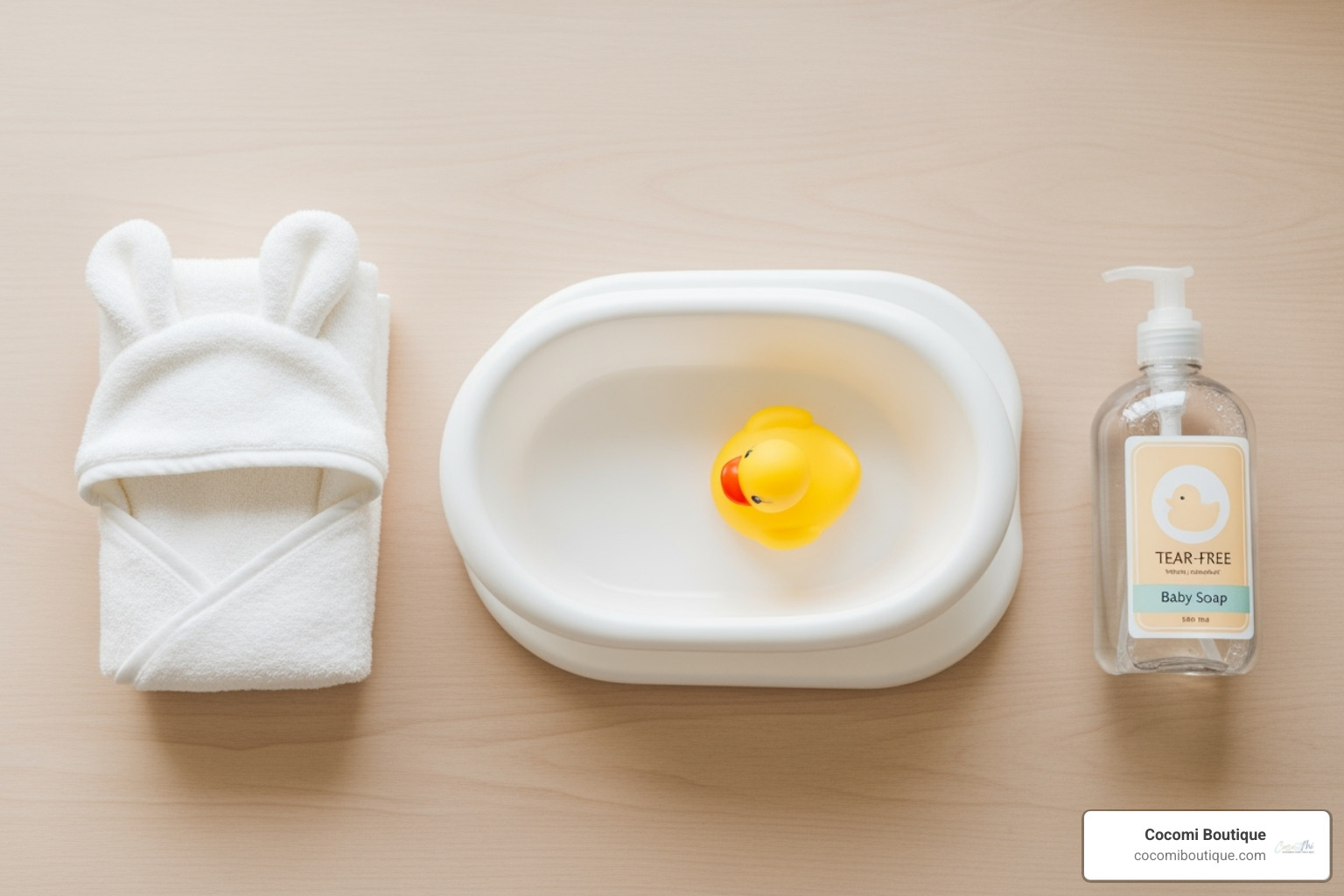
Selecting the right baby bathtub is truly one of your most important decisions when it comes to baby bath essentials. Your little one's safety comes first, and the right tub makes all the difference in creating a secure bathing environment.
Newborn tubs are specifically designed to cradle your tiniest tot in a semi-reclined position, providing crucial head and neck support when baby can't hold their head up independently yet. Many come with soft slings or inserts that make bathing a slippery newborn so much easier and safer. Most parents find these indispensable for those first few months. Plus, these smaller tubs help you save water—no need to fill a massive tub for such a tiny person!
As your baby grows stronger and gains better head control, you can transition to tubs designed for older babies that allow them to sit up. Many of these feature a molded seat or non-slip surface to prevent sliding. A good bath mat can also help keep your increasingly wiggly baby from moving around too much.
Sink inserts offer a simpler, more portable solution that fits directly into your kitchen sink. They're fantastic space-savers and can be easier on your back since you're working at counter height instead of bending over a bathtub.
Convertible tubs are the multitaskers of the baby bath world. They grow with your child, featuring removable slings for newborns that you can take out later to create a larger, more open space for older infants and toddlers. These can be a smart investment, providing utility for a much longer period.
Whatever type you choose, always prioritize non-slip surfaces or inserts. These prevent accidental slips and give you peace of mind that baby won't slide around. The water-saving benefit of infant tubs is another bonus—they require far less water than filling a regular bathtub, which is better for both the environment and your water bill.
Some parents wonder if a dedicated baby tub is really necessary, especially since it might only be used for a few months. While many families find them invaluable, others prefer using a bath support or bath seat in an adult tub, or even a washing-up bowl. Choose whatever feels safest and most comfortable for you and your baby—there's no single right answer.
Gentle Soaps and Shampoos: Skincare Baby Bath Essentials
Your baby's delicate skin deserves the gentlest care possible. Unlike adult skin, baby skin is thinner and more easily irritated by harsh chemicals, fragrances, and dyes. That's why choosing the right cleansing products is so important.
Always look for products specifically formulated for babies, especially those labeled for sensitive skin. These are typically much milder and designed to protect your baby's natural skin barrier. Hypoallergenic formulas are your friend here—they're less likely to cause allergic reactions or irritation.
While those sweet-smelling baby products are tempting (who doesn't love that classic baby scent?), fragrance-free formulas are often the safer choice. Artificial fragrances can be irritating to delicate skin, which is why pediatricians frequently recommend fragrance-free options.
Tear-free products are an absolute must-have! Bath time should be filled with giggles, not tears from stinging eyes. Tear-free formulas are specially pH-balanced to match your baby's natural eye pH, making them gentle if any soap accidentally gets in those precious eyes. In fact, the ideal baby bath products should have a pH balance between 5.5 and 7.0 to match infant skin, helping maintain its natural protective layer.
When selecting products, make sure they're free from potentially harmful chemicals like phthalates, parabens, and 1,4-dioxane. These can be harsh or even harmful to your baby's developing skin. When in doubt, consult your pediatrician—they can recommend products that are clinically proven to be gentle on sensitive skin.
Soft Washcloths and Cozy Hooded Towels
After a warm, soothing bath, wrapping your baby in something soft and absorbent is essential for keeping them comfortable and warm. The right washcloths and towels make this transition from bath to cuddles seamless.
For washcloths, choose gentle materials like 100% cotton or bamboo. These natural fibers are wonderfully soft against your baby's delicate skin. A helpful tip: warm washcloths slightly before use to improve comfort, especially when wiping baby's face.
Absorbency matters more than you might think. Good washcloths and towels should quickly absorb water so you can dry your baby without excessive rubbing, which can irritate sensitive skin.
Hooded towels are one of those baby items that truly deserve their place in your baby bath essentials collection. Since humans lose most of our body heat through our heads, these clever towels help keep babies warm after bath time is over. They're also incredibly convenient for drying baby's hair. The cozy hood keeps their head warm and dry, preventing chills—which is especially important for newborns who can't regulate their body temperature as well as older babies.
Look for towels that are durable enough to withstand many washes and generously sized to fully wrap around your growing baby. You want something that will last through countless bath times and still feel soft and luxurious.
At Cocomi Boutique, we understand how important soft, stylish, and comfortable baby essentials are to you and your little one. Our commitment to quality and care extends to every item we curate, ensuring a delightful experience for both parent and baby. You can explore more about choosing the perfect towel for your little one in our helpful guides: From Bath to Bliss: Finding the Best Baby Towel for Your Little Sprout and Bamboo Bliss: Discover the Perfect Towel for Your Baby's Bath Time.
Helpful Accessories for a Smoother Bath
Beyond the basic tub, soap, and towels, a few thoughtfully chosen accessories can transform bath time from functional to truly enjoyable for everyone involved.
Helpful accessories that make bath time easier:
- Rinse cup – A specially designed cup with a soft edge or flexible rim helps you rinse your baby's hair without getting water and suds in their eyes and ears, which keeps everyone happier
- Bath thermometer – This small but mighty tool ensures the water is at the perfect temperature, preventing accidental scalding or chilling; many are designed as fun floating toys that do double duty
- Spout cover – If you're using a regular tub, a soft spout cover protects your baby from bumps and scrapes on the hard faucet
- Bath kneeler for parents – This one's more for you than baby, but a soft bath kneeler and elbow rest pad can save your knees and back from discomfort while you lean over the tub during those longer bath sessions
These accessories might seem like small additions, but they make a real difference in creating a smooth, stress-free bath time routine that you'll actually look forward to each day.
Mastering the Bath: Safety and Technique
Let's be honest—that first baby bath can feel like you're handling the world's most precious, slippery fish. But here's the good news: with a little practice and the right safety measures, bath time transforms from nerve-wracking to absolutely delightful.
The golden rule? Your undivided attention is non-negotiable. Bath time isn't the moment to check your phone or grab that forgotten washcloth from the other room. Keep one hand on your baby at all times, maintaining that secure hold that gives both of you confidence.

The First Few Washes: Sponge Baths for Newborns
Your newborn's very first baths won't actually be baths at all—they'll be gentle sponge baths. The American Academy of Pediatrics recommends sticking with sponge baths until that umbilical cord stump falls off, which usually takes a week or two.
Umbilical cord stump care is simple but important. Keeping the area dry helps prevent infection and allows it to heal naturally. This means no submerging your little one in water just yet, no matter how adorable those bath photos might be.
How to give a sponge bath is easier than you might think. Start by choosing a warm room—you don't want your naked baby getting chilly. Lay out a soft towel or blanket on a flat, safe surface like your changing table or even the floor. Gather everything you need before you begin: a basin of warm water, a soft washcloth, mild baby soap (though you can skip soap for the face), a fresh diaper, and clean clothes.
Keep your baby mostly wrapped during the sponge bath, only exposing the part you're currently washing. This is key for keeping baby warm and comfortable. Start with the face, using just water—no soap—and gently wipe from the inside corner of each eye outward. Then move to the rest of the body, paying special attention to those adorable creases under the arms, behind the ears, around the neck, and in the diaper area where milk and moisture can hide.
Pat your baby dry immediately and get them dressed. A wet baby loses body heat quickly, so speed matters here.
It's worth noting that bathing your baby too much can dry out their skin, so three times a week is often plenty until your little one starts crawling and getting genuinely dirty.
Getting the Water Just Right
Temperature and depth aren't just details—they're critical safety factors that make or break a good bath experience.
The ideal water temperature sits right around 100°F (38°C). Before your baby touches the water, test it with your wrist or elbow—it should feel comfortably warm, never hot. A bath thermometer from your baby bath essentials kit takes the guesswork out of this step entirely.
For water depth, think shallow. About 2 inches (5 centimeters) of water is perfect. That's enough to keep your baby warm and get them clean, but not so much that it poses any risk. Babies can drown in surprisingly little water, so less is definitely more here.
Preventing scalding starts before bath time even begins. Set your water heater thermostat to below 120°F (49°C). This simple adjustment protects not just your baby, but everyone in your household from accidental burns. Even if you're carefully mixing the water, a safety buffer at the source gives you peace of mind.
Key Safety Precautions for Every Bath
Some safety rules bear repeating, because they're that important. Never leave your baby alone in the bathtub—not for a second, not for anything. If the doorbell rings or you suddenly remember you left the stove on, wrap your baby in a towel and take them with you. No exception is worth the risk.
Always keep one hand on your baby throughout the entire bath. Babies are slippery when wet (hence that fish comparison earlier), and even older babies who can sit up can lose their balance. Your steadying hand provides security and prevents scary moments.
Gather all your supplies beforehand—and we mean everything. Your soap, shampoo, washcloths, rinse cup, hooded towel, fresh diaper, and clean clothes should all be within arm's reach before you start running water. If it's not there when you begin, you won't be able to get it mid-bath without compromising safety.
A non-slip bath mat is essential once you transition to a regular tub. Those suction cups on the bottom aren't just decorative—they keep the mat firmly in place so your baby has a stable surface.
For more comprehensive information on keeping bath time safe and enjoyable, the Mayo Clinic offers expert guidance on baby bath basics that covers everything from technique to troubleshooting common concerns.
With these safety measures in place, you're ready to make bath time the joyful, bonding experience it's meant to be.
From Splashes to Smiles: Making Bath Time Fun
Once your baby is comfortable with bathing, it's time to transform those simple washes into moments of pure joy. Bath time offers a wonderful opportunity for playful engagement and creates a rich sensory experience that your little one will look forward to each day.

Engaging and Safe Bath Toys
Bath toys are more than just fun additions to your baby bath essentials—they're tiny teachers disguised as playthings. Your little one will absolutely love splashing about in the water and playing with colorful companions floating around them.
The developmental benefits are real. When your baby reaches for a floating boat, they're building hand-eye coordination. Those adorable rubber duckies encourage grasping and tracking skills. Water squirters help develop fine motor control as tiny fingers learn to squeeze and aim. Every giggle and splash is building important skills.
Classic choices like rubber duckies, floating boats, and gentle squirters remain bath time favorites for good reason—they're simple, engaging, and perfectly sized for little hands. Look for toys in bright colors that catch your baby's attention and are easy to grip, even when wet and slippery.
Here's the practical part: choose toys that are easy to clean. Bath toys can harbor mold and mildew if they don't dry properly, so opt for toys made from safe, non-toxic materials that you can clean thoroughly and allow to dry completely between baths. Simple designs without small holes work best.
When to Graduate to the Big Tub
The move from a cozy baby bathtub to the family's regular tub is an exciting milestone—for both of you! This transition marks your baby's growing independence and confidence in the water.
The key sign your baby is ready? Sitting up unaided with good control. When your little one can sit independently and maintain balance while playing and moving, they're ready for more space. This typically happens around 6 months of age, though every baby develops at their own pace. We generally recommend using specialized baby baths for approximately 6 months, or until your baby demonstrates solid body control while sitting.
Making the transition smooth starts with preparation. Place a non-slip mat firmly on the bottom of your regular tub—this is non-negotiable. Fill the tub with just 2-3 inches of water, enough to cover their bottom but not overwhelming in the larger space. Many parents find that a bath seat or support helps their baby feel secure during those first few big-tub experiences, providing stability while they adjust to their new bathing environment.
Keep familiar bath toys within reach to make the bigger tub feel less intimidating and more like an adventure. And remember, even though your baby is sitting independently, you still need to stay within arm's reach and provide constant supervision. The rules of bath safety never change, regardless of tub size.
Beyond the Bath: Potty Training Prep
While we're talking about the bathroom, let's touch on something that might seem far off but arrives sooner than you'd think. The bathroom routine you establish now naturally sets the stage for potty training later.
Familiarizing your child with the entire bathroom routine—including where the potty lives—makes that eventual transition less intimidating. Bath time provides natural opportunities to introduce the concept of the toilet in a relaxed, pressure-free setting.
When the time comes, look for a potty with comfortable design features. Something colorful, appropriately sized, and inviting will encourage your child to use it. Step stools also become invaluable, helping your toddler reach the sink independently and fostering that wonderful sense of autonomy that makes children so proud.
These small introductions during regular bath time create familiarity and comfort with the bathroom environment, making future milestones feel like natural next steps rather than daunting changes.
Frequently Asked Questions About Baby Baths
Bath time questions are something we hear all the time from parents—whether they're in Northbrook, IL, Chicago, IL, or neighboring communities like Deerfield, IL, and Riverwoods, IL. You're not alone in wondering about the best approach! Here are the most common questions we get about baby bath essentials and bathing routines.
How often should I bathe my newborn?
Here's some good news: you don't need to give your newborn a bath every day. In fact, three times a week is usually plenty until your baby starts crawling and getting into everything. Bathing too frequently can actually dry out your baby's delicate skin, which is the last thing we want.
Between those bath days, you can keep your little one fresh by cleaning their face, neck, and diaper area with a wet washcloth. Pay special attention to those adorable little folds of skin—around the thighs, groin, armpits, and under the chin—where milk, drool, and general baby business tends to accumulate. A quick wipe-down in these areas keeps them comfortable and prevents irritation.
As your baby becomes more mobile and starts exploring the world (and getting messier in the process), you might find yourself increasing bath frequency naturally. Just remember to watch for signs of dry skin and adjust accordingly.
Is it better to bathe my baby in the morning or at night?
This is entirely your call! The best time to bathe your baby is whenever it works for your family's schedule and when you won't feel rushed or interrupted.
Some parents love morning baths because their babies are alert, playful, and ready to engage. It can be an energizing way to start the day with some quality bonding time. Plus, there's something delightful about a freshly bathed baby in the morning.
On the other hand, many families prefer making bath time part of their calming bedtime ritual. A warm bath can help your little one relax and wind down, signaling that it's time to transition to sleep. The predictability of this routine often helps babies settle more easily at night.
One timing tip: if you've just fed your baby, consider waiting a bit before bath time. Let their tummy settle first to keep them comfortable and prevent any spit-up situations in the tub.
What's the best way to hold a newborn in the tub?
Getting the hold right is crucial for both safety and helping your baby feel secure in the water. A confident, secure hold will calm your nerves and your baby's.
Use your nondominant arm to support your baby's head and neck—this is your anchor hand and stays in position throughout the bath. With your other hand, hold and guide your baby's body into the water, always feet first. This gradual entry helps them adjust to the temperature and prevents startling.
Once your baby is in the water, continue supporting their head and back with that anchor arm. Many parents find it helpful to reach behind their baby and hold onto their opposite arm throughout the bath. This technique gives you a really secure grip while keeping their head safely above water.
It might feel awkward the first few times, but you'll quickly develop muscle memory. Soon, you'll be bathing your little one with confidence, and they'll relax into the routine, trusting your steady hands.
Conclusion: Creating Cherished Bath Time Memories
Bath time is so much more than getting your baby clean—it's a precious opportunity to bond, to watch your little one explore their senses, and to create memories that will warm your heart for years to come. Those early days when you're nervously cradling your slippery newborn? They quickly give way to joyful splashing sessions filled with giggles and rubber duckies.
By gathering the right baby bath essentials and following safe bathing practices, you'll find that what once felt intimidating becomes one of the most relaxing and enjoyable parts of your day. Whether it's the gentle lather of tear-free shampoo, the soft accept of a bamboo washcloth, or wrapping your clean, warm baby in a cozy hooded towel, each element contributes to building a comforting routine that both you and your baby will cherish.
We understand that building confidence as a new parent takes time and the right support. That's why we're passionate about providing clear guidance and advocating for high-quality, thoughtfully designed products that make your parenting journey easier. Every washcloth, every towel, every piece of advice—it all matters in creating those peaceful, connecting moments.
At Cocomi Boutique, our commitment to quality, care, and customer satisfaction extends beyond our soft, stylish baby clothing to every aspect of your baby's comfort and your peace of mind. We're honored to be part of your journey as you find the rhythms and rituals that work best for your family.
Ready to continue learning and growing with us? Explore more parenting tips and guides for additional insights and support. Here's to many happy bath times filled with splashes, smiles, and sweet bonding moments!