

Why Understanding Baby Nest Features Matters for Your Newborn's Safety and Comfort

Baby nest newborn products have become increasingly popular among parents seeking a cozy, portable spot for their little ones to rest while supervised. Here's what you need to know:
- What it is: A soft, cushioned lounger with raised sides designed to create a snug, womb-like environment for newborns
- Primary use: Supervised lounging, tummy time, and bonding moments—never for unsupervised sleep
- Key benefit: Portability that lets you keep baby close as you move around your home
- Safety priority: Must always be used on firm, flat surfaces with constant adult supervision
- Age limit: Discontinue use when baby can roll over independently
The appeal is clear: baby nests offer that cocoon-like comfort newborns crave after spending months in the womb. Research on nest positioning for preterm infants in NICUs shows that this type of containment can improve sleep quality and motor development. However, major health organizations like the NHS caution that sleeping pods or nests with raised or cushioned areas are not advised for unsupervised sleep, as they increase the risk of overheating and SIDS.
This creates confusion for parents: if nests can be beneficial, how do you use them safely? What features actually matter? And how do you tell a quality nest from one that might compromise your baby's safety?
I'm Monika Jarog, and I've spent years handcrafting baby essentials from 100% natural, chemical-free materials that meet the highest European safety standards. Through my work creating baby nest newborn products, I've learned what truly matters for both infant safety and parent peace of mind.
Baby nest newborn further reading:
What is a Baby Nest and What Are Its Benefits?
A baby nest newborn, sometimes called a baby lounger or snuggler, is essentially a portable, cushioned space designed to mimic the secure feeling of the womb. It typically features soft, breathable materials with raised, firm bumpers around the perimeter, creating a snug, cocoon-like environment for your little one.
How it works:
Imagine being comfortably snuggled up; that's the feeling a baby nest aims to recreate for your newborn. The soft yet supportive sides provide a gentle accept, making the baby feel secure and contained. This can be especially soothing for newborns who are adjusting to the wide-open world after nine months in a cozy, confined space. The design aims to help babies feel safe and calm, potentially reducing the startle reflex and encouraging a sense of contentment during their awake and supervised moments.
The Comfort Factor: Why Newborns Love Nests
Newborns naturally crave the feeling of being held and contained. A baby nest newborn provides this sense of security with its snug boundaries. This "cocoon-like design" helps ease their transition from the womb to the world. Many parents find that the gentle pressure and enclosed space help reduce their baby's startle reflex (Moro reflex), leading to more peaceful supervised lounging and napping. It offers a familiar, comforting spot for them to rest, whether it's by your side in the living room or on a playmat.
The Practical Perks for Parents
For us parents, the benefits extend beyond just our baby's comfort. A baby nest newborn offers incredible practical advantages:
- Portability: Its lightweight and compact design means you can easily move it from room to room. Whether you're making dinner, working at your desk, or simply enjoying a moment on the couch, you can keep your baby close by, always within sight. This portability allows for hands-free moments while ensuring your baby is in a safe, designated spot.
- Supervised Naps & Lounging: While never for unsupervised sleep, a nest is perfect for supervised naps during the day, providing a consistent and comforting spot. It’s also ideal for supervised lounging, allowing your baby to observe their surroundings from a comfortable position.
- Tummy Time Station: The raised sides can offer gentle support during tummy time, making it a more enjoyable experience for some babies and encouraging the development of neck and upper body strength.
- A Clean Surface: It provides a clean, designated surface for your baby to lie on, no matter where you are in the house.
- Facilitating Bonding: Keeping your baby close in their nest allows for more spontaneous interactions, cuddles, and bonding moments throughout the day.
Interestingly, research supports the idea that nest positioning can have positive effects, particularly for vulnerable infants. A systematic review on the effects of nest positioning on preterm newborns in a neonatal intensive care unit (NICU) found that "nest positioning improves sleep quality" and "improves motor development" in these infants. The study concluded that "nesting positioning is a secure and cost-effective method." While this research focuses on a clinical setting for preterm babies, it highlights the potential benefits of providing a contained, supportive environment for newborns.
For more insights into the advantages, explore our blog post The Truth About Newborn Snuggle Nests: Safety, Benefits, and What to Consider.
The Ultimate Safety Guide for Your Baby Nest Newborn
Safety is paramount when it comes to our little ones, and a baby nest newborn is no exception. While they offer many comforts and conveniences, it's crucial to understand and adhere to strict safety guidelines to ensure your baby's well-being. The most critical rule to remember is: a baby nest is for supervised use only.

Nests vs. Cribs: Understanding the Difference
It's essential to distinguish between a baby nest newborn and other sleeping arrangements like cribs or bassinets. They serve different purposes and have different safety guidelines:
- Baby Nests (Loungers): These are designed for supervised lounging, awake time, and supervised naps. Their soft, raised sides, while comforting, are precisely why they are not safe for unsupervised sleep. Health organizations like the NHS explicitly state that "sleeping pods or nests are not advised as they have raised or cushioned areas," which can increase the risk of overheating and Sudden Infant Death Syndrome (SIDS). The risk comes from soft bedding, especially around the baby's head, which can make it difficult for them to lose heat and lead to overheating.
- Cribs and Bassinets: These are designed for unsupervised sleep. They feature firm, flat mattresses and breathable, typically mesh or slatted, walls. The Royal Society for the Prevention of Accidents (RoSPA) and The Lullaby Trust (UK-based organizations, whose advice aligns with general safe sleep principles) provide comprehensive guidance on safe sleep environments, emphasizing firm sleeping surfaces and clear airways. A bassinet, for example, is designed for bedside sleeping and often features breathable mesh walls and a firm mattress, making it suitable for unsupervised sleep until the baby reaches a certain weight or milestone.
For more on choosing between these options, see our guide Crib or Nest: Navigating Safe Sleep for Your Baby.
Safe Use of a Baby Nest Newborn
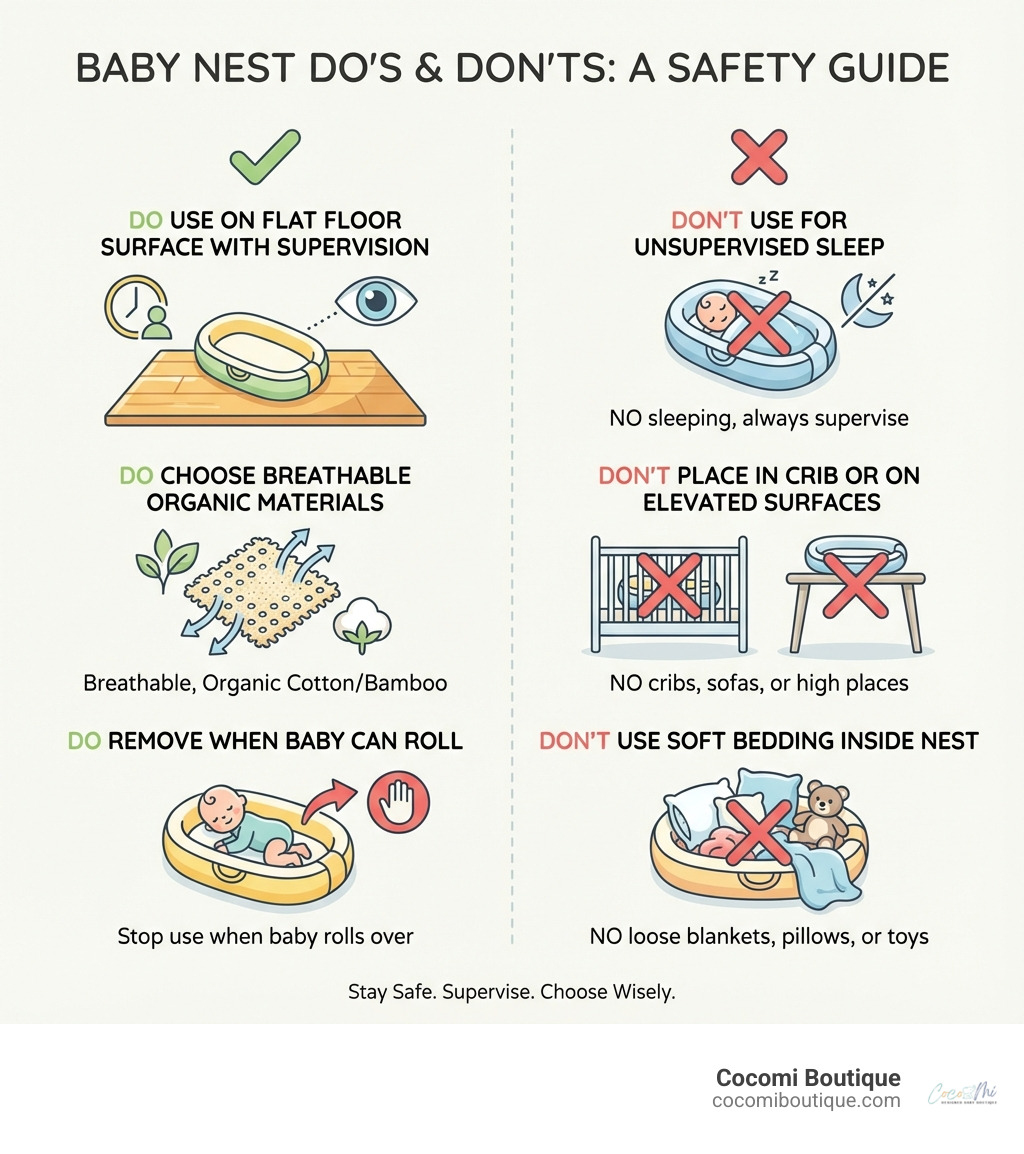
To ensure your baby's safety while using a baby nest newborn, we must follow these critical rules:
- Always Supervised Use: Never leave your baby unattended in a nest, even for a moment. This is the golden rule.
- Firm, Flat Surface: Always place the nest on a flat, stable, and firm surface, such as the floor or a sturdy playmat. Never place it on liftd surfaces like beds, sofas, or countertops, where the baby could roll or fall.
- Never in a Crib or Bassinet: Do not place a baby nest newborn inside a crib, bassinet, or playpen. The soft sides of the nest, combined with the sides of the crib, can create entrapment hazards or restrict airflow.
- Back to Sleep: Always place your baby on their back in the nest for supervised rest.
- No Soft Bedding: Do not add extra blankets, pillows, stuffed animals, or loose toys inside the nest. Keep the area clear to prevent suffocation hazards and overheating. Use wearable blankets if needed to keep your baby warm.
- Keep Away from Hazards: Ensure the nest is away from heat sources, cords, blinds, and anything else that could pose a danger.
- Discontinue Use When Baby Can Roll: Stop using the baby nest newborn as soon as your baby shows signs of rolling over, pushing up on their hands and knees, or reaching the manufacturer's specified weight/age limit (typically around 20 lbs or 5 months, or when they can push up). This prevents them from getting into an unsafe position where their face could be obstructed.
Following these guidelines, backed by official recommendations from organizations like the NHS safer sleep advice, is essential for your peace of mind and your baby's safety.
Choosing the Perfect Nest: Key Features & Materials
When it comes to selecting a baby nest newborn, the market offers a variety of options. To make an informed choice, we focus on features and materials that prioritize safety, comfort, and ease of care.
What to Look for in a Baby Nest Newborn
- Firm Mattress/Base: While the sides are soft, the central sleeping surface should be firm and flat. This is critical for supporting your baby's back and ensuring proper head positioning. Just like a crib mattress, we want to ensure your baby's head doesn't sink in more than a few millimeters.
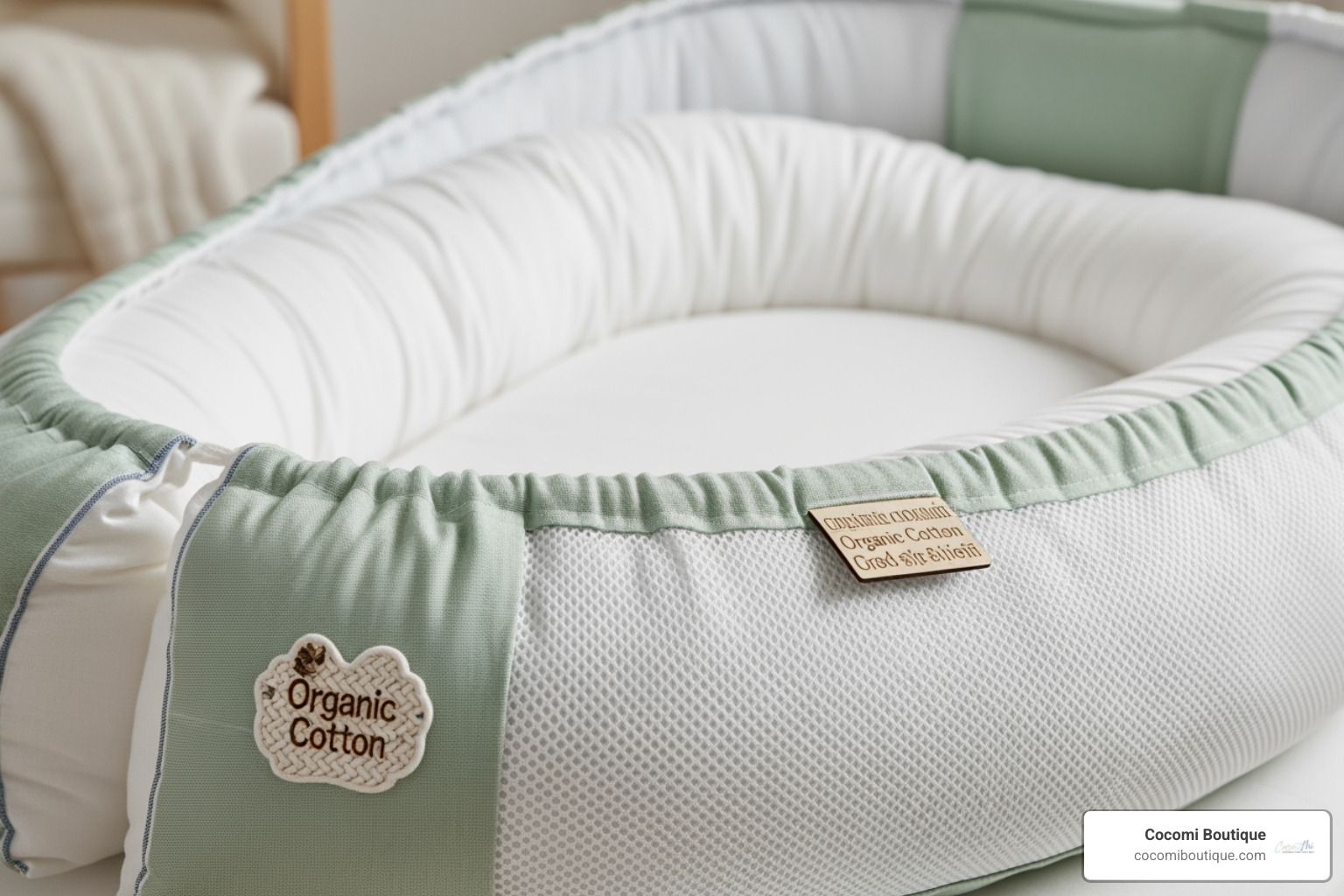
- Breathable Materials: Look for materials that promote airflow to prevent overheating. Organic cotton and breathable mesh are excellent choices.
- Removable and Washable Cover: Babies are messy! A nest with a cover that can be easily removed and machine-washed is a lifesaver for maintaining hygiene.
- Raised, Firm Bumpers: The side bumpers should be firm enough to provide a sense of enclosure without being overly soft, which could pose a suffocation risk if a baby's face presses against them. High contours can also help protect the baby from rolling away.
- No Loose Strings or Ties: Ensure there are no loose strings, ribbons, or ties that could pose a strangulation hazard. Some nests have adjustable ties at the bottom; these should be securely tucked away or covered, perhaps with a Velcro-attached cloth, as mentioned in some product safety features.
- Size and Adjustability: Consider the dimensions. Some nests are adjustable via ties at the bottom, allowing them to grow with your baby for a period. A typical size might be around 20.5 x 32.5 x 5 inches, but always check the specific product dimensions.
For a deeper dive into making the right choice, check out Is a Baby Nest Worth It? Unpacking the What, Why, and How-To.
Decoding Materials: From Organic Cotton to Wool
The materials used in a baby nest newborn are crucial for safety, comfort, and durability. At Cocomi Boutique, we are committed to quality and care, which is why we emphasize organic and natural materials.
| Material Type | Breathability | Hypoallergenic Properties | Temperature Regulation | Maintenance |
|---|---|---|---|---|
| Organic Cotton | Excellent | High | Good (absorbent) | Easy (machine washable) |
| Wool | Excellent | High (naturally) | Superior (cools/warms) | Moderate (spot clean/dry clean covers) |
| Synthetics (e.g., Polyester) | Varies (can be poor) | Low | Poor (can trap heat) | Easy (machine washable) |
- Organic Cotton: This is a fantastic choice for baby nest newborn products. It's soft, breathable, and less likely to irritate sensitive skin. Organic cotton is produced without harmful pesticides or chemicals, making it a safer option for your baby and the environment. We ensure our organic cotton inserts are free from harmful chemicals and flame retardants.
- Wool: Wool is a powerhouse of natural benefits. It naturally regulates temperature, keeping babies cool in summer and warm in winter. It also wicks away moisture for sweat-free nights (during supervised naps!). Wool is naturally flame-resistant, dust mite and mildew resistant, anti-microbial, and anti-bacterial. Our wool-filled nests use 100% wool batting, providing an optimal microclimate for restful supervised sleep.
- Avoid Synthetics with Chemicals: Be wary of synthetic materials and foam-filled loungers that may contain chemicals, glues, and flame retardants. Our philosophy at Cocomi Boutique is to use only organic and biodegradable materials, free from harmful chemicals, dyes, bleaches, VOCs, and finishes, ensuring a truly non-toxic product for your little one.
How to Clean and Maintain Your Baby Nest
Maintaining the cleanliness of your baby nest newborn is essential for your baby's health and the longevity of the product. Luckily, most high-quality nests are designed with easy maintenance in mind.
General Cleaning Tips:
- Read Manufacturer Instructions: Always start by consulting the specific care guidelines provided by the manufacturer. This is the most reliable source for how to clean your particular nest.
- Removable Covers are Key: A major advantage of many quality nests, including those we offer, is a removable and washable cover, often with a zipper enclosure. This makes cleaning a breeze.
- Machine Washing Covers: For most organic cotton covers, machine wash cold with like colors on a gentle cycle. Avoid bleach. Hang to dry or tumble dry on low to prevent shrinkage and maintain fabric integrity.
- Spot Cleaning: For minor spills or stains on the inner cushion or bumpers, spot clean with a mild soap solution and a damp cloth.
- Wool Care: If your nest has a wool filling, avoid machine washing the entire cushion, as wool can felt and shrink. The wool batting (e.g., 3 layers of 400 gsm and 1 layer of 300 gsm) is typically protected by a removable cover. If the wool itself needs cleaning, it often requires professional dry cleaning or careful spot cleaning. Wool is naturally resistant to dust mites and mildew, so deep cleaning is less frequent.
- Air Drying: Always air dry components thoroughly to prevent mildew growth. Ensure everything is completely dry before reassembling and using.
- Maintaining Shape and Firmness: Regular fluffing of the bumpers and cushion can help maintain the nest's shape and firmness over time.
What Customer Reviews Say
We pride ourselves on a delightful shopping experience, and customer feedback often highlights the effectiveness and usability of our baby nest newborn products. Parents frequently praise:
- Baby's Comfort: Many reviews express how their babies seem incredibly content and cozy in the nest, often settling down quickly for supervised naps or quiet time. The "handmade for sound sleep" aspect is often appreciated.
- Portability: The ease of moving the nest around the house, keeping baby close, is a common theme. It truly helps parents manage daily tasks while ensuring their little one is safe and visible.
- Ease of Cleaning: The removable, washable covers are consistently mentioned as a huge plus, simplifying life for busy parents.
- Quality Materials: Parents appreciate the use of organic, non-toxic, and temperature-regulating materials, giving them peace of mind about what their baby is resting on.
While specific reviews for generic baby nests are hard to quantify from our research, the general sentiment from product pages emphasizes satisfaction with the "optimal microclimate for restful sleep" and the overall quality. One specific product review (for a bassinet that converts to a nest) noted that "82% of parents report it helped them sleep better," indicating a high level of satisfaction with products designed for infant comfort and parental ease. This positive feedback reinforces our commitment to providing high-quality, safe, and comfortable options for your baby.
Frequently Asked Questions about Newborn Nests
Can my baby sleep in a baby nest overnight?
No, your baby should never sleep unsupervised in a baby nest newborn overnight or for any extended period. Baby nests are designed for supervised lounging, tummy time, and supervised naps only. For unsupervised sleep, your baby should always be placed in a crib or bassinet that meets current safety standards, has a firm, flat mattress, and is free of soft bedding. Using a nest for unsupervised sleep significantly increases the risk of suffocation and SIDS due to the soft, raised sides.
What materials are safest for a baby nest?
The safest materials for a baby nest newborn are those that are breathable, natural, and free from harmful chemicals. We recommend looking for:
- Organic Cotton: Soft, breathable, and free from pesticides.
- Wool: Naturally temperature-regulating, breathable, hypoallergenic, and resistant to dust mites and mildew.
- Breathable Mesh: For any side panels, ensuring maximum airflow.
- Firm, Non-Toxic Filling: The core should be firm and made from materials free of flame retardants, VOCs, and other harmful substances. Always look for certifications like Oeko-Tex or GOTS (Global Organic Textile Standard) to ensure the materials meet strict environmental and toxicological criteria. Avoid synthetic materials or foam fillings that may contain chemicals, glues, or flame retardants.
When should I stop using a baby nest?
You should discontinue using a baby nest newborn as soon as your baby shows signs of being able to roll over independently, push up on their hands and knees, or reaches the manufacturer's specified weight or age limit (whichever comes first). This milestone typically occurs around 4-6 months of age, or when your baby reaches approximately 20 pounds. Continuing to use the nest once your baby is mobile poses a risk, as they could roll and get into an unsafe position where their face is obstructed by the soft sides, increasing the risk of suffocation. Safety always comes first, so when in doubt, err on the side of caution and transition to a safe, firm sleeping surface like a crib.
Conclusion
Navigating baby nest newborn products can feel overwhelming, but with the right information, we can make choices that prioritize both comfort and safety. We've explored what baby nests are, their many benefits for both baby and parent during supervised use, and the critical safety guidelines that must always be followed.
Remember the golden rule: a baby nest newborn is for supervised lounging and supervised naps only. Never use it for unsupervised sleep. By choosing nests made with quality, organic, and breathable materials like those we champion at Cocomi Boutique, you're investing in a product that offers a truly cozy, chemical-free environment for your little one. Our commitment to quality, care, and customer satisfaction ensures you receive baby essentials designed with your family's well-being in mind.
We hope this extensive guide empowers you to make informed decisions for your newborn's comfort and safety. For more tips, insights, and expert advice on all things baby, we invite you to Explore our blog for more newborn tips.