

Why Choosing the Right Baby Footmuff Matters
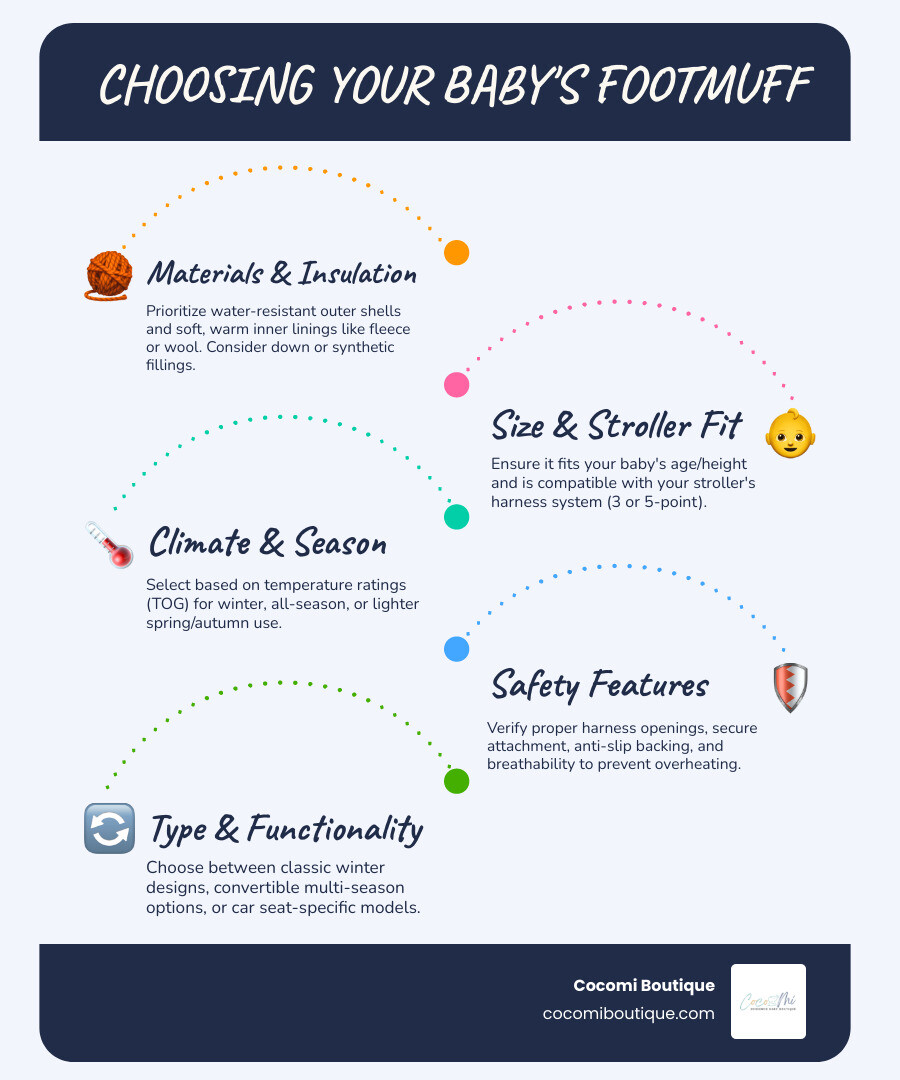
How to choose a baby footmuff comes down to five essential factors:
- Materials and Insulation - Look for water-resistant outer shells, soft inner linings, and appropriate filling for your climate.
- Size and Fit - Ensure compatibility with your baby's age/height and your stroller's harness system (3-point or 5-point).
- Climate Suitability - Match the footmuff's insulation level to your local weather.
- Safety Features - Verify proper harness openings, secure attachment, and breathability to prevent overheating.
- Type and Functionality - Choose between classic winter designs, convertible multi-season options, or car seat-specific models.
Winter walks with your baby shouldn't mean a battle with blankets that constantly slip off. A footmuff—also called "cosy toes"—is a sleeping bag designed for strollers. Unlike loose blankets that can fall off, cover your baby's face, or get caught in wheels, a footmuff attaches securely to your stroller, keeping your baby warm from toes to shoulders. It's wind-resistant, often water-resistant, and eliminates the need for bulky layers of clothing.
The wrong choice can lead to overheating or a poor fit, but the right one becomes an essential piece of gear for year-round outdoor adventures.
I'm Monika Jarog, and I've spent years crafting handmade baby essentials from 100% natural, chemical-free materials that meet European safety standards. Through conversations with parents and extensive research, I've learned what makes a footmuff a purchase you'll love.

Learn more about how to choose a baby footmuff:
What is a Baby Footmuff and Why Do You Need One?
Picture this: you're bundling your baby for a winter walk, layering on clothes and tucking in blankets, only for the blanket to slip off two minutes later. A footmuff changes everything.
Think of it as a cozy sleeping bag designed for your baby's stroller or pram. Often called "cosy toes," this accessory wraps your little one in warmth from their feet to their shoulders, creating a snug cocoon that stays put.
The warmth and protection a footmuff provides goes far beyond what a blanket can offer. The outer shell is typically made from wind- and water-resistant materials, acting as a barrier against cold, wind, and light rain. Your baby stays dry and toasty inside, protected from the elements without the bulk of a snowsuit.
Footmuffs also shine when it comes to safety. Loose blankets can fall off, get tangled in stroller wheels, or cover a baby's face, creating a suffocation hazard. A footmuff eliminates these risks by attaching securely to the stroller and working with the harness system. Your baby is properly strapped in, warm, and safe.
For parents, the convenience is a game-changer. No more stopping to readjust blankets or wrestling your baby into bulky layers. With a footmuff, your little one can wear their regular clothes underneath, making outings and diaper changes much easier. You can enjoy your walks instead of stressing about slipping covers, changing daily outings into the peaceful moments they should be.
How to Choose a Baby Footmuff: Key Factors to Consider
Choosing the perfect footmuff is like finding the right winter coat—you want something that fits well, keeps your little one warm, and works with your lifestyle. Let's walk through the key factors to help you make the best choice.
How to choose a baby footmuff based on materials and insulation
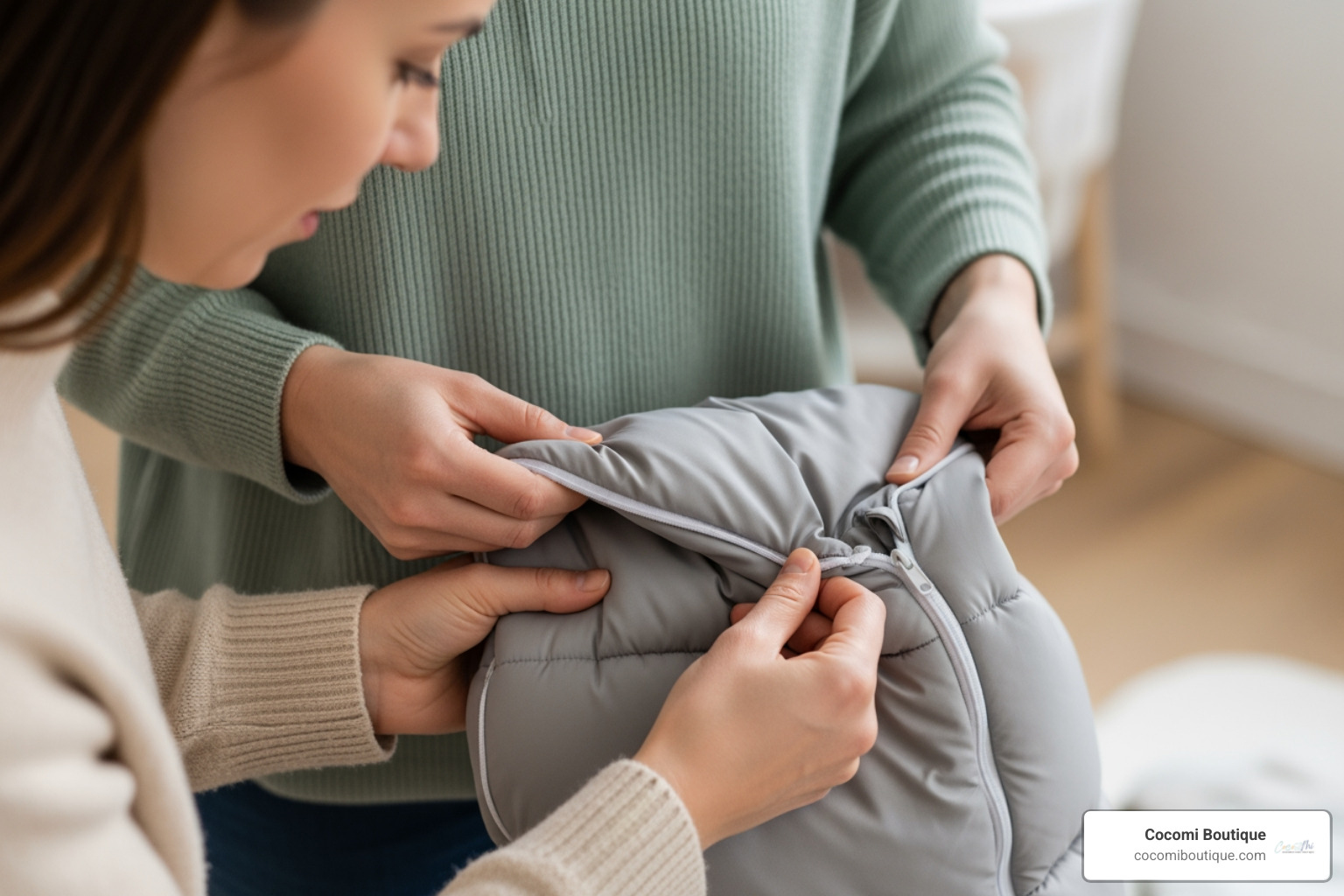
The materials in a footmuff determine its comfort and performance. The outer shell is your baby's shield against the weather. Look for polyester or nylon fabrics that repel wind and water, keeping your baby dry during unexpected drizzles or snowfall.
The inner lining, where your baby snuggles, should be soft and comfortable. Microfleece creates a cozy cocoon, while cotton offers natural breathability. For exceptional temperature regulation, European natural sheep wool is a fantastic option, as it's hypoallergenic and adjusts to your baby's body temperature.
The filling between these layers provides the warmth. Down filling is incredibly warm and lightweight, while modern synthetic fillings (like those made from recycled polyester) perform well even in damp conditions. Crucially, look for breathable materials that wick away moisture to prevent your baby from getting sweaty and uncomfortable. For more detailed information about footmuff materials and features, check out this comprehensive guide about everything you need to know about footmuffs.
We share more practical tips in our Keep Them Toasty: Top Warm Pram Liners and Sleeping Bags guide.
How to choose a baby footmuff for the right size and fit
Getting the right fit is essential for both comfort and safety. While most footmuffs are sized by age (e.g., 0-6 months, 6 months-2 years), it's best to compare your child's height to the manufacturer's sizing chart for an accurate fit.
Stroller compatibility is just as important. Many footmuffs claim "universal compatibility," but it's wise to verify. Measure your stroller's seat and backrest to ensure the footmuff will sit snugly without bunching or interfering with the folding mechanism.
Harness compatibility is non-negotiable. The footmuff must have openings that align perfectly with your stroller's 3-point or 5-point harness system. The harness must fit securely around your child without any slack.
Since children grow quickly, look for adjustable features. Expandable foot areas, adjustable hoods, or zip-out extensions allow the footmuff to grow with your child, extending its value for years to come.
Climate and Seasonal Suitability
Matching your footmuff to your climate is key to keeping your baby comfortable. Temperature ratings, often described by TOG (Thermal Overall Grade), can help guide your choice.
- Lightweight Footmuffs (0.5-1.0 TOG): Perfect for milder weather in spring and autumn, with breathable materials and less bulky insulation.
- All-Season Footmuffs (2.5 TOG): Ideal for cooler days, these versatile designs often feature removable panels or layers to adapt to changing temperatures.
- Winter Footmuffs: For temperatures below 20°F, you'll need a heavily insulated model with thick synthetic or down filling and a robust wind- and water-resistant shell.
Choosing the right level of insulation ensures your baby stays warm and cozy without overheating.
Budget and Value
Footmuff prices can range from around $45 to over $200. Understanding what drives these differences helps you find the best value for your needs.
- Budget options ($40-$60) offer basic warmth and protection with standard synthetic materials.
- Mid-range options ($60-$120) provide a great balance of cost and performance, with better materials, insulation, and design features.
- Premium models ($120-$200+) feature superior materials like down or natural wool, advanced weatherproofing, and highly adjustable designs. They are built for extreme conditions and exceptional durability.
While premium footmuffs have a higher initial cost, their durability often makes them more economical long-term, lasting through multiple winters and even multiple children. Better materials also mean superior warmth, breathability, and safety certifications like Oeko-Tex® Standard 100, ensuring they are free from harmful substances.
| Feature | Budget ($40-$60) | Mid-Range ($60-$120) | Premium ($120-$200+) |
|---|---|---|---|
| Materials | Basic synthetic | Improved synthetic, fleece | Down, wool, advanced synthetic, water-resistant coatings |
| Insulation | Standard | Good | Excellent, often extreme cold-rated |
| Features | Essential warmth, basic | Better weather resistance, softer lining | Highly adjustable, convertible, compact for travel, superior harness fit |
| Durability | Moderate | Good | Excellent, multi-child longevity |
| Value | Good for occasional use | Great balance of cost/features | Long-term investment, superior comfort/safety |
Exploring the Different Types of Footmuffs
Just as babies come in all shapes and sizes, so do footmuffs. Understanding the different types will help you find the best fit for your family's lifestyle, especially during those unpredictable Illinois winters.
Classic and Lightweight Footmuffs
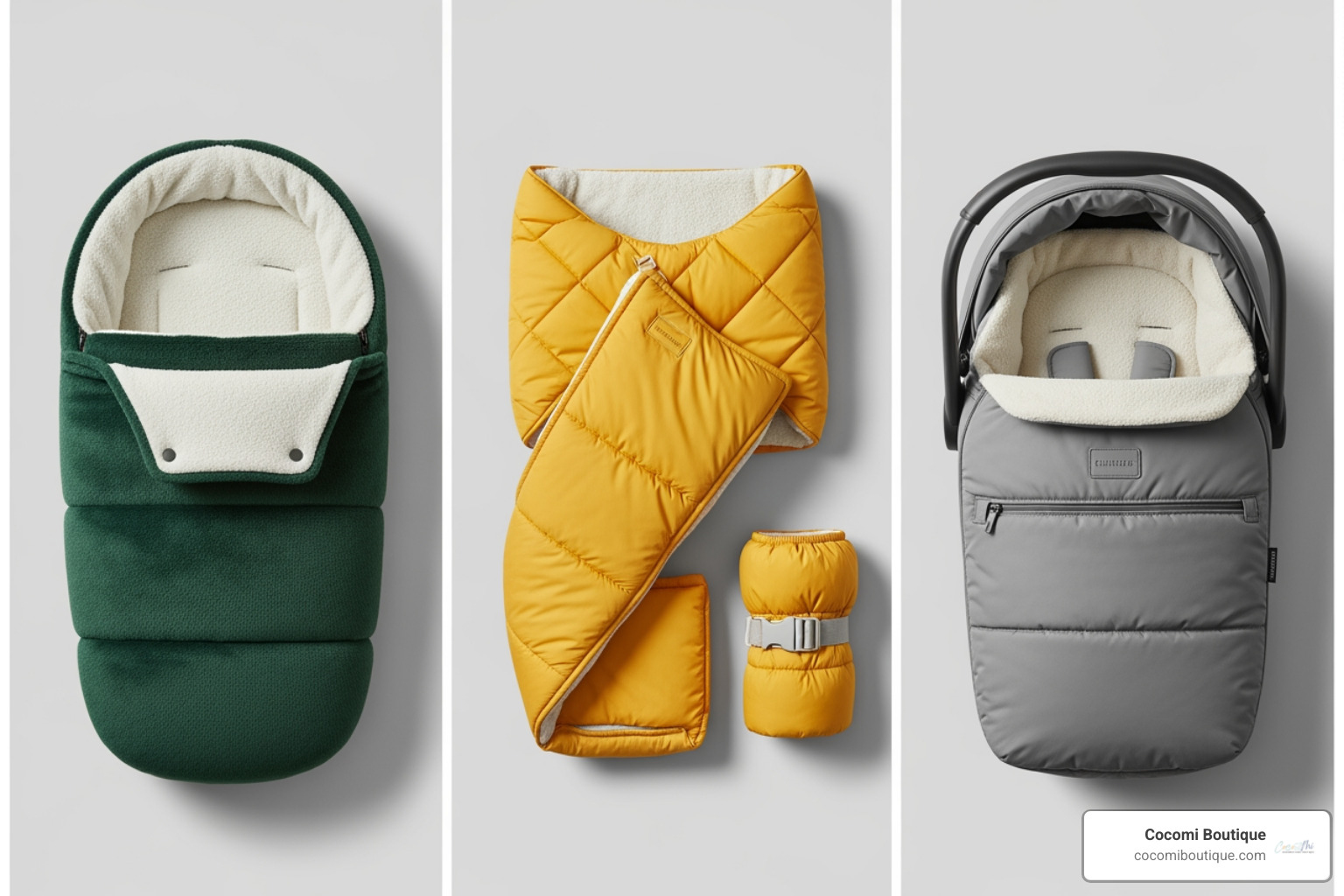
Classic footmuffs are the workhorses of winter strolling. Built with robust insulation and comprehensive protection, they are your all-purpose companion for frosty mornings and snowy afternoons. They are designed to be durable, with many parents using the same one for several years.
Lightweight footmuffs prioritize portability without sacrificing comfort. Often filled with down, they are remarkably light and compress easily for travel, sometimes into a built-in pouch. They provide the right amount of warmth for milder weather or quick errands, without the heft of a full winter model.
Convertible and Multi-Functional Footmuffs
If versatility is your priority, convertible footmuffs are an excellent choice. These ingenious 2-in-1 or 3-in-1 designs adapt to your changing needs throughout the year.
The magic lies in their flexibility. On a chilly morning, use the full footmuff for maximum warmth. If the afternoon sun appears, simply unzip and remove the top cover to transform it into a cozy pram liner or stroller cushion. This adaptability makes them cost-effective and convenient for year-round use, especially in climates with fluctuating weather. Your baby enjoys consistent comfort with a familiar lining, and the product's longevity means it can grow with your child.
For a closer look at these versatile options, explore our article on 3-in-1 Footmuff Baby Winter Essentials, where we dive deeper into how these multi-functional designs can simplify your life.
Car Seat Specific Footmuffs
This specialized category requires careful attention. Car seat footmuffs are designed specifically for infant car seats, typically for babies from birth to around 6 months.
Their unique design often features an open back to ensure the car seat harness fits snugly against the baby, without any bulky fabric interfering. This is a critical safety feature. Bulky winter clothing or thick layers behind a baby can compress in a crash, creating dangerous slack in the harness. A car seat footmuff solves this by keeping the baby warm without compromising harness safety.
However, it's crucial to remember that car seat footmuffs are not for use in strollers for extended walks. They are not as large or insulating as dedicated stroller footmuffs and should be considered specialists for car travel only.
Safety, Installation, and Maintenance
Proper installation and maintenance are key to ensuring your footmuff is both safe and long-lasting. Here's what you need to know to keep your baby cozy and secure.
Key Safety Features and Proper Installation
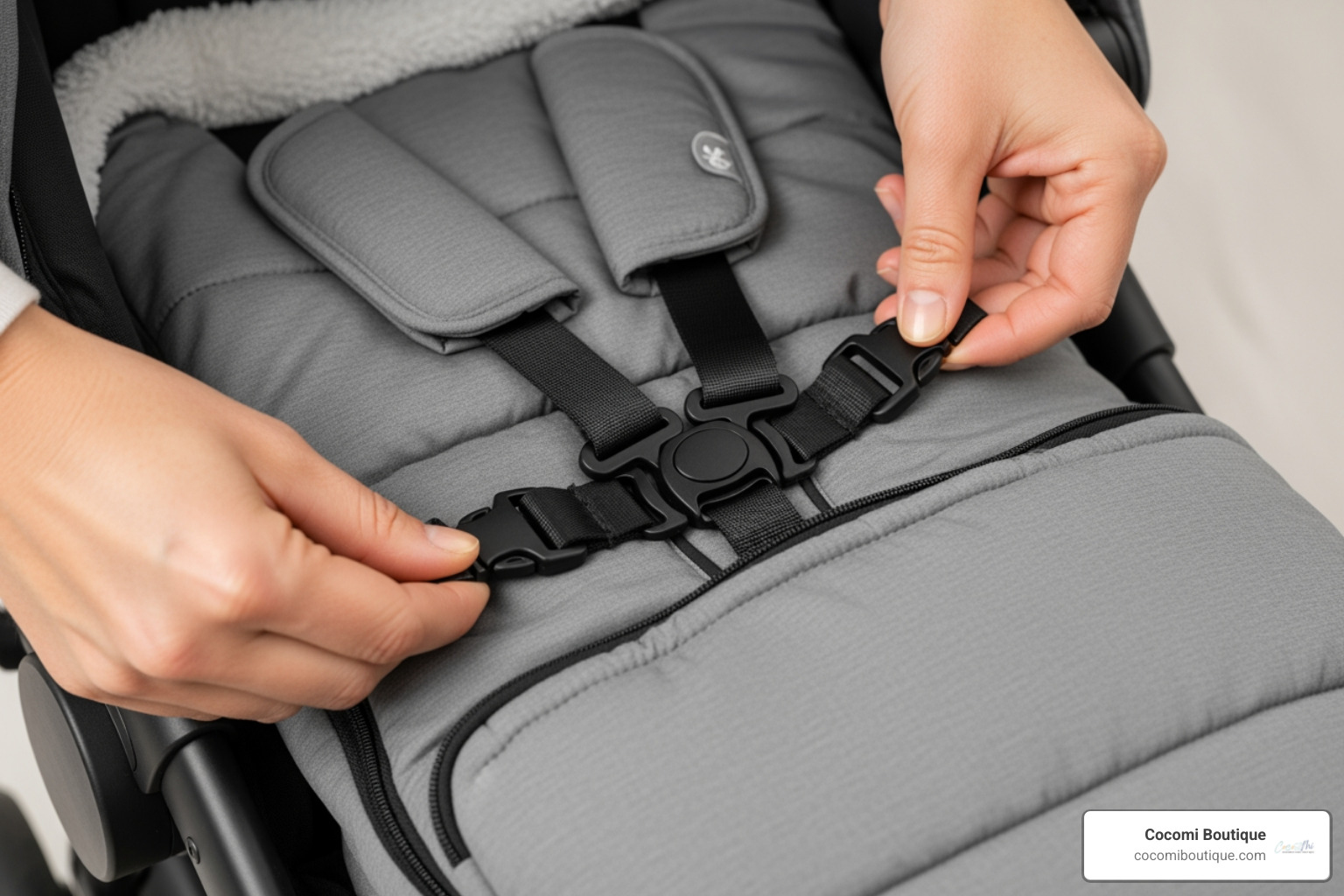
When you choose a baby footmuff, safety is the top priority. The most critical aspect is harness compatibility. The footmuff must have openings that align perfectly with your stroller's 3-point or 5-point harness, allowing the straps to be threaded through without twisting or creating slack.
Look for secure attachment mechanisms like elastic straps or a hood that loops over the stroller's backrest to prevent sliding. An anti-slip backing is another excellent feature that keeps the footmuff in place.
To install, lay the footmuff on the stroller seat, thread the harness straps through the designated openings, and secure the footmuff to the stroller. Always test the buckle to ensure it clicks and releases smoothly. The harness should remain snug against your baby's body.
Overheating is a real concern, even in winter. Check your baby's temperature by touching their neck or back; if it feels hot or sweaty, they are too warm. Use adjustable zippers to control airflow or remove a layer of clothing underneath.
The Car Seat Safety Debate
This topic deserves your full attention. Most stroller footmuffs are not car seat safe. Car seat manufacturers advise against using aftermarket products that were not crash-tested with their seats. Any bulky material between your baby and the harness can compress in a crash, creating dangerous slack in the straps. For evidence-based guidance on keeping babies warm and safe in car seats during winter, the American Academy of Pediatrics provides comprehensive winter car seat safety guidelines.
Car seats are precision-engineered safety devices. Adding a thick footmuff changes how the harness performs and can prevent you from tightening it sufficiently. So, what are the safe alternatives for car travel in the cold?
- Shower-cap style covers go over the car seat after the baby is buckled in, providing warmth without interfering with the harness.
- Layering clothing correctly is another safe option. Dress your baby in thin, warm layers (like fleece) under the harness. Once buckled, you can tuck a blanket over them.
If you must use a footmuff, choose one specifically designed and tested for car seat use, which will be much thinner and won't interfere with the harness. Always prioritize safety over warmth in the car.
Cleaning and Maintaining Your Footmuff
Life with a baby involves messes, but most modern footmuffs are designed for easy cleaning.
- Check the Label: Always follow the manufacturer's care instructions.
- Machine Washing: Many synthetic footmuffs are machine washable. Use a gentle cycle with cold water and mild detergent.
- Wool Care: Wool-lined footmuffs often require spot cleaning or a special wool wash cycle. Wool is naturally antimicrobial and needs less frequent washing.
- Drying: Air drying is almost always recommended. Lay the footmuff flat, away from direct heat or sunlight, to preserve its shape and water-resistant coatings. Avoid the tumble dryer unless the label explicitly permits it.
- Storage: Before packing it away for the season, ensure the footmuff is completely clean and dry to prevent mold or mildew. Store it in a breathable bag in a dry, cool place like a closet.
Proper care will keep your footmuff fresh and functional for many winters to come.
Frequently Asked Questions about Baby Footmuffs
Here are clear, helpful answers to the questions we hear most often from parents navigating their first winter with a baby.
When can my baby start using a footmuff?
Most footmuffs are designed for babies 3 months and older. This is because very young infants are still developing the ability to regulate their body temperature. For newborns, it's often better to use layers of clothing and blankets that can be easily added or removed.
Some specialized footmuffs, particularly those designed for car seats, may be safe from birth. However, the golden rule is to always check the manufacturer's guidelines for your specific product and consult your pediatrician if you have any concerns.
How do I prevent my baby from overheating in a footmuff?
Overheating is a genuine concern, but it's manageable. The most reliable way to check your baby's temperature is by feeling the back of their neck or chest. If it feels warm and sweaty, they are likely too hot. Don't rely on their hands or feet, which are often naturally cooler.
To prevent overheating:
- Use the footmuff's adjustable zippers to increase airflow when moving indoors or on warmer days.
- Dress your baby in light layers underneath the footmuff. Avoid bulky outfits.
- Match the footmuff's insulation level to the weather. Use a lightweight model for mild days and save the heavy-duty ones for true winter cold.
Can I use a footmuff in a bassinet or carrycot?
We generally advise against using a stroller footmuff in a bassinet or carrycot for sleep. Footmuffs are shaped for stroller seats and may not fit properly in a flat bassinet, potentially creating loose fabric that could pose a safety risk.
Safe sleep guidelines recommend keeping a baby's sleep space free of loose bedding to ensure clear airways. A footmuff, while secure in a stroller, is not designed for an unsupervised sleep environment.
For sleep in a bassinet, it is best to use products designed for that purpose, such as appropriate sleep sacks or swaddles that align with safe sleep practices. Always defer to the manufacturer's recommendations for both your footmuff and your bassinet.
Conclusion
We've covered a lot of ground, and you now have the tools to choose the perfect footmuff for your family. How to choose a baby footmuff comes down to your unique needs.
Recap of Key Factors:
- Materials & Insulation: For warmth and weather protection.
- Size & Fit: For safety and compatibility with your stroller.
- Climate Suitability: To match your local weather.
- Safety Features: For peace of mind.
- Type & Functionality: To fit your lifestyle.
The right footmuff transforms winter outings. No more wrestling with slipping blankets or over-bundling your baby. Just cozy, safe, and comfortable adventures, whether you're strolling through your neighborhood or exploring Chicago's parks.
At Cocomi Boutique, we pour our hearts into creating baby essentials that meet the highest European safety standards, using 100% natural, chemical-free materials. Our commitment is to quality, care, and your peace of mind.
Ready to keep your little one snug all winter long? Explore our 3-in-1 Footmuff for your baby's winter adventures and find how our versatile, cozy designs can make every outing a joy.