

Why Mastering the Footmuff Layering System Keeps Your Baby Safe and Comfortable
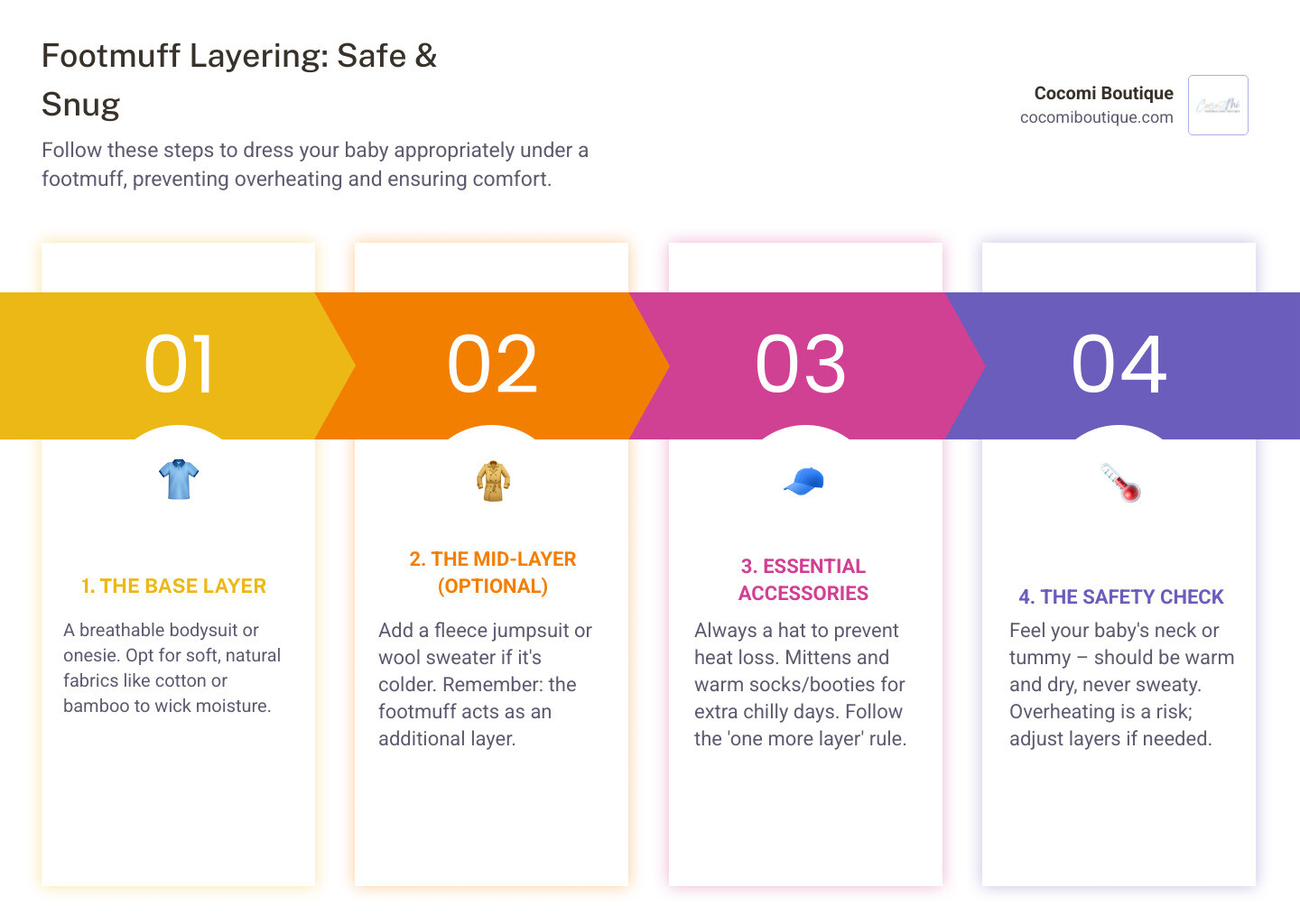
How to dress baby under footmuff depends on the temperature and your footmuff's warmth, but the core principle is simple: use fewer layers than you might expect, since the footmuff itself acts as an outer layer. Here's the quick guide:
Quick Answer: The One-More-Layer Rule
- Base Layer: Breathable bodysuit or onesie
- Mid Layer (if cold): Fleece jumpsuit or wool sweater
- Accessories: Always a hat; mittens and warm socks for very cold days
- The Rule: Dress baby in one more layer than you're wearing, then add the footmuff
- Safety Check: Feel baby's neck or tummy—should be warm, not hot or sweaty
When planning stroller walks, many parents wonder if a baby needs a full snowsuit under a footmuff. The answer is that less is more. While babies lose heat faster than adults, they also overheat quickly. Research shows overheating increases the risk of SIDS, making the right layering balance crucial.
Think of a footmuff as a wearable sleeping bag for your stroller. Your baby doesn't need heavy outerwear inside it, as the footmuff traps their body heat to create a cozy microclimate. Too many layers can cause sweating, which makes babies colder and uncomfortable.
The key is to match the layers to your specific footmuff's warmth level. A lightweight spring footmuff requires different layers than a thick, fleece-lined winter version. Getting this right ensures your baby stays comfortable on any outing.
I'm Monika Jarog, and through years of designing handcrafted baby essentials from natural, breathable materials, I've helped countless parents learn how to dress baby under footmuff for optimal comfort and safety. My focus on chemical-free, soft fabrics has taught me which layers work best against a baby's delicate skin.
Common how to dress baby under footmuff vocab:
Understanding Your Footmuff: The First Step to Cozy Outings
Before we dive into how to dress baby under footmuff, let's talk about what a footmuff does. Think of it as a wearable sleeping bag that attaches to your stroller, keeping your baby warm without the hassle of blankets that get kicked away. It provides consistent protection from wind, cold, and even light rain or snow, making winter outings easier.
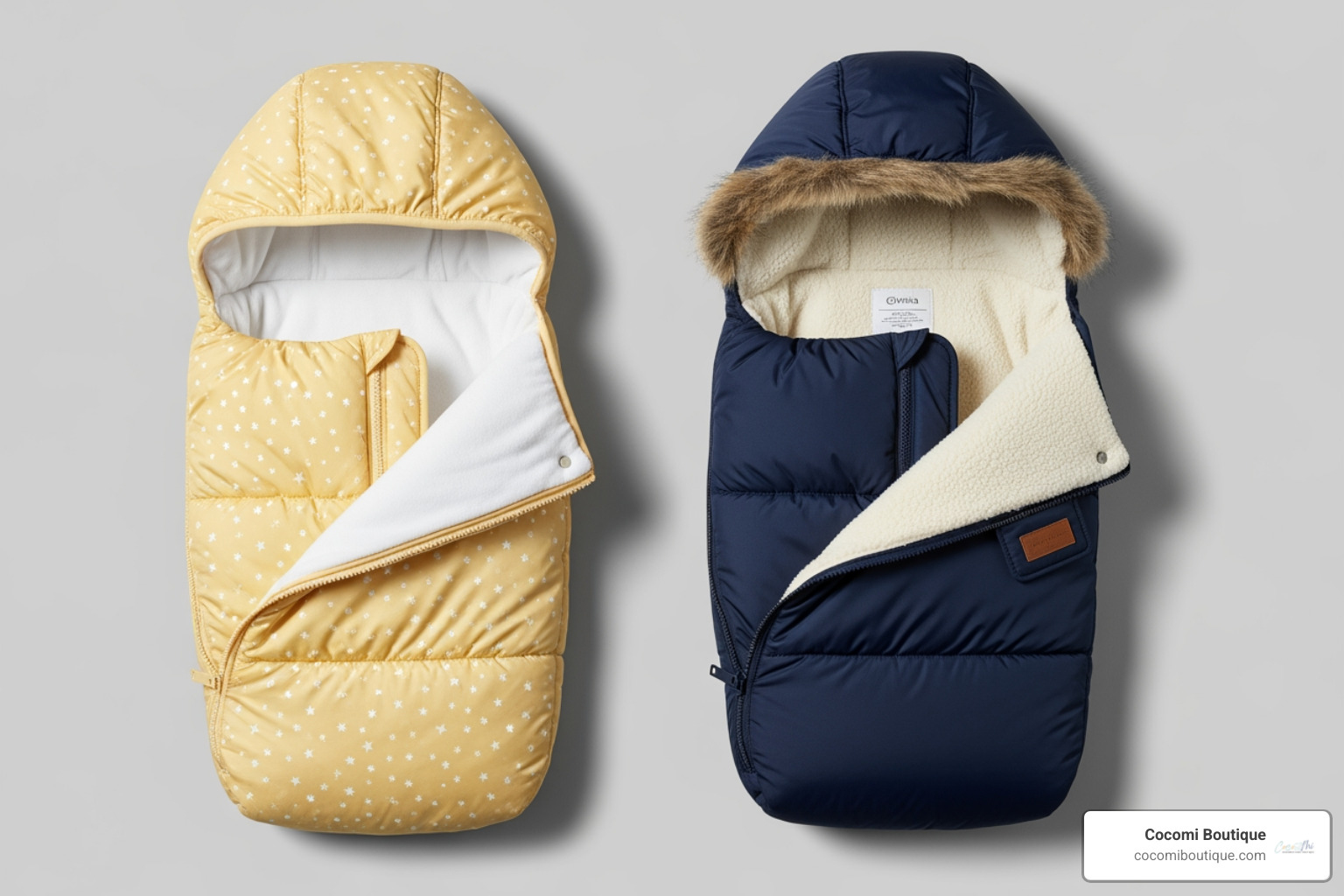
Not all footmuffs are created equal. They come in different weights and warmth levels, from lightweight spring versions to thick, fleece-lined winter models rated for temperatures below freezing. The insulation (down, fleece, or synthetic) and its TOG rating—a measure of thermal resistance—determine its warmth. A higher TOG means a warmer footmuff.
Many also feature water-resistant or waterproof exteriors to keep your baby dry in unpredictable weather. This outer shell blocks wind and moisture while the inner lining provides soft warmth.
While a puffy snowsuit might seem like a good choice for winter, it's often too much when combined with an insulated footmuff and can lead to overheating. The footmuff itself acts as the outer protective layer, allowing you to use thinner, more comfortable layers underneath.
Here's a critical safety note about car seats: bulky footmuffs and thick clothing should never go under a car seat harness. In a crash, puffy materials compress, leaving dangerous slack in the straps. For car travel, use "shower cap" style covers that go over the car seat after the baby is buckled, or place thin blankets over the secured harness. Safety always comes first.
Understanding your footmuff's design is the foundation for dressing your baby correctly. For more ideas, check out our guide on Keep Them Toasty: Top Warm Pram Liners and Sleeping Bags.
The Layering Masterclass: How to Dress Baby Under Footmuff
Just as you wouldn't wear a winter coat inside a sleeping bag, your baby doesn't need bulky outerwear inside a footmuff. The secret to comfort is smart layering, which allows you to easily adjust for temperature changes. The goal is to let your baby's body heat warm the footmuff, rather than trapping excessive heat that leads to sweating.
A good layering system has three parts: a base layer next to the skin, a mid-layer for insulation, and the footmuff as the outer layer. It's important to avoid bulky clothing, as infants struggle to regulate their body temperature.

Choosing the Right Fabrics for Each Layer
The materials you choose make all the difference. Your base layer should be soft, breathable, and moisture-wicking. Great options include organic cotton, silky bamboo fabric, or temperature-regulating merino wool. Our Gentle Touches: Our Favorite Soft Baby Essentials collection features ideal base layer fabrics.
The mid-layer provides insulation by trapping warm air. Fleece jumpsuits, wool sweaters, or even a thick cotton sleepsuit work well. These materials provide warmth without restricting movement or adding excessive bulk.
A Temperature-Based Guide to dressing your baby under a footmuff
Match your layers to the temperature outside. This guide is a starting point for the chilly weather we see in the Midwest:
| Temperature Range | Recommended Clothing Layers (Under Footmuff) |
|---|---|
| Mild (40-50°F / 4-10°C) | Lightweight bodysuit + pants, or a thin cotton sleepsuit. A hat for outdoors. |
| Cold (30-40°F / -1 to 4°C) | Long-sleeved bodysuit + fleece jumpsuit or thick cotton sleepsuit. Hat and mittens. |
| Very Cold (Below 30°F / -1°C) | Long-sleeved bodysuit + fleece or wool mid-layer + warm socks or booties. Hat and mittens essential. |
Even on the coldest days, resist adding too many layers. Trust that your footmuff is doing its job.
Don't Forget the Accessories!
Babies lose a significant amount of heat through their heads, so a soft, well-fitting hat that covers the ears is essential. Mittens keep fingers warm, while warm socks or booties protect tiny toes. Pay attention to any exposed areas like the face and neck, as these feel the cold first. The Guide to dressing your baby in cold weather offers more visual tips for protecting your baby.
Understanding Your Footmuff: The First Step to Cozy Outings
A footmuff's purpose is to keep your baby warm and protected during stroller outings. It's a wearable sleeping bag that attaches to the stroller, providing consistent warmth without the fuss of blankets that get kicked off. This makes bundling up for a winter walk quick and easy.
Not all footmuffs are the same, and understanding the differences is key to knowing how to dress baby under footmuff. Warmth varies based on several factors:
- Insulation levels: Lightly padded footmuffs suit mild autumn days, while heavily insulated versions are designed for harsh winter conditions, sometimes rated for temperatures as low as -20 degrees Celsius.
- TOG ratings: Similar to baby sleeping bags, this Thermal Overall Grade tells you how much warmth the footmuff provides. A higher number means more warmth.
- Weather resistance: Water-resistant or waterproof exteriors repel rain and snow, keeping your baby dry and comfortable.
- Design and coverage: A footmuff that fully encloses the upper body requires fewer clothing layers than one that only covers the legs.
Compared to other methods, a footmuff has clear advantages. Blankets get kicked off, and snowsuits can be bulky and lead to overheating when combined with a footmuff. A well-designed footmuff provides enclosed warmth while allowing freedom of movement.
One critical safety note involves car seat use. Bulky clothing and thick footmuffs should never go under a car seat harness. The National Highway Traffic Safety Administration is clear that puffy materials can compress in a crash, leaving the harness dangerously loose. For car travel, use "shower cap" style footmuffs that go over a buckled baby, or place a blanket over the secured harness.
For more guidance on selecting warming accessories, explore our guide on Keep Them Toasty: Top Warm Pram Liners and Sleeping Bags.
The Layering Masterclass: How to Dress Baby Under Footmuff
The secret to keeping your baby comfortable in a footmuff is mastering the art of layering, not piling on clothes. This strategy allows you to adjust to temperature changes as you move between outdoors and indoors. The goal is to create a cozy cocoon where your baby's body heat warms the footmuff.
A good layering system has three parts: a base layer against the skin, a mid-layer for insulation, and the footmuff as the outer layer. Avoid bulky clothing, as babies lose heat up to four times faster than adults but also overheat quickly.
Choosing the Right Fabrics for Each Layer
The right materials are crucial for comfort. At Cocomi Boutique, we prioritize soft, breathable fabrics that support your baby's temperature regulation.
Your base layer should be gentle and moisture-wicking to keep your baby dry. Organic cotton is an excellent choice, as highlighted in our Gentle Touches: Our Favorite Soft Baby Essentials. Bamboo is exceptionally soft and breathable, while Merino wool offers incredible warmth and temperature regulation for colder days.
The mid-layer provides insulation. Fleece jumpsuits, wool sweaters, or thick cotton sleepsuits are great options that add warmth without too much bulk. This layer should be easy to remove when you go indoors.
A Temperature-Based Guide to dressing your baby under a footmuff
Tailor the layers to the temperature, keeping in mind your footmuff's warmth rating and that some babies run warmer than others. Remember the "one more layer" rule: dress your baby in one more layer than you're wearing.
| Temperature Range | Recommended Clothing Layers (Under Footmuff) |
|---|---|
| Mild Cold (40-50°F / 5-10°C) | Base Layer: Long-sleeve cotton bodysuit or thin wool onesie. Mid-Layer: Thin fleece or cotton sleepsuit/romper. Outer: Footmuff. |
| Cold (20-40°F / -5 to 5°C) | Base Layer: Long-sleeve wool or bamboo bodysuit. Mid-Layer: Fleece jumpsuit or thick wool sweater and leggings/pants. Outer: Footmuff. |
| Extreme Cold (below 20°F / -5°C) | Base Layer: Thick long-sleeve wool or thermal bodysuit. Mid-Layer: Thick fleece jumpsuit or wool sleepsuit. Outer: Highly insulated footmuff. (Consider a very thin, non-bulky overall if footmuff insulation is minimal). |
Consider your footmuff's design. A heavily quilted model that covers the upper body requires fewer layers. Too many layers can cause sweating, which ironically makes a baby colder.
Don't Forget the Accessories!
Babies can lose up to 25% of their body heat from an uncovered head, so a hat is an absolute must. A soft hat that covers the ears is ideal. Mittens are crucial for tiny fingers, and an extra layer of warm socks or insulated booties ensures toes stay toasty. These accessories are essential components of your baby's cold-weather protection. For more visual guidance, check out this helpful Guide to dressing your baby in cold weather.
Safety First: Avoiding Overheating and Other Risks
When considering how to dress baby under footmuff, safety is as important as comfort. Babies are not efficient at regulating their body temperature and can overheat quickly, which research links to an increased risk of sudden infant death syndrome (SIDS). Getting the layering balance right is critical.
The most common mistake is overdressing. When you move from the cold into a warm store, car, or home, always unzip the footmuff and remove your baby's hat and other outer layers to prevent them from getting too hot.
How to Check if Your Baby is Too Hot or Too Cold
The best way to check your baby's temperature is to feel the back of their neck or their tummy. These areas should feel warm, but not hot or sweaty. If they feel cool, your baby may need another layer.
Don't worry about cold hands and feet; this is normal due to a baby's developing circulatory system and not a reliable indicator of core temperature.
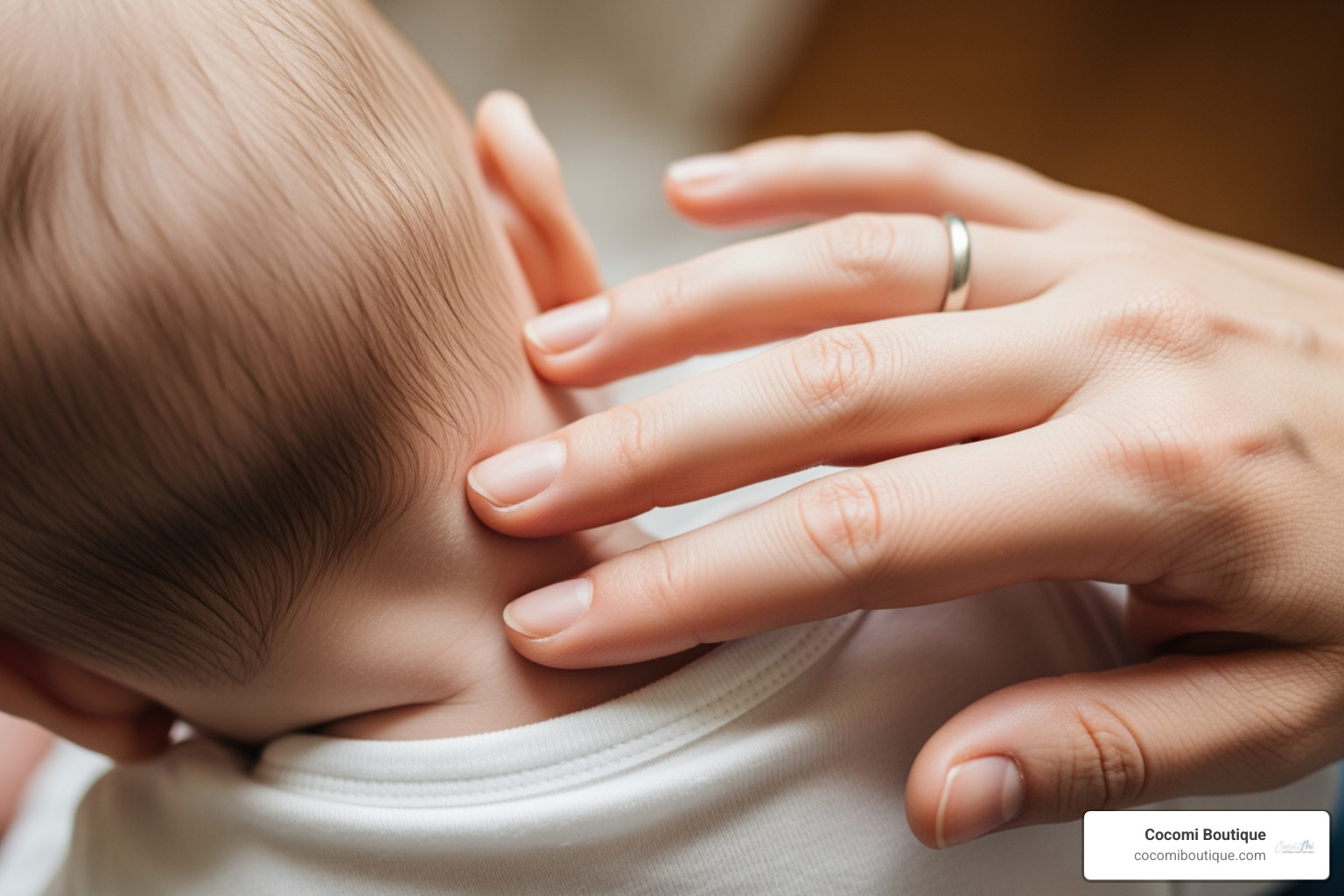
Signs of overheating include sweating, flushed skin, rapid breathing, or fussiness. A baby who is too cold might become unusually quiet or lethargic.
The Link Between Overheating and SIDS
Research consistently shows a higher risk of SIDS in babies who get too hot. To keep your baby safe, use breathable layers, remove extra clothing indoors, and ensure their sleep environment is a comfortable temperature (68-72°F / 20-22°C). For comprehensive guidance, The Lullaby Trust on SIDS risk offers valuable information.
A Note on Footmuffs and Car Seat Safety
Car seat safety is non-negotiable. Bulky clothing should never go under the car seat harness, as it can compress in a crash and create dangerous slack. Dress your baby in thin layers, buckle the harness snugly, and then place a coat or blanket over the straps. For practical advice, 3 Steps to Bundle Your Baby offers expert guidance.
Frequently Asked Questions about Footmuff Dressing
We know that figuring out how to dress baby under footmuff brings up questions. Here are answers to some of the most common ones.
Can I use a snowsuit and a footmuff together?
Generally, no. Combining a thick snowsuit and an insulated footmuff is a recipe for overheating, which can be dangerous. Both items are designed to provide substantial warmth on their own. For most cold weather, a footmuff with appropriate layers underneath is safer and sufficient. In extreme cold (well below 0°F / -18°C), you might consider it, but only with very thin base layers and constant monitoring for overheating.
What's the best way to dress a baby for a nap in a footmuff?
Follow the same layering principles, but lean towards fewer layers. A footmuff creates an enclosed, warm environment. For a nap in a well-insulated footmuff, a simple long-sleeve bodysuit or a thin sleepsuit is often enough. The baby's body heat will warm the space. Always check their neck or tummy to ensure they are warm, not sweaty. You can also partially unzip the footmuff for ventilation.
How should I clean and maintain a footmuff?
First, always check the manufacturer's specific instructions. For minor spills, spot cleaning with a damp cloth and mild detergent is usually enough. For a deeper clean, most footmuffs are machine washable on a gentle, cold cycle. It's best to air dry the footmuff by laying it flat or hanging it. If using a dryer, select a low-heat or air-only setting to protect the fabric and insulation.
Conclusion: Accept Winter with Confidence
You've now mastered the essentials of how to dress baby under footmuff. We've covered why your footmuff is a game-changer and how to build the perfect layering system to keep your little one cozy without overheating.
The key is simple: use a breathable base layer, a warm mid-layer when needed, and let the footmuff act as a protective outer shield. Don't forget essential accessories like a hat, mittens, and warm socks.
Most importantly, you know the critical safety checks: feel your baby's neck or tummy for warmth (not sweat), remove layers indoors, and never put bulky clothing under a car seat harness. These habits protect your baby from the risks of overheating.
Now you can enjoy crisp winter walks and run errands without worrying if your baby is too hot or too cold. With the right approach, you and your little one can accept the season's magic together.
At Cocomi Boutique, we are passionate about providing the soft, high-quality fabrics that make layering comfortable and safe. When you're ready to build your perfect winter layering system, explore our collection of 3-in-1 Footmuff Baby Winter Essentials to find everything you need for cozy, confident adventures.