

Introduction: The Comforting Accept of a Swaddle
Finding the best swaddles can feel overwhelming for new parents. To help you quickly, here are some popular types to consider:
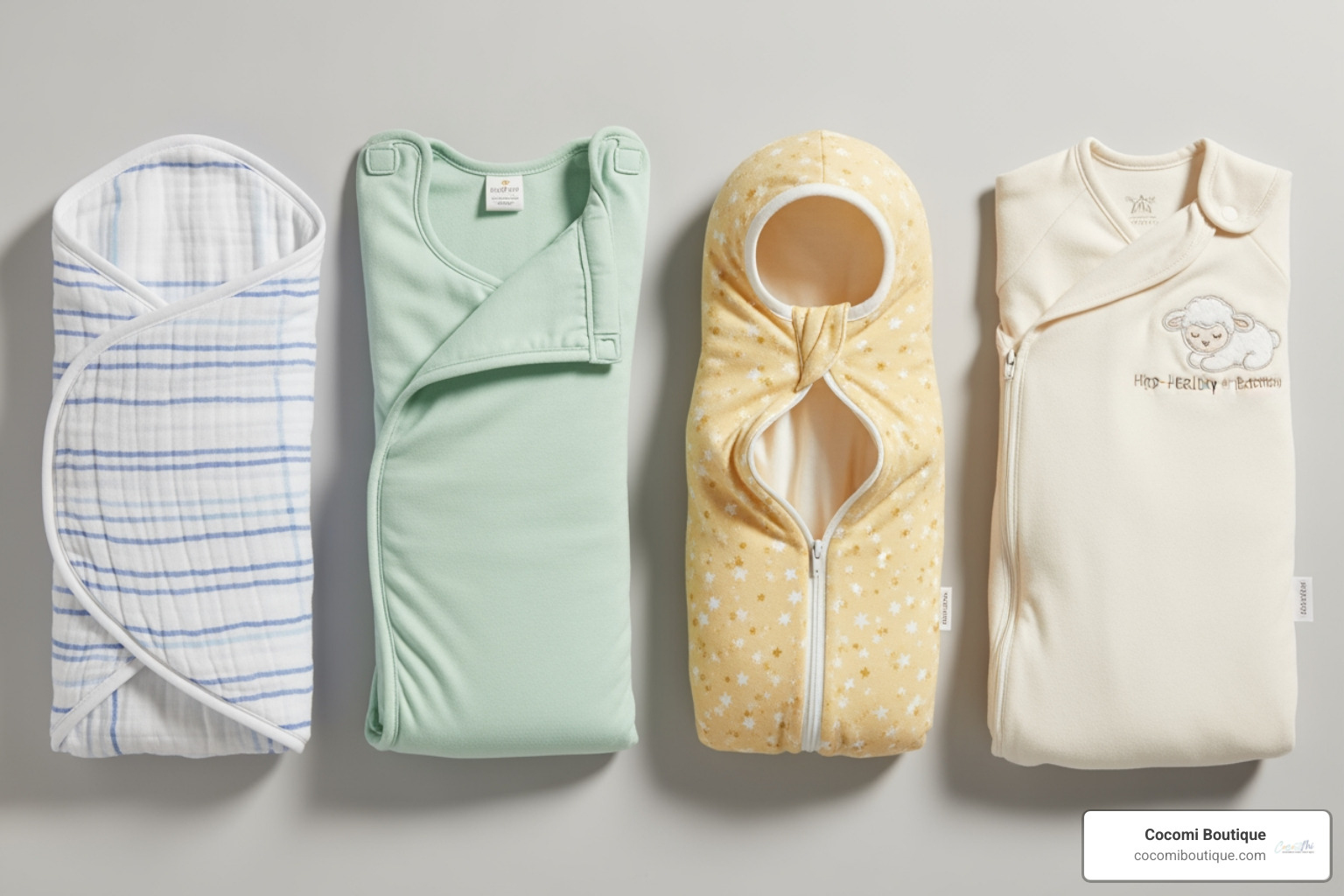
- Traditional Swaddle Blankets: Known for their versatility and classic feel.
- Swaddle Sacks and Pods: Great for ease of use with simple zipper closures.
- Adjustable Swaddle Wraps: Feature secure closures and an adjustable, snug fit.
- Transitional Swaddles: A versatile option for babies who prefer an arms-up position or are transitioning out of swaddling.
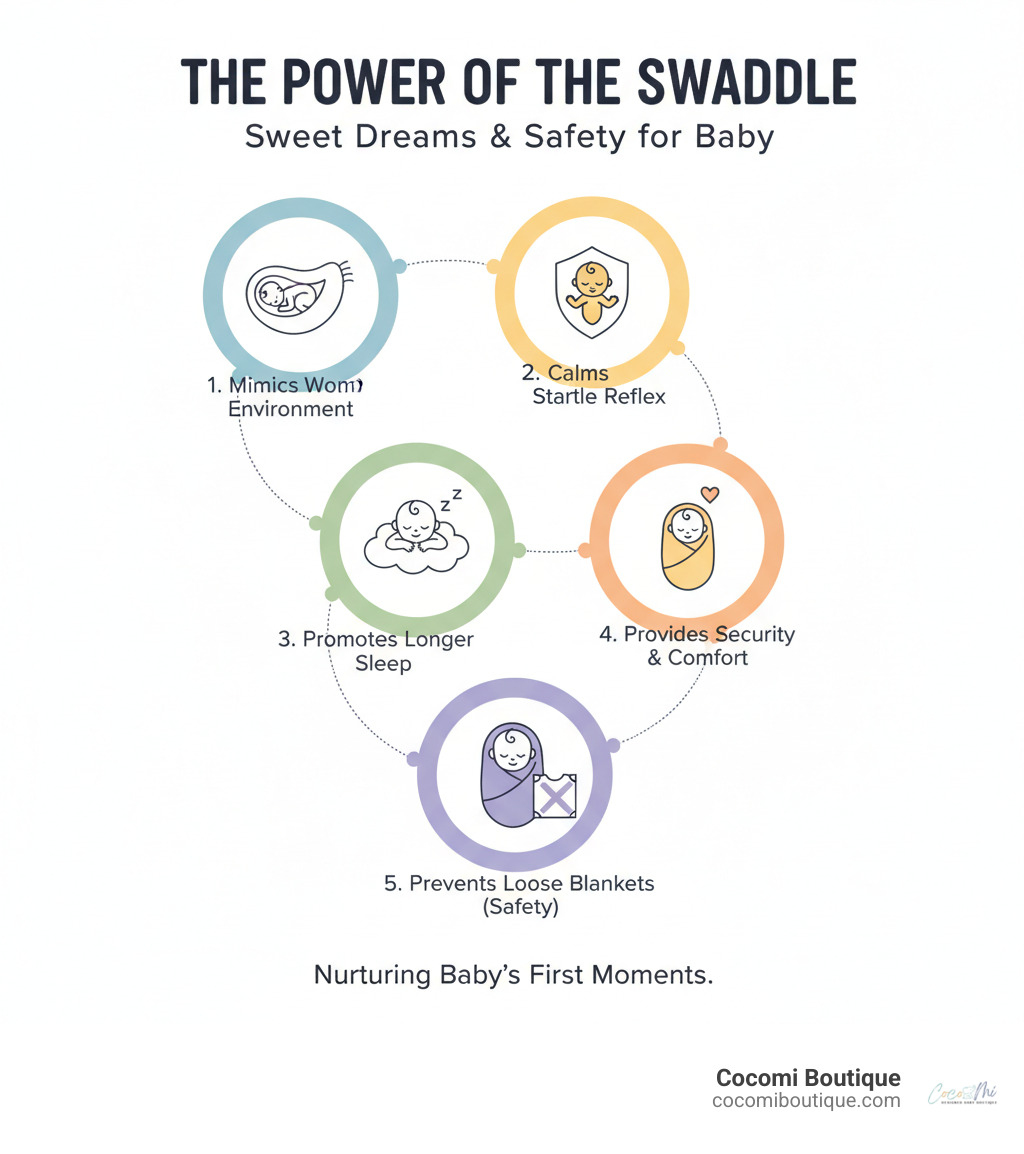
Swaddling is an age-old practice that brings newborns comfort. It wraps them snugly, mimicking the secure feeling of being in the womb. This snugness helps calm babies and can lead to longer, more peaceful sleep.
A key benefit of swaddling is how it helps manage the startle reflex, also known as the Moro reflex. This involuntary movement can often wake a sleeping baby. By gently restricting their arms, a swaddle prevents babies from startling themselves awake. This means better sleep for both baby and parents.
I'm Monika Jarog, and I've spent years thoughtfully designing baby essentials for comfort, safety, and style, including curating collections of the best swaddles. My goal is always to combine luxury with practicality, ensuring peace of mind for parents.
Related content about best swaddles:
Decoding the Different Types of Swaddles
When you become a parent, you quickly find that babies are wonderfully unique little people with their own preferences—especially when it comes to sleep. This is where understanding the variety of best swaddles available becomes so valuable. There's no single perfect swaddle that works for every baby; instead, there are different categories designed to meet various needs and comfort levels. Choosing a style often comes down to what helps your baby sleep best and what feels manageable for you at 2 a.m. Let's explore the main types you'll encounter on your swaddle journey.
Traditional Swaddle Blankets
These are the classic, large square blankets that probably come to mind when you think of swaddling. Often made from lightweight, breathable materials like muslin or cotton, they offer incredible versatility that goes far beyond just wrapping your baby for sleep.
These blankets are true multi-taskers. You can use them as a burp cloth during feeding time, drape them as a nursing cover for privacy, spread them out as a tummy time mat, or tuck them around your little one in the stroller. This flexibility makes them a favorite among parents who appreciate getting multiple uses from a single item.
The main challenge with traditional swaddle blankets is that they require some practice to master. Getting that snug, secure wrap that won't come undone takes time to learn, especially when you're exhausted in the middle of the night. But once you get the hang of the technique, many parents find the natural feel and versatility of these blankets well worth the learning curve.
Swaddle Sacks & Pods
If you're looking for something more straightforward, swaddle sacks and pods offer a structured, no-fuss approach. These designs feature a pouch-like bottom with zipper closures that make wrapping your baby almost foolproof. You simply place your baby inside, zip them up, and you're done.
The ease of use is what makes these swaddles so appealing to tired parents. They provide a snug fit without requiring any special folding techniques. Many feature two-way zippers, which are absolutely brilliant for nighttime diaper changes. You can unzip from the bottom for quick access without fully unswaddling your baby, helping them stay drowsy and settle back to sleep more easily.
The stretchy fabric used in most swaddle sacks moves with your baby while still providing that comforting containment they crave. While they might not offer as much adjustability as some other types, their simplicity and reliability make them a solid choice for many families.
Adjustable Swaddle Wraps
Adjustable swaddle wraps bridge the gap between traditional blankets and modern convenience beautifully. These swaddles typically feature fabric wings that wrap around your baby and secure with Velcro or snap closures. This design creates a secure fit that prevents even the wiggliest babies from breaking free.
The adjustability is what really sets these wraps apart. They can grow with your baby through different stages, allowing you to customize the fit as your little one develops. Many designs include silent closures that won't startle a sleeping baby during late-night checks or changes—a thoughtful detail that makes a real difference.
These wraps are particularly good at preventing that frustrating moment when you check on your baby only to find they've completely escaped their swaddle. The secure closure system keeps everything snug throughout the night, giving both you and your baby better rest.
Transitional & Arms-Up Swaddles
As babies grow and develop, their sleep preferences often change. Some babies naturally prefer sleeping with their arms up, which allows them to self-soothe by bringing their hands to their face or mouth. This is where transitional and arms-up swaddles become incredibly helpful.
These innovative designs allow babies to sleep in their natural arms-up position while still providing the comforting snugness of a swaddle around their body. The unique structure accommodates this preference while managing the startle reflex that can disrupt sleep.
What makes these swaddles especially valuable is how they ease the transition out of swaddling entirely. Many feature zip-off sleeves or one-arm-out options, allowing you to gradually introduce more freedom of movement as your baby prepares to sleep unswaddled. This gradual approach can make the transition much smoother for everyone involved.
These best swaddles are particularly beneficial for babies who resist having their arms tucked down or those who are starting to show signs of rolling but still benefit from some gentle containment during sleep.
How to Choose the Best Swaddles for Your Baby
Choosing the best swaddles for your little one involves more than just picking a cute pattern. We need to consider key features, materials, and most importantly, safety. Our goal is always to make an informed choice that prioritizes your baby's comfort and well-being.
Material Matters: Fabric and TOG Rating
The material of a swaddle directly impacts your baby's comfort and ability to regulate their temperature. Since newborns can't regulate their body temperature like we do, we always look for breathable fabrics to prevent overheating.
Cotton is a popular choice for its softness, breathability, and durability. Organic cotton swaddle blankets offer an even gentler touch and are often GOTS certified, meaning they're free from harmful chemicals. Muslin, a lightweight, loosely woven cotton fabric, is known for its exceptional breathability and softness that actually improves with each wash. Many parents love how it drapes and molds to their baby.
Bamboo fabric is silky soft, naturally hypoallergenic, and excellent at wicking away moisture. It's a wonderful option for babies with sensitive skin. Wool, particularly merino wool, is self-regulating and naturally flame-retardant. It wicks moisture away and helps regulate temperature across different seasons, making it surprisingly versatile.
Beyond the fabric itself, understanding the TOG rating is crucial for keeping your baby comfortable. TOG stands for Thermal Overall Grade, and it measures how warm a textile will keep your baby. A low TOG of 0.5 to 1.0 is ideal for warmer climates or heated rooms around 68-72°F. Many cotton and muslin swaddles fall into this range. A medium TOG of 1.0 to 2.5 suits cooler rooms, while a high TOG of 2.5 or above is designed for cold environments.
Matching the TOG rating to your nursery's temperature is essential to prevent overheating. We recommend dressing your baby in a single layer, like a lightweight onesie, under their swaddle. Always check your baby's skin on their chest or back for signs of overheating like sweating or flushed cheeks. For those seeking certified organic options, explore GOTS Certified Goodness: Finding the Perfect Organic Muslin Blanket for guidance on safe, chemical-free materials.
Finding the Best Swaddles: Key Features to Look For
Beyond material and warmth, several design features can make your life easier and keep your baby safer. When comparing closure types, you'll typically encounter zippers or Velcro. Zippers are often preferred for their ease of use and quiet operation, especially during those midnight diaper changes. Two-way zippers are particularly helpful because they allow you to change a diaper without fully unswaddling your baby, keeping them snug and sleepy.
Velcro provides a highly adjustable and secure fit, making it difficult for determined little escape artists to wriggle free. However, Velcro can be loud and might startle a sleeping baby. It may also lose effectiveness over time with frequent washing. Some parents worry about Velcro scratching their baby's skin, though many brands design theirs to minimize this risk. Look for silent Velcro attachments if you're concerned about noise.
Easy diaper access is a feature you'll quickly come to appreciate. Two-way zippers make this simple, but some swaddles feature an open-bottom design or diaper changing flaps that allow quick access without disturbing your baby's upper body. This keeps your baby calmer during changes and helps them settle back to sleep faster.
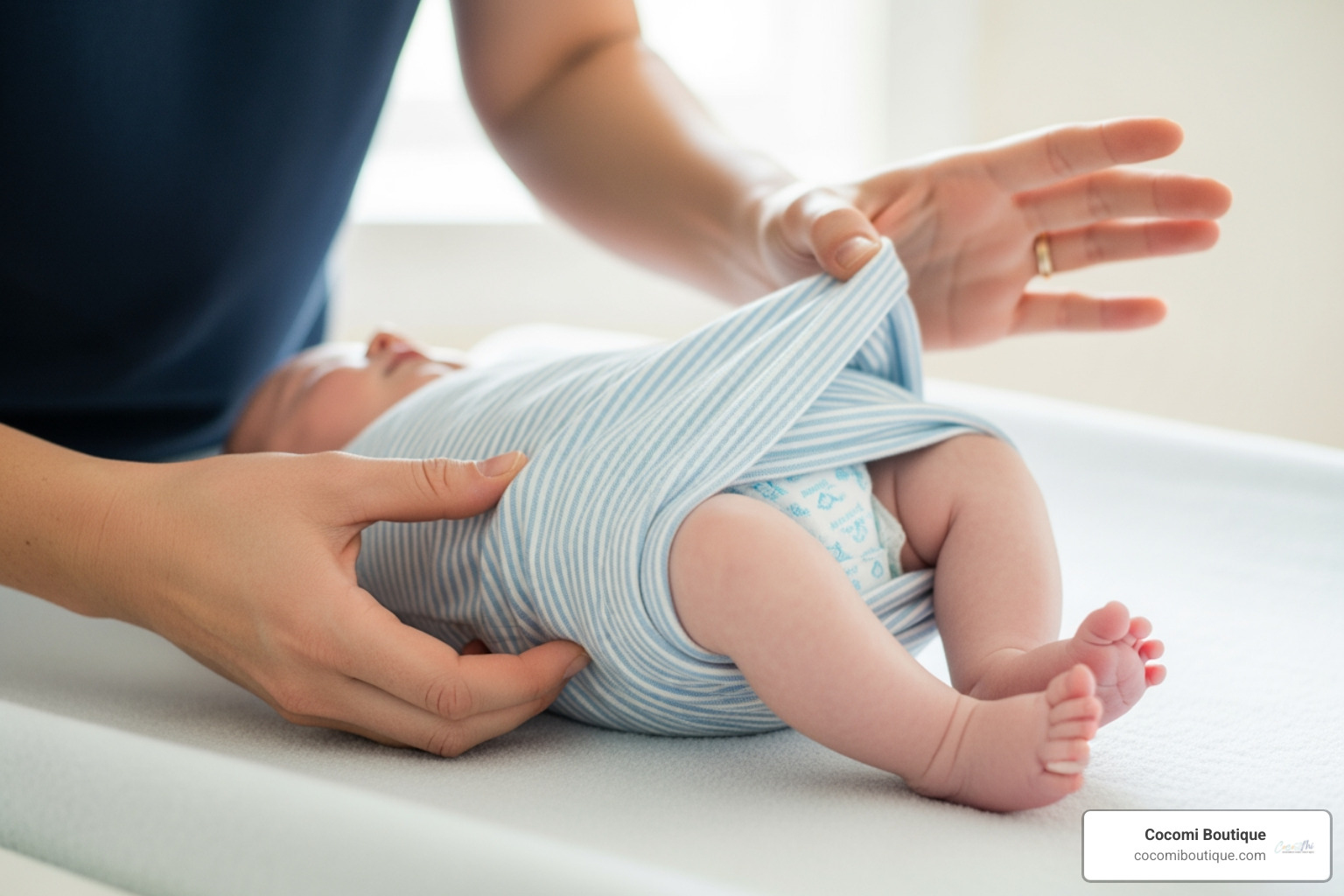
The hip-healthy design is a non-negotiable safety feature. A swaddle should always be snug around the arms and chest but loose around the hips and legs. Babies need to be able to bend their legs up and out at the hips to prevent conditions like hip dysplasia. The swaddle should allow for natural hip development and healthy movement, never restricting the lower body.
Always follow the manufacturer's size and weight guidelines. A swaddle that's too large can become loose and pose a suffocation hazard, while one that's too small can be restrictive and uncomfortable, potentially hindering hip development.
Prioritizing Safety in Your Swaddle Choice
When it comes to baby sleep, safety is always our top priority. We follow the guidelines set by the American Academy of Pediatrics to ensure a safe sleep environment for your little one.
The "Back to Sleep" rule is fundamental. Always place your baby on their back to sleep. Swaddling can actually help keep infants in this safe position and lessen the likelihood of accidentally rolling over early. However, once your baby shows signs of rolling, it's time to transition out of swaddling.
Understanding the difference between snug versus tight is important. The swaddle should be snug enough around the arms and chest to prevent breaking free and triggering the startle reflex, but never so tight that it restricts breathing or hip movement. There must be ample room for your baby's legs to bend and move freely.
Ensure there's no loose fabric that could cover your baby's face or become a suffocation hazard. The swaddle should be securely fastened, and it should never cover your baby's head or face. Always place your swaddled baby in a crib or bassinet with a firm mattress, completely free of loose blankets, pillows, bumpers, or toys.
A Parent's Guide to Safe Sleep emphasizes these points for preventing SIDS. Our commitment at Cocomi Boutique is to provide baby essentials that align with these crucial safety guidelines, giving you peace of mind. For a comprehensive overview of safe swaddling practices, we encourage you to review The Ultimate Guide to Safe Swaddling for Newborns.
The Swaddle Lifecycle: From Newborn to Sleep Sack
As your baby grows and develops, their sleep needs naturally evolve. Understanding this journey helps us steer one of parenting's important milestones: knowing when to stop swaddling and how to make that transition smoothly. Think of it as a gentle progression from the contained comfort of a swaddle to the freedom of a sleep sack.

When to Stop Swaddling Your Baby
This question comes up constantly from parents, and for good reason—it's a critical safety milestone. The American Academy of Pediatrics is clear on this: you should stop swaddling as soon as your baby shows any signs of attempting to roll over. This can happen surprisingly early, sometimes around two months of age, though every baby develops at their own pace.
Why is rolling such a big deal? Once a baby can roll over while swaddled, it becomes dangerous. Their arms are restricted, which means they can't push themselves back up if they roll onto their stomach. This significantly increases the risk of suffocation.
Watch for these signs of rolling over: your baby might only manage to roll from back to side at first, but even that counts. You might notice them rocking side to side or lifting one shoulder off the mattress during tummy time. Some babies will practice these movements during the day before they actually roll at night.
Other signals that it's time to transition include breaking free from the swaddle consistently. If your little escape artist keeps working their arms out no matter how snugly you wrap them, they're telling you they need more freedom. You might also notice a diminished startle reflex as your baby matures. The Moro reflex naturally fades over time, usually by three to four months, reducing the primary reason for swaddling in the first place.
While the typical age range for stopping swaddling falls between two to four months, rolling ability—not age—is your real indicator. Even if your baby still seems to love being wrapped up, we have to prioritize safety over comfort preferences.
Swaddle vs. Sleep Sack: Making the Transition
Once your baby is showing signs of rolling, it's time to introduce them to a sleep sack. This shift might feel daunting, but understanding the difference between these two sleep solutions makes the transition easier.
A sleep sack is essentially a wearable blanket—a bag-like garment that zips over your baby's pajamas. The key difference from even the best swaddles is that it allows complete freedom of movement for both arms and legs. Your baby can move, stretch, and reposition themselves safely throughout the night.
This freedom is crucial for rolling babies. If they roll onto their tummy, they can use their arms to push up and adjust their position. Sleep sacks maintain warmth without the restriction, providing the same temperature regulation that a swaddle did. They're also a safe alternative to loose blankets, which pose suffocation risks in the crib. This is similar to how we think about warm pram liners and sleeping bags for keeping babies cozy during stroller outings—warmth without hazard.
Many parents worry their baby won't sleep as well without the snugness of a swaddle, and that's a valid concern. The good news is that sleep sacks can still provide a comforting sleep cue, signaling bedtime and helping maintain your established routine. The familiar ritual of putting on their sleep "uniform" remains, just in a different form.
For babies who struggle with the sudden change, transitional swaddles can be lifesavers. These clever designs bridge the gap between full swaddling and complete freedom. Many feature zip-off sleeves that let you remove one arm at a time, or one-arm-out options that allow gradual adjustment. You might start by freeing one arm for a few nights, then both arms, before moving to a traditional sleep sack. This step-by-step approach helps babies who are particularly attached to the swaddled feeling.
The transition period might bring a few restless nights, but most babies adapt within a week or so. Your baby is growing and changing, and this is just one of many adjustments you'll steer together. Trust your instincts, watch for those rolling cues, and make the switch when the time is right.
Frequently Asked Questions about Swaddling
We know that swaddling can bring up many questions, especially when you're navigating those early weeks with your newborn. You want to make sure you're doing everything right for your little one's comfort and safety. Let's walk through some of the most common concerns we hear from parents.
How does swaddling help with the startle reflex?
You've probably noticed your baby suddenly flinging their arms and legs out, arching their back, and then pulling everything back in—sometimes waking themselves up in the process. This is called the Moro reflex, or startle reflex, and it's a completely normal involuntary response in newborns. It can be triggered by sudden movements, loud noises, or even just the sensation of falling as they drift off to sleep.
This is where swaddling works its magic. By gently wrapping your baby's arms close to their body, a swaddle provides that snug, womb-like environment they remember from their time before birth. This physical containment prevents those sudden, jerky arm movements that trigger the reflex in the first place. When your baby can't startle themselves awake, they're able to settle into longer, more peaceful sleep periods.
The continuous sense of security that swaddling provides truly mimics the comfort and gentle pressure they felt in the womb. It's not about restricting them—it's about helping them feel safe and protected, which allows both baby and parents to get the rest everyone desperately needs.
What are the best swaddles for newborns?
When you're choosing best swaddles for your newborn, we focus on a few key priorities: ease of use (because those first weeks are exhausting!), secure closures that keep your baby safely wrapped, soft and breathable materials for delicate skin, and a hip-healthy design that allows for natural movement.
Ease of use is honestly one of the most important factors during the newborn phase. When you're fumbling through a 3 a.m. diaper change, you need something that works quickly and intuitively. Adjustable wraps with Velcro closures and swaddle pods or sacks with zippers eliminate the need for mastering complex folding techniques. You simply place your baby inside, secure the closures, and you're done.
Secure closures are essential to prevent your baby from wriggling free during the night, which could create loose fabric hazards. Whether it's Velcro, zippers, or a clever layered fabric design, the closure needs to stay put throughout the night. This security gives you peace of mind that your baby remains safely swaddled.
Soft, breathable materials matter tremendously for newborn comfort. Their skin is incredibly delicate, and they can't regulate their body temperature as adults do. Natural fibers like cotton, muslin, or bamboo are gentle on sensitive skin while allowing proper air circulation to prevent overheating.
Finally, a hip-healthy design is non-negotiable. The swaddle should be snug around the arms and chest but roomy around the hips and legs, allowing your baby's legs to bend up and out naturally. This supports healthy hip development during these crucial early months.
While traditional swaddle blankets are beautiful and versatile, their learning curve might make them less practical when you're sleep-deprived and just need something that works immediately. The best swaddles for newborns combine all these elements—safety, comfort, and simplicity—to support those precious early weeks.
What should my baby wear under a swaddle?
This is such a practical question, and the answer really depends on your nursery's temperature and the warmth level (TOG rating) of your swaddle. Our goal is to keep your baby comfortable—not too hot, not too cold.
If your nursery sits at a comfortable temperature between 68°F and 72°F, a single layer underneath the swaddle is typically all you need. This might be a short-sleeved onesie on warmer nights or a long-sleeved onesie when it's a bit cooler. Some parents prefer lightweight pajamas, which work beautifully as well.
The TOG rating of your swaddle makes a big difference here. If you're using a warmer swaddle with a higher TOG rating, your baby needs fewer layers underneath. Conversely, if you've chosen a light, airy muslin swaddle with a low TOG, you might opt for long sleeves or slightly warmer pajamas in a cooler room.
We can't stress enough the importance of avoiding over-bundling. Newborns cannot regulate their body temperature the way adults do, which means we need to be vigilant about monitoring them. Check your baby's temperature by gently feeling their chest or back—not their hands or feet, which often feel cool even when baby is comfortable. Signs of overheating include sweating, damp hair, flushed cheeks, or the appearance of a heat rash. If your baby feels too warm, remove a layer. If they seem cold, add a layer underneath the swaddle.
Never add loose blankets on top of a swaddled baby, as this creates a serious safety risk. The swaddle itself provides the warmth and security your baby needs for safe, comfortable sleep.
Conclusion: Wrapping Up Your Swaddle Search
Finding the best swaddles for your baby is a journey, and I hope this guide has made it feel a little less overwhelming. We've covered so much together—from understanding how swaddling recreates that cozy womb feeling and calms the startle reflex, to exploring the different types available and what makes each one special.
The beauty of swaddling lies in its simplicity and effectiveness. Whether you choose a traditional muslin blanket for its versatility, an adjustable wrap for its secure fit, a convenient zippered sack for those bleary-eyed nighttime changes, or a transitional arms-up design for your little self-soother, each style has something valuable to offer. What matters most is finding the right match for your baby's unique needs and your family's lifestyle.
As we've discussed, safety is paramount. Always remember to place your baby on their back to sleep, ensure the swaddle is snug around the arms but loose around the hips, and transition to a sleep sack as soon as your baby shows any signs of rolling. These AAP guidelines aren't just recommendations—they're essential practices that protect our precious little ones.
The material you choose matters too. Breathable fabrics like cotton, muslin, bamboo, or wool help regulate your baby's temperature, and paying attention to TOG ratings ensures they stay comfortable through the night. Hip-healthy designs, easy diaper access, and secure closures all contribute to making those early months smoother and safer for everyone.
At Cocomi Boutique, we understand that every product you bring into your home for your baby carries weight. That's why we're committed to offering soft, stylish, and comfortable baby essentials that meet the highest standards of quality and care. We believe in combining luxury with practicality, creating pieces that support your family's needs while bringing a touch of beauty to your nursery here in Northbrook, Chicago, and throughout Illinois.
Your baby's comfort and your peace of mind are what drive everything we do. We invite you to explore our collection of baby sleep essentials and find products that will support your little one's sweetest dreams. Here's to restful nights and the joy of watching your baby sleep peacefully, wrapped in comfort and love.