

Why Choosing the Safest Swaddle Blanket Matters for Your Newborn

The safest swaddle blanket keeps your baby snug, supports back sleeping, uses breathable fabric, and allows free hip movement — without any loose fabric near the face.
Quick answer — what makes a swaddle the safest?
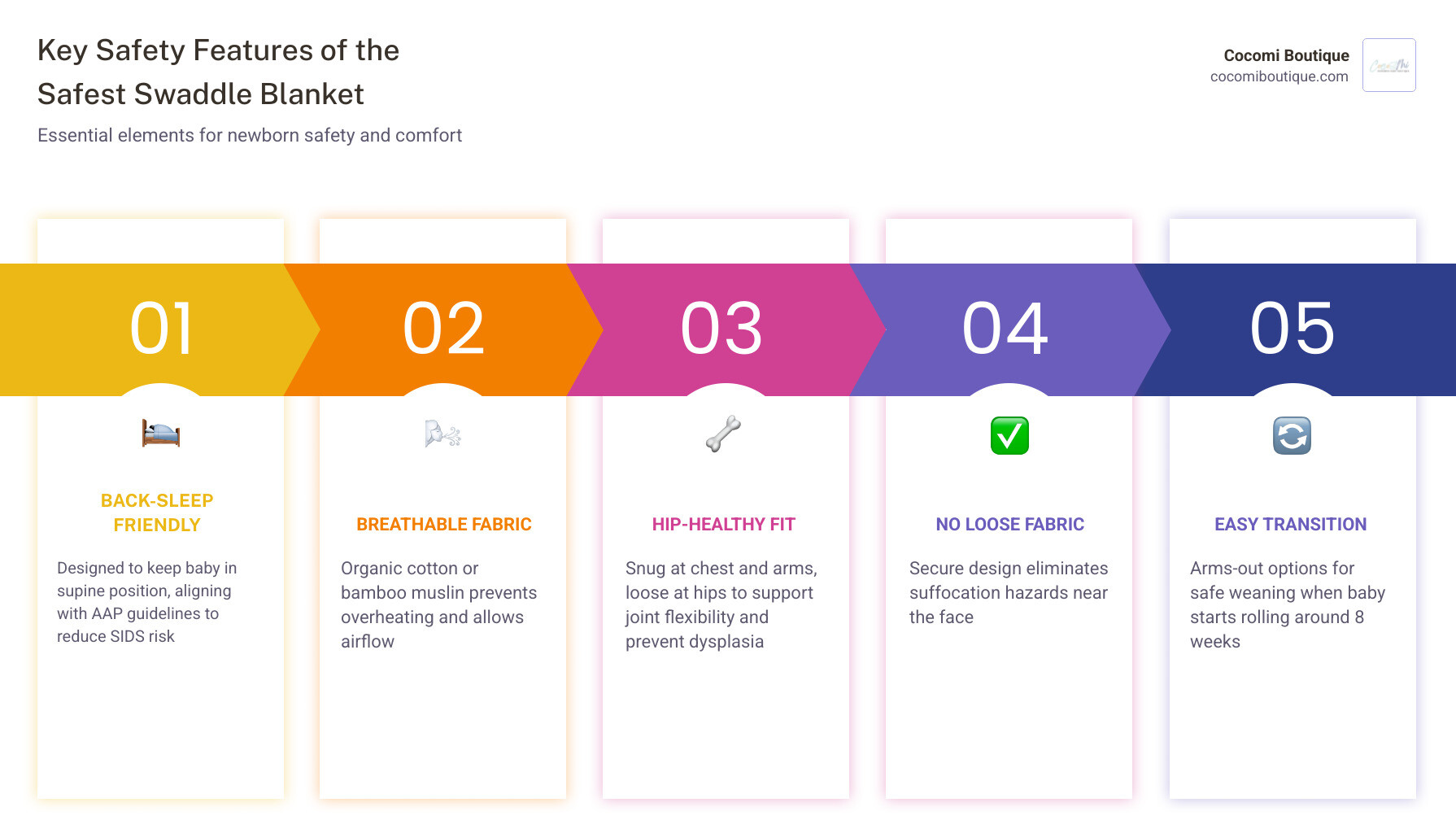
- Back-sleep friendly — designed to keep baby in the supine (face-up) position
- Breathable fabric — organic cotton, bamboo muslin, or a similar natural, low-TOG material
- Snug at the chest and arms, loose at the hips — prevents hip dysplasia
- No loose fabric near the face — reduces suffocation risk
- Clear transition path — arms-out option for when baby starts rolling (typically around 8 weeks)
- No added weight — the AAP advises against weighted swaddles for infants
Every new parent knows the feeling. Your baby finally drifts off — then flails awake two minutes later. That sudden jerk is the Moro reflex, and it's completely normal. Swaddling works by mimicking the snug environment of the womb, calming that reflex so babies sleep longer and more peacefully.
But not every swaddle is created equal. With dozens of options on the market — traditional muslin blankets, velcro wraps, zippered sacks, arms-up designs — it's genuinely hard to know which ones are safe and which ones cut corners.
The stakes are real. Overheating, improper hip positioning, and loose fabric are all linked to serious infant safety risks, including SIDS. Choosing the right swaddle isn't just a comfort decision — it's a safety one.
I'm Monika Jarog, and at Cocomi Boutique I've spent years curating handcrafted, chemical-free baby essentials — including muslin swaddles and newborn wraps made from 100% natural materials — so I understand exactly what separates a truly safest swaddle blanket from one that simply looks good on a shelf. In this guide, I'll walk you through everything you need to make a confident, informed choice.
Safest swaddle blanket terms explained:
Understanding AAP Guidelines for the Safest Swaddle Blanket
When we talk about infant safety, the gold standard is always the American Academy of Pediatrics (AAP). For parents in our local communities—from the windy lakefront of Chicago to the quiet nurseries of Northbrook and Glenview—following these evidence-based rules is the first step in creating a secure sleep environment.
The most critical recommendation is the "Back to Sleep" campaign. To minimize the risk of Sudden Infant Death Syndrome (SIDS), babies should always be placed on their backs on a firm, flat sleep surface. The safest swaddle blanket is one that helps maintain this supine position without allowing the baby to roll onto their stomach prematurely.
We must also address a recent and vital update from the AAP regarding weighted products. While some products claim that added weight mimics a "parent's touch," the AAP explicitly advises against weighted swaddles or blankets. These can interfere with a baby’s ability to breathe and move, potentially leading to dangerous situations. Safety always trumps the promise of a few extra minutes of sleep.
Furthermore, a safe sleep environment must be clear of all loose bedding, pillows, and soft toys. This is why a well-fitted swaddle or a wearable blanket is so effective—it provides the necessary warmth and security without the hazards of a loose blanket that could cover a baby’s airway. For a deeper dive into these protocols, you can explore 5 Safe Sleep Products That Actually Work or our own the ultimate guide to safe swaddling for newborns.
Identifying the Safest Swaddle Blanket for Newborns
For a newborn, the safest swaddle blanket is one that provides a "snug but not tight" fit. Think of it like a gentle hug. The fabric should be firm enough around the torso and arms to suppress the Moro (startle) reflex, yet flexible enough to allow for natural chest expansion as the baby breathes.
Key features to look for include:
- Face Clearance: The neckline should be cut so that the fabric cannot slide up over the baby's chin or nose.
- Secure Fasteners: If you are using a wrap with velcro or snaps, they must be high-quality and stay put. You don't want a "Houdini baby" breaking free and creating loose fabric in the crib.
- Breathable Weave: Muslin or open-weave cotton is ideal because it allows for maximum airflow.
If you are choosing a traditional square blanket, size matters. A blanket that is too small won't tuck securely, while one that is too large can become bulky and dangerous. We often recommend a 47" x 47" size for the perfect balance of security and ease. You can find more specifics in our infant swaddle blanket guide.
Selecting the Safest Swaddle Blanket for Summer
In Illinois, our summers can be notoriously humid and hot, whether you're in Highland Park or Buffalo Grove. Overheating is a significant risk factor for SIDS, making temperature regulation a top priority for the safest swaddle blanket.
During the warmer months, look for moisture-wicking fabrics like bamboo or lightweight organic cotton muslin. These materials help pull sweat away from the baby's skin and allow heat to escape. You should also pay close attention to the TOG (Thermal Overall Grade) rating. A TOG of 0.5 or lower is generally best for summer or for rooms kept above 72°F.
Always monitor your baby for signs of overheating, such as:
- Reddened cheeks
- Damp hair or a sweaty chest
- Rapid breathing
- Heat rash
It is better for a baby to be slightly cool than too warm. For more tips on navigating the heat, see our guide on summer swaddling secrets how to keep your little one cool and content.
Essential Features of a Hip-Healthy Swaddle
One of the most common mistakes in swaddling is wrapping the legs too tightly. While we want the arms to be secure to prevent waking, the legs and hips need total freedom.
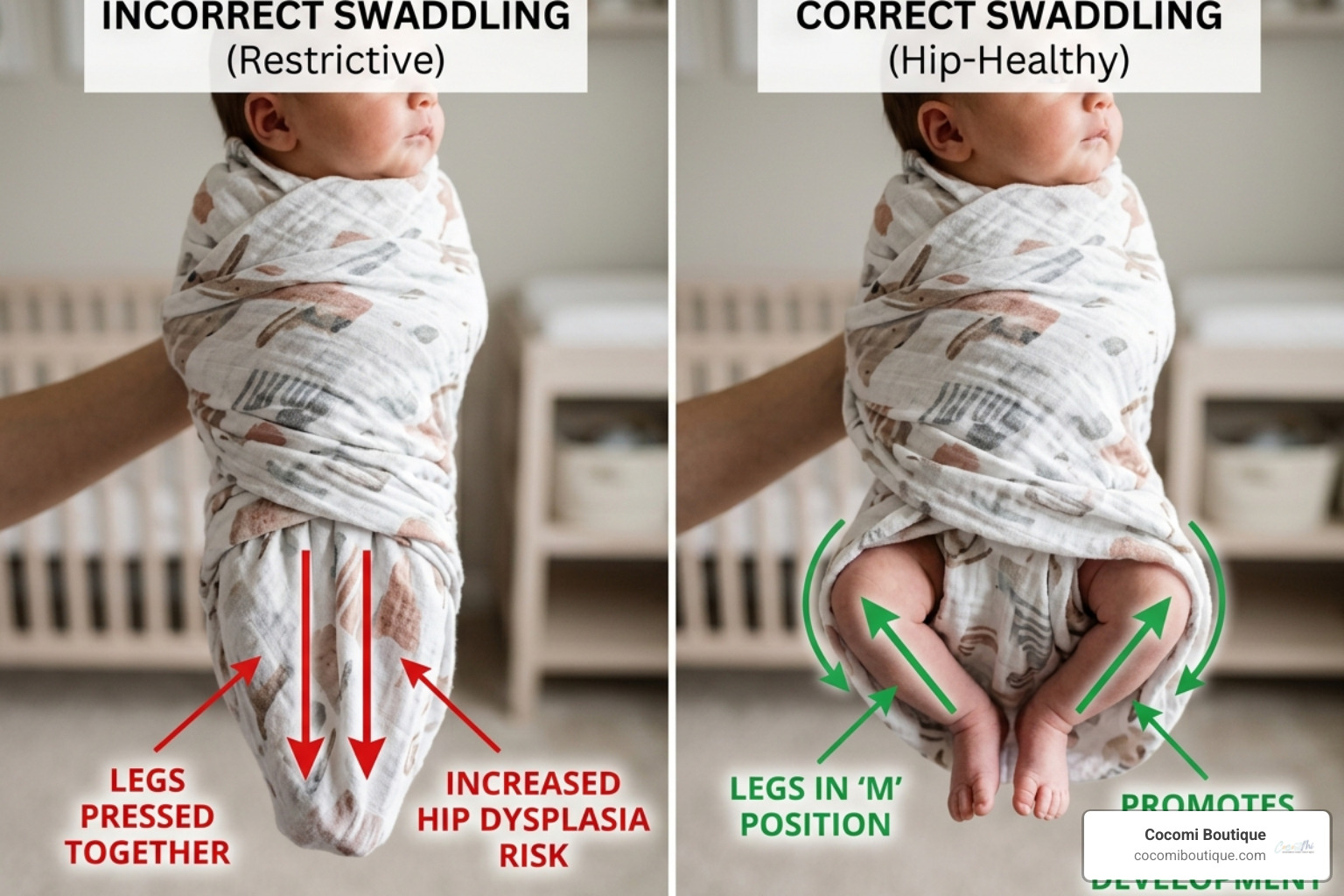
The International Hip Dysplasia Institute emphasizes that for healthy joint development, a baby's hips should be able to fold up and out, similar to a "frog" or "M" position. If the legs are forced straight and pressed together, it can lead to hip dysplasia or even dislocation.
The safest swaddle blanket will always feature a "bell-shaped" or roomy bottom section. This allows the baby to kick and move their legs freely. When testing a swaddle, you should be able to see the baby's legs moving inside the fabric, and you should be able to fit two or three fingers between the baby's chest and the swaddle wrap.
TOG Ratings and Room Temperatures
Choosing the right warmth level is a science. Use this table as a general guide to help you decide how to dress your baby based on your nursery's temperature in places like Winnetka or Glencoe:
| Room Temperature | Recommended TOG | Suggested Clothing Underneath |
|---|---|---|
| Over 24°C (75°F) | 0.2 - 0.5 TOG | Short-sleeved bodysuit or just a diaper |
| 20-23°C (68-73°F) | 1.0 TOG | Long-sleeved bodysuit or light pajamas |
| 16-19°C (61-66°F) | 2.5 TOG | Long-sleeved bodysuit + sleepsuit/fleece pajamas |
Selecting Premium Materials for Safety and Comfort
At Cocomi Boutique, we believe that what touches your baby's skin matters just as much as how they are wrapped. The safest swaddle blanket is made from premium, natural materials that are free from harsh chemicals and synthetic dyes.
Organic cotton is a gold standard for a reason. It is grown without synthetic pesticides, making it hypoallergenic and incredibly soft for a newborn's delicate skin. Furthermore, looking for OEKO-TEX certification ensures that every thread, button, and zipper has been tested for harmful substances.
Bamboo muslin is another fantastic option, prized for its silk-like texture and superior breathability. It is naturally temperature-regulating, which is a blessing during the fluctuating weather we experience in the Chicago area. When you choose European-quality craftsmanship, you are investing in a product that features reinforced seams and high-quality weaves that won't fray or pill after a few washes.
For more information on making the right choice, read our articles on the best material for swaddle blanket and bamboo or cotton your guide to the best organic muslin swaddles.
Transitioning Safely: When to Stop Swaddling
Swaddling is a temporary phase in a baby's life. Knowing when to stop is a critical safety milestone.
The general rule of thumb is to stop swaddling with arms in as soon as your baby shows any signs of trying to roll over. For many babies, this happens around the 8-week mark, though some may start as early as 2 months or as late as 4 months. Once a baby can roll onto their stomach, they need their arms free to push themselves up or reposition their head to ensure their airway remains clear.
If your baby is breaking their arms out of the swaddle regularly or seems frustrated by the restriction, these are also signs that it might be time to move on. Transitioning doesn't have to be a "cold turkey" process. You can start by swaddling with one arm out for a few nights, then both arms out, eventually moving to a wearable blanket or sleep sack.
These wearable blankets provide the familiar weight and warmth of a swaddle but allow for full range of motion in the arms. To find the best path for your little one, check out finding the best swaddle for sweet dreams.
How to Swaddle Your Baby Safely: A Step-by-Step Guide
If you've chosen a traditional muslin blanket—a favorite for its versatility and elegance—mastering the technique is essential for safety.
Follow these steps for a secure, hip-healthy wrap:
- The Diamond Fold: Lay the blanket flat in a diamond shape and fold the top corner down about 6 inches. This is where your baby's head will be.
- Position Baby: Place your baby on the blanket so their neck sits right at the edge of the fold.
- Right Side First: Gently place your baby's right arm down by their side (or slightly flexed). Pull the right side of the blanket across the chest and tuck it firmly under the left side of their body.
- Bottom Up: Fold the bottom of the blanket up over the baby's feet. Crucial: Ensure there is plenty of room for the legs to bend and kick. Never pull this part tight.
- Left Side Over: Place the left arm down, pull the left side of the blanket across the chest, and tuck it securely under the right side.
- The Two-Finger Rule: Always check the tightness. You should be able to slide two to three fingers between the blanket and your baby's chest. If it's tighter than that, it could restrict breathing; if it's looser, it could unravel and become a hazard.
For a visual walkthrough, visit our guide on wrapping wonders an illustrated guide to perfect baby swaddling and learn more about sweet dreams ensuring muslin blanket safety for your little one.
Frequently Asked Questions About Swaddle Safety
How should I dress my baby under a swaddle?
Less is usually more. In a standard 68-72°F nursery (common in Deerfield or Riverwoods homes during winter), a simple long-sleeved cotton bodysuit or "onesie" is often enough. If the room is warmer, a diaper alone may suffice under a muslin swaddle. Avoid heavy fleece layers under a swaddle, as the swaddle itself acts as a layer of clothing.
Are swaddles safe for premature babies?
Yes, and in fact, they are often used in NICUs to help preemies conserve energy and feel secure. However, preemies have even more delicate skin and may have different temperature regulation needs. Always use the softest organic materials and consult with your pediatrician or neonatal nurse for specific guidance tailored to your baby's weight and health status.
What are the most common swaddling mistakes to avoid?
The "Big Three" are:
- Wrapping the hips too tight: Always ensure the legs can move freely.
- Swaddling past the rolling milestone: This is a major safety risk.
- Using loose blankets: If the swaddle isn't secure, it can ride up over the face. If you find yourself struggling with a traditional blanket, consider a high-quality "engineered" swaddle with secure fasteners.
Conclusion
Finding the safest swaddle blanket is a journey of balancing tradition with modern safety standards. Whether you prefer the timeless elegance of a handcrafted muslin wrap or the precision of a modern sleep sack, the priorities remain the same: breathability, hip health, and safe sleep positioning.
At Cocomi Boutique, we are proud to serve parents in Northbrook, Wheeling, Prospect Heights, and beyond by providing premium essentials that never compromise on quality. Our collection is built on the belief that every baby deserves a sleep environment that is as safe as it is beautiful. By choosing natural, chemical-free materials and following the expert guidelines outlined today, you are giving your newborn the best possible start.
Ready to find the perfect addition to your nursery? Explore our curated selection of More info about safe sleep essentials and discover why so many Illinois families trust us for their boutique baby needs. Sweet dreams start with safety!